
Priorities
Sun spots and pigmentation
Brown spots, melasma, and uneven tone from sun exposure and hormonal changes.
Sun spots and uneven pigmentation build up over years of sun exposure, most often as scattered brown spots across the cheekbones and the backs of the hands. Not all brown spots are the same. Sun spots, freckles, and melasma can look alike but respond differently to light-based treatment, so your consult starts with a close look at your skin and a few questions.
What we'd want you to know
Melasma isn't a sun spot, and IPL can make it worse, so we'll check first
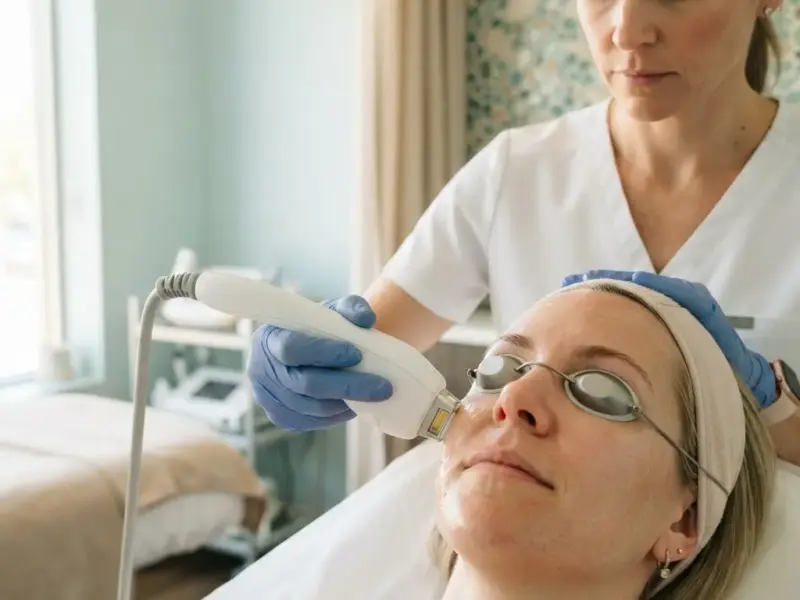
If your spots are discrete sun spots on lighter skin, IPL is the fastest route. Our medical esthetician can treat the face, neck, chest, or hands in three to five sessions. The spots will darken and look like coffee grounds for a week before they flake off, which is a normal part of the process.
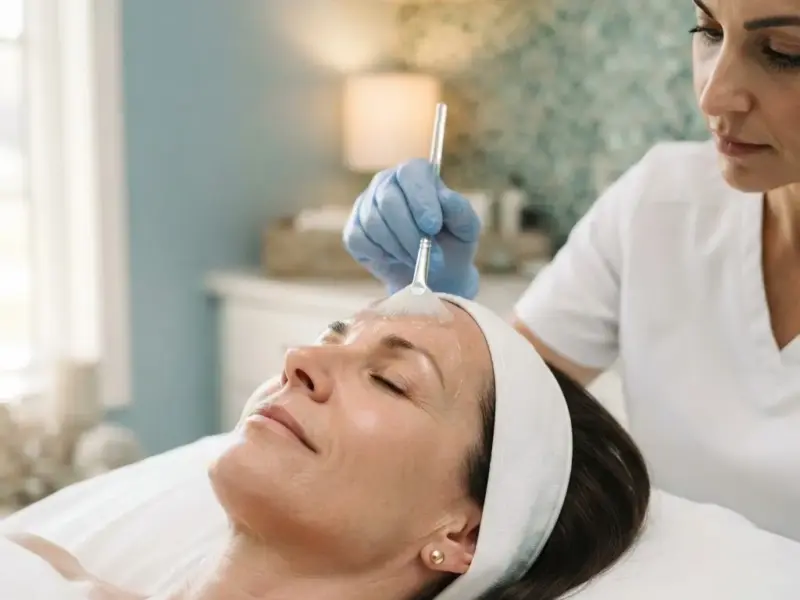
If your skin is medium to dark, or the pigment is a soft mask across your cheeks and upper lip that gets worse in summer, that’s melasma or pigment that IPL can aggravate. In that case, a VI Peel series lifts it more gently and is safer in darker skin.
How we decide
We’ll ask you three things. Did the spots appear one at a time, or as a symmetrical patch during pregnancy or while on the pill? Do they darken after a weekend outside? And what’s your natural skin tone?
For discrete spots on skin that tans slowly, we’ll usually suggest IPL. It’s a broad-spectrum light, not a laser, FDA-cleared for benign pigmented and vascular lesions. Across trials, IPL cleared sun spots in 74.6 to 90 percent of cases, versus 12 to 46 percent for TCA peels, per a 2025 systematic review. The studies enrolled skin types I to IV, and that’s where we use it.
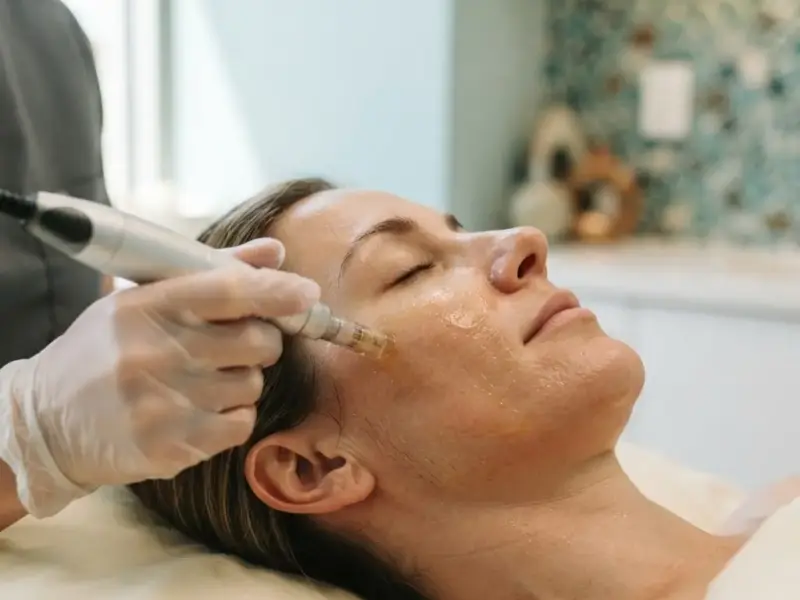
A symmetrical mask that flares in summer is melasma. The cleared indication technically lists it, but the American Academy of Dermatology frames light devices as an add-on for people already on topical medication and strict sun protection, per the AAD. For melasma, we start with a VI Peel series, a daily sunscreen routine, and sometimes a dermatologist’s prescription first. Microneedling with PRP has meta-analysis support as an add-on too.
Any spot that’s new, irregular, or growing should be checked by a dermatologist before we treat it. Individual results vary.
Your questions, answered
Can I get IPL in the summer?
We don’t offer it in summer. Tanned skin raises the burn and pigment risk, and summer rarely allows two sun-free weeks on either side of a session. We offer IPL from October through April.
How many IPL sessions for sun spots?
Usually three to five, spaced three to four weeks apart. Trials averaged about four. Spots lighten as they flake at one to two weeks, and you’ll see the full result a month after the last session. Because ongoing sun exposure causes new spots, plan on a maintenance session or two a year.
Is IPL safe for dark skin?
No. The broad light is absorbed in the surface of darker skin and can burn or leave patches. For skin types V and VI, we treat pigment with peels and microneedling instead.
Related treatments
From the clinic
Treatment guides · 5 min read
How often should you get a HydraFacial? A realistic maintenance calendar
Most people do best with a HydraFacial about once a month: every 4 weeks while you're clearing congestion or dullness, closer to 6 once you're maintaining,…
Local · 6 min read
Laser hair removal in Buffalo Grove and Palatine: when to start so you’re done by pool season
We recommend starting in September. A full course is typically 6 sessions, up to 8 for hormonal areas, spaced 4 to 8 weeks apart, so a…