
Smoother skin, off the surface
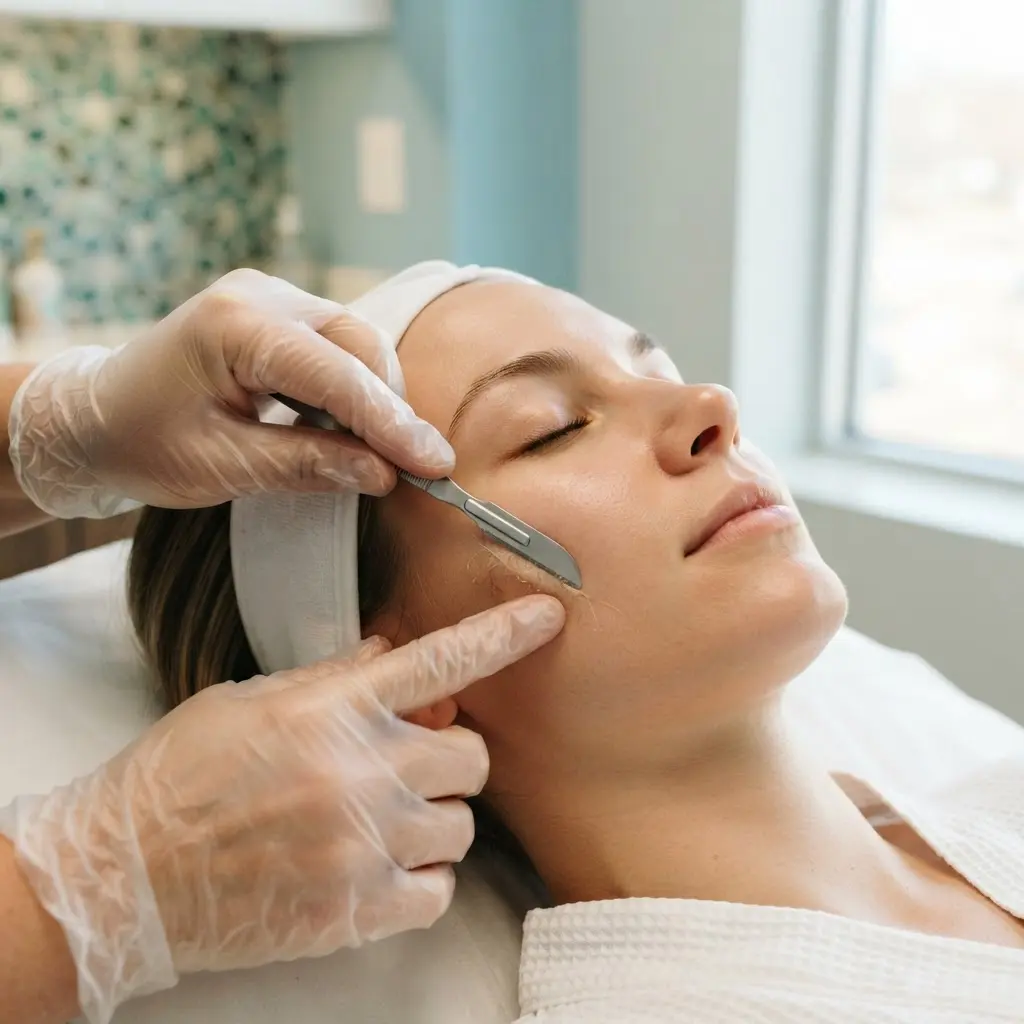
Dermaplaning is a 30-minute exfoliation with a sterile surgical blade that removes dead skin cells and peach fuzz. It’s a good option if your makeup catches on fuzz or flaky winter skin and you’d like a smoother surface with no downtime, performed by a licensed esthetician, not a drugstore razor.
$150
per visit
At a glance
Dermaplaning- Appointment
- 30 to 45 minutes, no numbing
- Downtime
- None, pink for an hour or two
- First results
- Immediately
- Full results
- Immediately, until the fuzz regrows
- Sessions
- One, repeat every 3 to 6 weeks if you like it
- Cost
- From $150. About $38 per payment across 4
What to expect
What the appointment is like
You can arrive with or without makeup. Your esthetician cleanses and dries your skin, then works section by section with the skin held taut: forehead, cheeks, upper lip, chin, and jawline. There’s no numbing, because there’s nothing to numb. It feels like a light scraping, and most people notice the sound more than the feeling.
Check-in
We’ll look at your skin under light and check for active breakouts, cold sores, or a sunburn. If any are present, we’ll reschedule.
Cleanse
We remove makeup and oil and dry your skin, since the blade needs a clean, dry surface.
Dermaplaning
Short strokes with a sterile blade at a shallow angle, one section at a time, for about 20 minutes. It feels like light scraping.
Serum and sunscreen
A calming serum, then sunscreen, then a peel or HydraFacial if you’ve booked one. We go over aftercare for the next few days.
Results
A predictable timeline
You’ll see the difference in the mirror before you leave: smoother, brighter, and bare of fuzz. Makeup sits better for a couple of weeks. Then the vellus hair grows back at the same rate and the same fine texture it always had. Shaving doesn’t change hair growth rate, thickness, or color.
Day 0
Smooth and bright
Smooth, bright, and bare of fuzz. You may be pink for an hour or two.
Days 1 to 3
A little sensitive
Skin is a little more sensitive while the barrier rebuilds. Products absorb more, so keep them gentle.
Weeks 1 to 3
Makeup sits better
Makeup goes on thinner and stays put, which makes this a good window before a wedding or event.
Weeks 3 to 6
Fuzz regrows
The fuzz has regrown, fine and light as before, and the surface has dulled. A good time to rebook if you’re keeping a routine.
What it costs
Clear pricing, planned by the visit
Your cost depends on whether you book dermaplaning on its own or as an add-on to a HydraFacial or a peel, and whether you buy one visit or a package. Add-on pricing reflects the shared cleanse and setup, and packages suit people who come back monthly. No series is required, since one visit is a complete treatment.
- On its own or as an add-on
- A single visit or a package
- Whether it’s paired with a HydraFacial or peel
- How often you plan to come back
Blade exfoliation
Dermaplaning
$150
per visit
- One visit
- A complete treatment
- Repeat
- Every 3 to 6 weeks
- Consultation
- $50
- Financing
- Affirm, Afterpay, Klarna
Often paired with a HydraFacial or light peel in the same visit, blade first.
Book your Dermaplaning appointmentSimilar purpose, different options
Dermaplaning or something else?
Two treatments on our menu are often compared with dermaplaning, and both pair well with it.
A HydraFacial exfoliates wet, with glycolic and salicylic solutions and light suction, then clears the pores and infuses serum, but it doesn’t remove hair. Dermaplaning removes hair and dead skin but doesn’t extract or hydrate. That’s why the two are often done together, blade first. Our HydraFacial calendar can help you plan how often to come for the combined version.
A chemical peel works chemically and deeper: an acid loosens the damaged layers so they shed over three to seven days. Dermaplaning is mechanical and surface-only, with nothing to shed. With a light peel, we’ll do the blade first, in the same visit. A medium peel goes on a separate day, because a thinned barrier lets the acid go deeper than intended. If what’s bothering you is color rather than texture, the peel is the treatment and dermaplaning is the prep.
| Dermaplaning | HydraFacial | Chemical peel | |
|---|---|---|---|
| How it exfoliates | A blade, dry, surface only | Acid solutions and suction, wet | Acid, into the upper layers |
| Removes peach fuzz | Yes | No | No |
| Clears pores | No | Yes, by suction | No |
| Changes pigment | No | Slightly, over a series | Yes, over a series |
| Downtime | None | None | 3 to 7 flaking days |
| Best booked | Before an event, or with a facial | Monthly for congestion and dryness | October to March, as a series |
How it exfoliates
- Dermaplaning
- A blade, dry, surface only
- HydraFacial
- Acid solutions and suction, wet
- Chemical peel
- Acid, into the upper layers
Removes peach fuzz
- Dermaplaning
- Yes
- HydraFacial
- No
- Chemical peel
- No
Clears pores
- Dermaplaning
- No
- HydraFacial
- Yes, by suction
- Chemical peel
- No
Changes pigment
- Dermaplaning
- No
- HydraFacial
- Slightly, over a series
- Chemical peel
- Yes, over a series
Downtime
- Dermaplaning
- None
- HydraFacial
- None
- Chemical peel
- 3 to 7 flaking days
Best booked
- Dermaplaning
- Before an event, or with a facial
- HydraFacial
- Monthly for congestion and dryness
- Chemical peel
- October to March, as a series
Is it right for me?
Who it’s for, and who it isn’t
Dermaplaning suits most skin types and most ages. It works especially well if you have fine, light facial hair and normal-to-dry skin that flakes in winter. It’s also a good first treatment if you’re not ready for anything with needles.
A good fit for
- Fine, light peach fuzz that catches makeup
- Flaky winter skin that a washcloth won’t clear
- Makeup that settles into fine texture
- Anyone not ready for a needle treatment
Not recommended
- Active acne, a cold sore, open skin, or a flare
- Coarse, dark facial hair (laser hair removal fits better)
- Skin still healing from a peel or laser
- Acne scars, wrinkles, or deep pigment
Hair grows back at the same fine texture in a few weeks, never thicker. Cutting hair doesn’t change its growth rate, thickness, or color. The blade is a surgical instrument, so claims that dermaplaning is “FDA-cleared” aren’t accurate.
In detail
What it treats
Peach fuzz. This is the fine, light vellus hair on your cheeks, upper lip, and jawline. It usually isn’t noticeable, but it can hold onto foundation and catch the light in photos.
Flaky winter skin. From November to March, forced-air heat can drop indoor humidity to 10 to 15 percent, and flaking around the nose and chin doesn’t always come off with a washcloth. The blade removes that layer in one pass.
Makeup that sits in texture. If foundation settles into fine texture over the course of the day, fuzz and dead cells are likely part of the reason. After dermaplaning, makeup goes on thinner and stays put, which is why many people book it two or three days before a wedding or another event.
Mild surface marks. The faint discoloration left after a breakout can look a little more even once the dull top layer is gone. The effect is modest and limited to the surface.
How it works
Dermaplaning is manual exfoliation. Your esthetician holds a sterile surgical blade at a shallow angle against cleansed, dried skin and moves it in short strokes. It scrapes off the stratum corneum, the outermost layer of dead cells, along with the vellus hair sitting in it.
A 2023 laboratory study confirmed what happens at the tissue level: dermaplaning removed the stratum corneum and some of the living epidermis beneath it, and the skin’s barrier resistance dropped sharply, per Tijani and colleagues in AAPS PharmSciTech. The surface is thinner for a day or two, which is why your skin looks brighter, why products absorb more, and why simple aftercare matters.
The published evidence for dermaplaning is limited. A systematic review in Aesthetic Plastic Surgery called the published data “scarce, anecdotal, and not well documented,” per Pryor and colleagues, even though patients and providers report liking it. We offer it as a cosmetic exfoliation with an immediate, short-lived result. There’s also no FDA clearance to cite, because the blade is a surgical instrument, so claims that dermaplaning is “FDA-cleared” aren’t accurate.
Afterwards
Downtime and aftercare
There’s no downtime. You may be a little pink for an hour or two, and makeup is usually fine afterward.
Your skin barrier is thinner for one to three days, which can show up as sensitivity: your usual retinoid might sting, and skin burns more easily. For three to five days, skip retinoids, exfoliating acids, and scrubs. Stick with a gentle moisturizer and sunscreen every morning, and hold off on facial waxing that week.
Side effects are minor: a small nick, some redness, or an occasional breakout in acne-prone skin. Rarely, aggressive work or skipping sunscreen afterward leads to infection or a dark patch, so we send you home with aftercare instructions to prevent that.
Why here
Why Arlington Heights
Dermaplaning takes about thirty minutes at our single-story brick building on Arlington Heights Road, near Dundee Road. Parking is free in the lot right outside the door, with no meters and no garage. Directions and photos are on the page for our Arlington Heights office.
In the dry months, November through March, dermaplaning works well as a first step before a HydraFacial or a light peel. The rest of the year, many patients book it two or three days before a wedding or event, so any pinkness is gone and makeup goes on smoothly.
Our plaza has several businesses: we’re the medical spa in Suite C, not the wellness studio at the front of the complex. We also have a nurse on the team if a spot on your skin needs a closer look.
Questions
Common questions, answered
They do different jobs. Dermaplaning is a blade exfoliation that removes dead surface cells and peach fuzz, with no downtime and a same-day result. Microneedling uses fine needles to reach the dermis and build collagen, so it treats texture, pores, fine lines, and mild scarring over three to four sessions, with a day or two of redness after each.
If your skin is smooth but dull or fuzzy, dermaplaning is a good choice. If there’s texture you can feel with a fingertip, microneedling is the better match.
Both are surface exfoliations with no downtime. Microdermabrasion uses a machine to sand the top layer with crystals or an abrasive tip under suction. Dermaplaning uses a hand-held sterile blade, and it’s the only one of the two that removes vellus hair.
We don’t run a classic microdermabrasion machine at Arlington Heights, so on our menu, you can choose between dermaplaning and a HydraFacial, which exfoliates wet.
Every three to six weeks if you’d like to keep the effect going, and no more often than monthly. That’s about how long the peach fuzz takes to regrow and the surface to dull again.
Many people skip a regular schedule and book it two or three days before an event instead. Back-to-back sessions don’t add anything, though, and can leave your skin sensitive.
No. Dermaplaning cuts vellus hair at the surface, and cutting hair doesn’t change its growth rate, thickness, or color. That was tested in a 1970 study in the Journal of Investigative Dermatology and has held up since.
Regrowth can feel blunt for a few days because each hair is cut flat instead of tapering, which is where the myth comes from. Within a couple of weeks, it’s back to the same fine, light fuzz.
Not over active breakouts. A blade across a pustule can open it and spread bacteria, so we’ll work around inflamed spots or reschedule if there are too many. If acne-prone skin is clear on the day, treatment is usually fine.
If acne is your main concern, dermaplaning isn’t the right treatment. A HydraFacial’s extraction step does more, and for persistent acne, we’d recommend seeing a dermatologist.
No. There’s no numbing because there’s nothing to numb. The blade moves in short, light strokes at a shallow angle, and most people notice the scraping sound more than any feeling. Your skin may be pink and a little sensitive for an hour or two afterward. A small nick is possible, as with any blade, and it heals just like a shaving nick.
Yes. The blade is a sterile, single-use surgical blade at a controlled angle, not a drugstore razor with a guard. It’s performed by a licensed esthetician who keeps the skin taut, works in one direction, and goes around anything that shouldn’t be cut.
A drugstore razor mostly shaves the fuzz. A surgical blade at the right angle takes the fuzz and the layer of dead cells with it, which is what changes how makeup sits. If an at-home razor works for you without nicks or breakouts, there’s no reason to stop.
The effect is temporary: hair grows back exactly as it was, usually within a couple of weeks. It won’t grow back thicker or darker, and its structure is unchanged.
Keep exploring
Related treatments
Related priorities
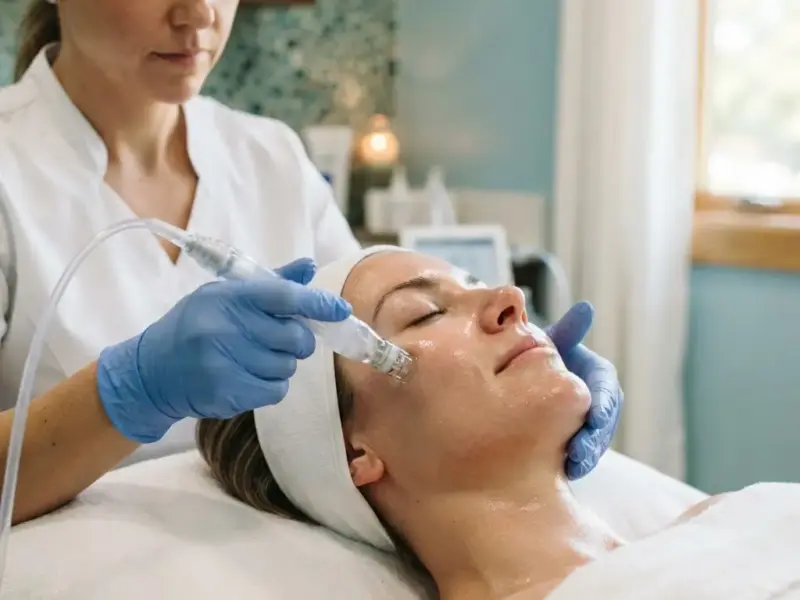
HydraFacial
From $299 / visitA 30-minute device facial that cleanses, exfoliates, extracts, and hydrates, with no downtime.
Learn more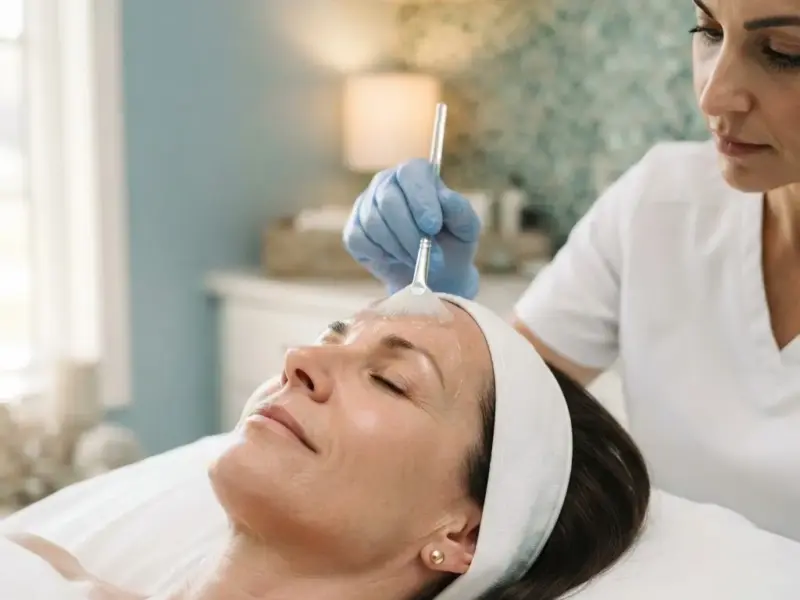
Chemical peels
From $275 / peelLight and medium peels that lift sun spots, melasma, acne marks, and dull, rough texture.
Learn more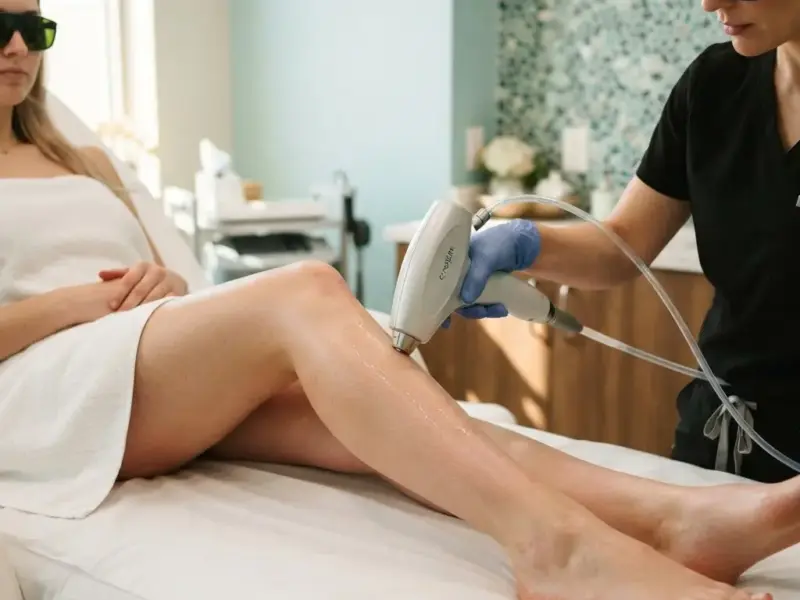
Laser hair removal
From $110 / sessionA course of Candela GentleMax Pro sessions for dark hair you’re tired of shaving, on any skin tone.
Learn more
Start with a consult
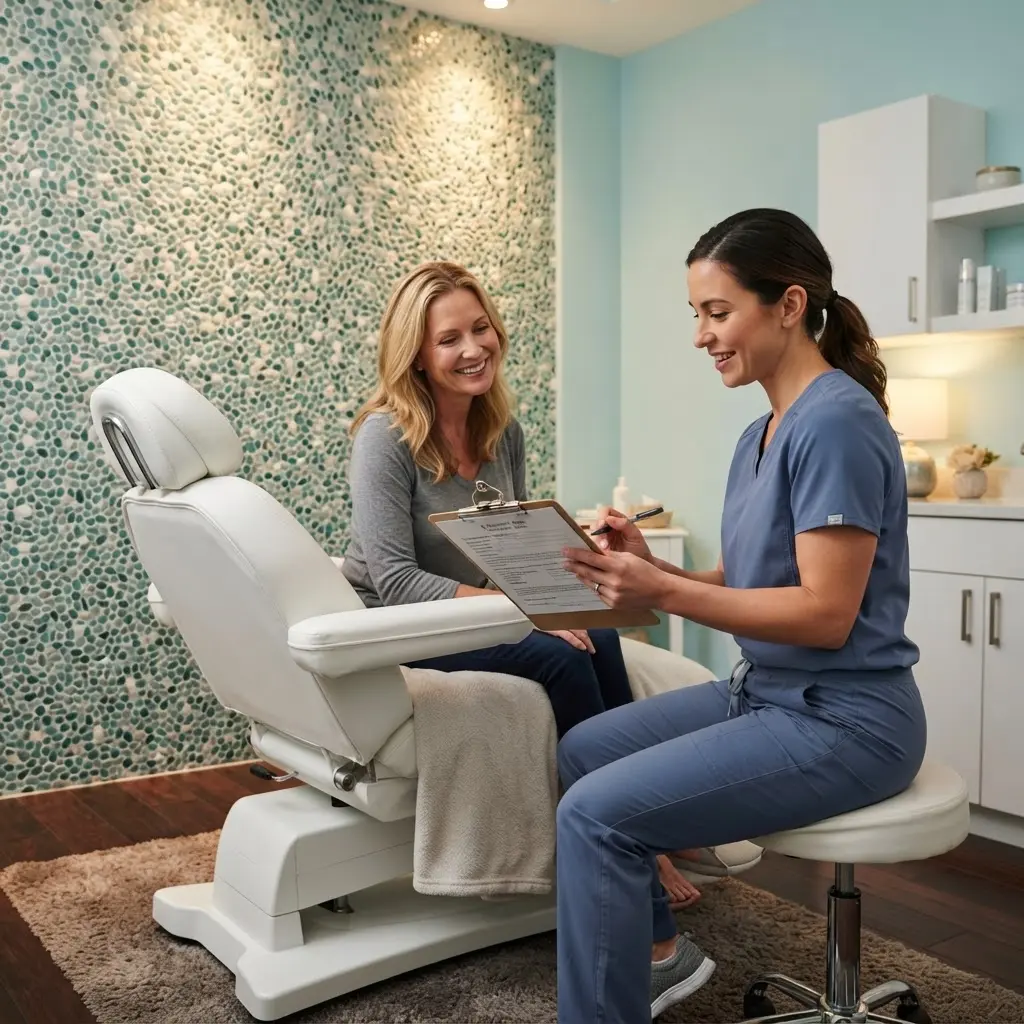
Tell us what you’d like to work on. We’ll assess your skin and goals, walk you through your Dermaplaning options, and give you a clear plan and price before anything begins.
Afterpay and Klarna available at checkout for eligible treatments.