
Even out tone, off the top layers
A chemical peel is a controlled exfoliation. An acid solution loosens the damaged top layers of skin so they shed over a few days, and what grows back is more even in color and smoother to the touch. We offer light and medium peels for sun spots, melasma, acne marks, and the dull, rough texture that sun leaves behind.
$275
small area, per peel
At a glance
Chemical peels- Appointment
- 20 to 45 minutes
- Downtime
- Light: flaking 3 to 7 days. Medium: 7 to 14 days
- First results
- Once the flaking clears, about a week
- Full results
- Light: over a series. Medium: 2 to 4 weeks, collagen at 2 to 3 months
- Sessions
- Light: 3 to 5, every 2 to 5 weeks. Medium: one, repeated in 3 to 6 months
- Cost
- From $275. About $69 per payment across 4
What to expect
What the appointment is like
You’ll spend 20 to 45 minutes with our medical esthetician, and most of that time goes to talking and prepping, the peel itself is on your skin for just minutes. Light peels don’t need numbing; you’ll feel stinging and heat that builds for a minute or two, then settles. A medium TCA peel stings more and may leave a white frosting.
Consult
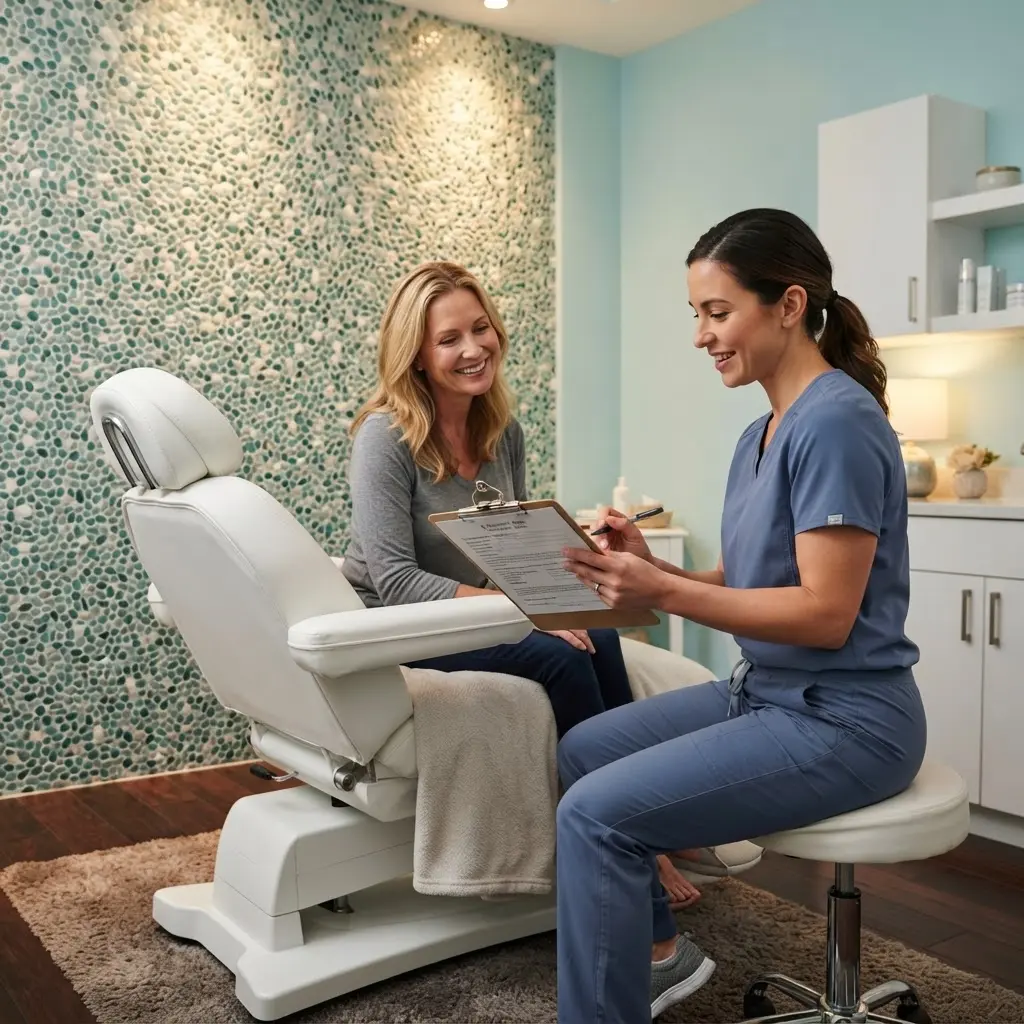
We’ll look at your skin in daylight, ask about retinoids, Accutane, cold sores, and recent sun, then recommend the right peel depth, or another treatment if a peel isn’t the right tool.
Prep
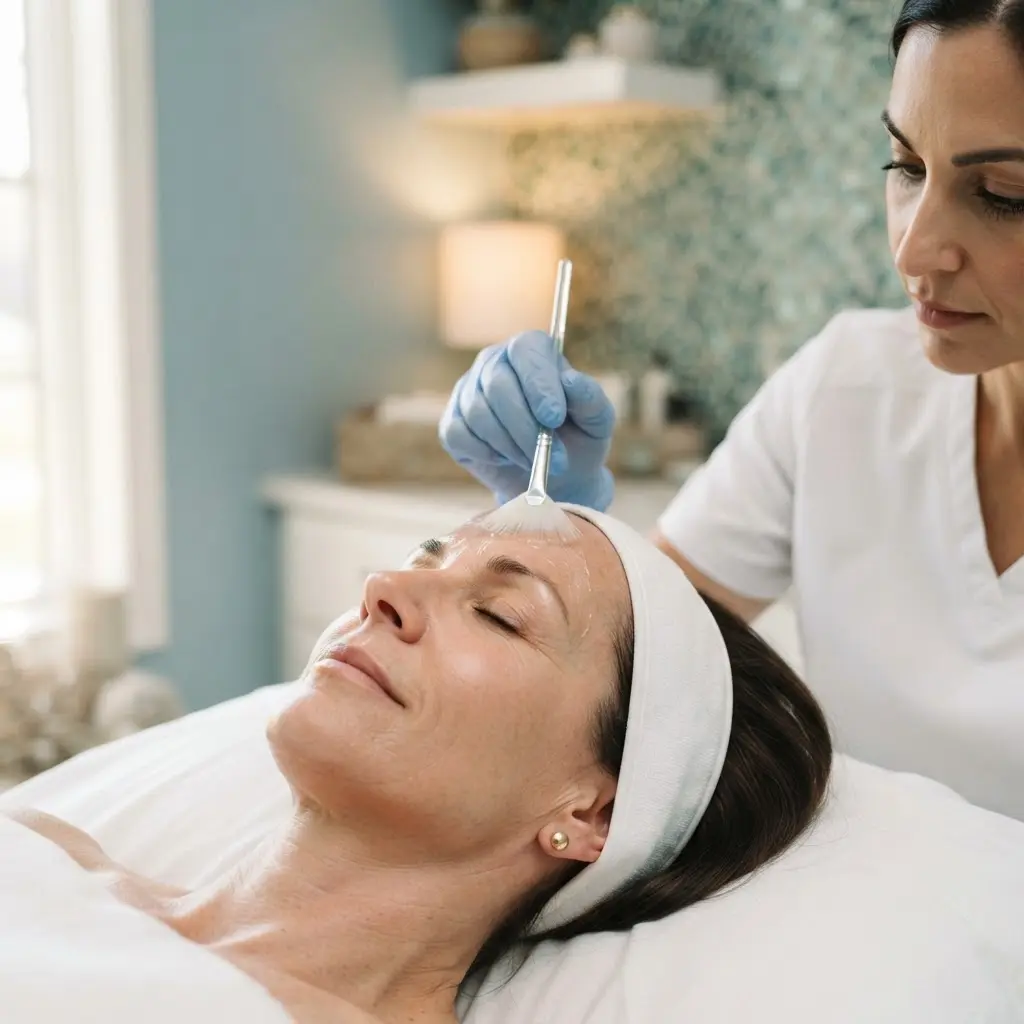
We cleanse and degrease your skin and protect your eyes. A handheld fan is available if you’d like one.
Peel
The solution goes on in thin layers with a brush. We time it, watch your skin closely, and neutralize or remove it when it’s done. Expect stinging and warmth, then a tight feeling.
Before you leave
We’ll apply a bland moisturizer and sunscreen and send you home with written aftercare. Makeup can usually wait until tomorrow, and you can drive yourself home.
Results
A predictable timeline
You’ll see your result once the flaking clears, and with a light series it builds peel by peel. Brightness comes first, then more even tone by the third or fourth session. A medium peel shows its pigment and texture change at 2 to 4 weeks, with the collagen effect arriving over 2 to 3 months.
Day 0
Pink and tight
Pink, tight, and shiny. We’ll apply sunscreen before you leave.
Days 1 to 2
Pigment darkens
Dry, and slightly darker where the pigment is about to lift. That’s normal.
Days 3 to 7
Flaking
Flaking starts at the mouth and nose. Let it come off on its own. Don’t pick.
Weeks 2 to 12
Brighter and even
Brighter and smoother, with the first spots lighter. Next light peel in the series here; medium-peel collagen effect at month 3.
What it costs
Clear pricing, planned by the visit
Several factors shape the cost: the depth and brand of solution, a single peel versus a series, face only versus face plus neck, chest, or hands, and add-ons like dermaplaning before or LED after. We offer peels as a series because light peels build on each other.
- The depth and brand of solution
- A single peel versus a series
- Face only versus face plus neck, chest, or hands
- Add-ons like dermaplaning or LED
Light and medium
Chemical peels
$275
small area, per peel
- Light peel series
- 3 to 5, every 2 to 5 weeks
- Medium peel
- One, repeated in 3 to 6 months
- Consultation
- $50
- Financing
- Affirm, Afterpay, Klarna
Best scheduled October to March, when sun exposure is lower and pigment responds best. Plan for 3 to 5 days of visible peeling.
Book your Chemical peels appointmentSimilar purpose, different options
Chemical peels or something else?
Two other treatments on our menu overlap with peels. Choosing between them comes down to what you’d like to improve and how much flaking you’re comfortable with.
Microneedling with hyaluronic acid works in the dermis with needles instead of on the surface with acid. It’s often the better pick for texture and pores, and its downtime is a day or two of redness rather than a week of flaking. For acne scars, combining the two is stronger than either one alone.
IPL photofacial uses filtered light to heat pigment and small vessels. For distinct sun spots and redness on lighter skin, IPL clears more per session and there’s no peeling, just a week of the spots looking darker. IPL isn’t a good match for darker skin types or for melasma, but a peel is.
| Chemical peel | Microneedling with HA | IPL photofacial | |
|---|---|---|---|
| Best for | Blotchy tone, melasma, acne marks, dull surface | Texture, pores, fine lines, mild scars | Distinct sun spots, redness, small veins |
| Where it works | Surface and upper dermis | Dermis | Pigment and vessels |
| Downtime | 3 to 7 flaking days (light) | 1 to 2 days of redness | A week of darkened spots, no peeling |
| Darker skin | Light peels, yes | Yes | Usually no |
| Sessions | 3 to 5 light, or 1 medium | 3 to 6 | 3 to 5 |
| Season | October to March | Any | October to April |
Best for
- Chemical peel
- Blotchy tone, melasma, acne marks, dull surface
- Microneedling with HA
- Texture, pores, fine lines, mild scars
- IPL photofacial
- Distinct sun spots, redness, small veins
Where it works
- Chemical peel
- Surface and upper dermis
- Microneedling with HA
- Dermis
- IPL photofacial
- Pigment and vessels
Downtime
- Chemical peel
- 3 to 7 flaking days (light)
- Microneedling with HA
- 1 to 2 days of redness
- IPL photofacial
- A week of darkened spots, no peeling
Darker skin
- Chemical peel
- Light peels, yes
- Microneedling with HA
- Yes
- IPL photofacial
- Usually no
Sessions
- Chemical peel
- 3 to 5 light, or 1 medium
- Microneedling with HA
- 3 to 6
- IPL photofacial
- 3 to 5
Season
- Chemical peel
- October to March
- Microneedling with HA
- Any
- IPL photofacial
- October to April
Is it right for me?
Who it’s for, and who it isn’t
A peel can be a good fit if you have sun spots, blotchy tone, acne marks, managed melasma, or a rough, dull surface, and you’re ready to wear sunscreen daily afterward. Sunscreen is essential, because sun exposure after a peel can undo the result. Light peels are used widely in skin of color.
A good fit for
- Sun spots, blotchy tone, and acne marks
- Managed melasma (lighter agents, never in summer)
- Rough, dull surface texture
- Darker skin, with light peels chosen over light devices
Not recommended
- Tanned skin, or the two weeks before an event
- Loose skin (Forma or Morpheus8 fit better)
- An active cold sore, open skin, or a sunburn
- A salicylic acid allergy (that includes most aspirin allergies)
Chemical peels don’t carry FDA clearance, the solutions are cosmetics or compounded products. The FDA has warned that at-home peels have caused serious injuries and that a peel belongs with a licensed, trained provider.
In detail
What it treats
The depth of a peel decides what it can help with. Here’s how peel depth matches the most common concerns.
Sun spots and uneven tone. Light peels, repeated as a series, lift the blotchy, freckled color that builds over years of summers. In a 2025 systematic review of solar lentigine trials, TCA peels cleared spots in 12 to 46 percent of cases, well below intense pulsed light, per Mardani et al. If you have a few distinct dark spots on light skin, we’ll usually recommend IPL instead. For overall blotchiness, or for darker skin where light devices carry more risk, a peel series is the better tool.
Melasma, with extra care. It responds to peels, but it can also flare from heat, sun, and irritation, so we use lighter agents, require daily sunscreen, and never treat it in summer. If you’re already on a prescription plan for melasma, tell us what it includes so we can work alongside it.
Acne and acne marks. Salicylic and Jessner’s-type peels clear congestion and fade the red and brown marks acne leaves behind. For indented scars, a peel on its own does little, but peel plus microneedling ranked highest of every combination tested in a 2024 network meta-analysis of 24 randomized trials, per Li and colleagues. We offer that pairing here.
Fine lines and dullness. A medium peel reaches the upper dermis and softens the fine lines around the mouth and under the eyes. A light peel brightens the surface but doesn’t reach deep enough to soften lines.
Rough texture beyond the face. Your chest and hands take as much sun as your face but often get less attention, and we treat those areas too.
We’ll go over the agents and strengths we stock at your consult. One thing we don’t offer is deep phenol peeling. That’s a physician procedure with sedation and weeks at home, so it isn’t on our menu.
How it works
The acid dissolves the bonds holding dead surface cells together, so the top layers lift off in flakes instead of one cell at a time. At medium depth, the solution causes a controlled injury into the upper dermis, and your skin rebuilds with more even pigment and new collagen, per the American Society for Dermatologic Surgery.
Depth is set by the agent and its concentration. Light peels use glycolic, lactic, mandelic, or salicylic acid, or a Jessner’s blend. Medium peels use trichloroacetic acid (TCA), usually somewhere between 20 and 35 percent. A light peel mostly refreshes the surface, which is why we offer it as a series. A medium peel remodels collagen, so it’s a single treatment you’d repeat a few times a year at most.
Chemical peels don’t carry FDA clearance or approval: the solutions are cosmetics or compounded products, not cleared devices or approved drugs. The FDA has warned that at-home peels have caused serious injuries and that a peel belongs in the hands of a licensed, trained provider, per the American Academy of Dermatology.
Afterwards
Downtime and aftercare
Here’s what to expect day by day after a light peel, which is where most first-timers start.
Day 0: your skin will be pink to red, tight, and a little shiny. Days 1 to 2: the redness settles and the skin looks slightly darker in the spots that are about to lift. Days 3 to 7: flaking. It starts around the mouth and nose and moves outward, a lot like a mild sunburn peeling. The AAD puts the scaling at 3 to 7 days, per its chemical peel FAQs. Makeup is usually fine the next day.
A medium peel takes longer to heal, so plan on 7 to 14 days. Swelling builds for the first 48 hours, sometimes into the eyelids, then the skin darkens and peels in larger sheets. You’ll do gentle soaks and ointment, take an antiviral for 10 to 14 days if you get cold sores, and hold off on camouflage makeup until day 5 to 7. Schedule it for a week without important commitments.
A few things to avoid, whichever depth you choose:
- Avoid picking or pulling the flakes. Skin pulled off early leaves marks that outlast the peel.
- Hold off on retinoids, acids, or scrubs until you’re fully healed.
- Wear sunscreen every day and stay out of direct sun, because peeled skin burns and pigments easily.
- Take a break from sweaty workouts for 24 to 48 hours after a medium peel.
- Skip waxing on the area for a week.
If you have work or events to plan around, consider booking a light peel on a Thursday or Friday, so the most visible flaking on days 3 to 7 falls over the weekend and the start of the following week.
Why here
Why Arlington Heights
Many Arlington Heights patients notice new sun spots and uneven tone in early fall, after a summer outdoors. As a tan fades, the pigment underneath becomes more visible, and October to March is the best window to treat it, with lower sun exposure and less time outside.
We’re in Suite C of the brown brick building at 3375 N Arlington Heights Rd, on the east side of the road about 200 yards south of Dundee. Parking is free in the lot right outside the building, with no meters and no garage. A light peel visit takes about half an hour. If you have events coming up, plan your peel so the flaking days fall well before them. Our medical esthetician performs every peel. You’ll find directions from Buffalo Grove and Palatine on the page for our Arlington Heights office.
Questions
Common questions, answered
A HydraFacial is a maintenance facial with a very mild peel step and no visible flaking, so you leave with a refreshed look and no downtime. A chemical peel is resurfacing: acid lifts the top layers, you flake for 3 to 7 days, and the tone underneath changes. For a quick refresh before an event, a HydraFacial is the better choice. To fade sun spots and acne marks, a peel series is more effective.
Avoid picking or pulling the flaking skin, hold off on retinoids, acids, or scrubs until you’re fully healed, and wear sunscreen every day. After a medium peel, also skip sweaty workouts for 24 to 48 hours and waxing for a week. Use a mild cleanser and a bland moisturizer, and avoid introducing new products.
Light peels can be repeated every 2 to 5 weeks, and a series of 3 to 5 is typical, per the American Academy of Dermatology. A medium peel is a single treatment, repeated no sooner than every 3 to 6 months. After a series, one or two maintenance peels a year help maintain your result.
A light peel stings and feels hot for a minute or two, then settles into tightness. Most people describe it as uncomfortable rather than painful, and a fan helps. A medium TCA peel stings more, and the skin can frost white while the acid works, which is normal. We don’t use numbing for either, but cold air and a fan are available.
Light peels are used widely in skin of color and are often safer than light-based devices like IPL. Medium and deep peels carry a higher risk of darkening or lightening, and the AAD advises people with skin of color to see a provider with real expertise. We use lighter agents, more sessions, and a test spot first.
We recommend waiting, and we won’t peel tanned skin. Freshly peeled skin burns and pigments easily, and summer brings the most sun exposure. We schedule most peels from October to March. The one exception is a very light peel for someone who truly stays out of the sun.
For sun spots, uneven tone, or acne marks, plan on 3 to 5 light peels, 2 to 5 weeks apart. For fine lines or stubborn pigment, one medium peel may do more than a series of light ones. A single light peel gives you a week or two of brightness, which can help before an event but won’t change your tone long term. We’ll recommend a plan based on your goals.
It removes damaged outer layers of skin in a controlled way. An acid solution loosens the dead surface cells, the skin flakes off over several days, and what grows back is more even in color and smoother. Light peels refresh the surface, while medium peels reach the upper dermis and build collagen, which helps fine lines. Peels don’t tighten or lift.
For a few distinct dark spots on lighter skin, we’d usually suggest IPL. It cleared solar lentigines in roughly 75 to 90 percent of cases across trials, against 12 to 46 percent for TCA peels, per a 2025 systematic review. For overall blotchiness, for melasma, or for darker skin where IPL carries burn and pigment risk, a peel series is the safer tool.
After a light peel, flaking starts around day 3 and finishes by about day 7, like a mild sunburn peeling. After a medium peel, the skin swells for two days, then darkens and peels in larger sheets over 7 to 14 days. The flaking means the treatment is working, so let it come off on its own.
A peel is temporary by design. Your skin turns over and settles within one to two weeks. On a first visit, we start with the lowest strength that will make a difference, and go deeper only once we’ve seen how your skin responds.
Keep exploring
Related treatments
Related priorities
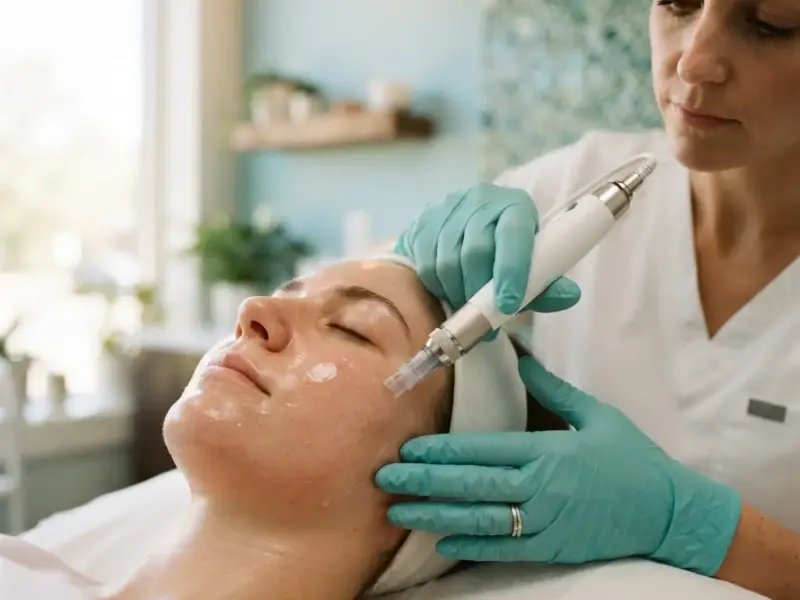
Microneedling
From $347 / sessionEntry-level microneedling with a hyaluronic acid serum for texture, pores, fine lines, and dull skin.
Learn more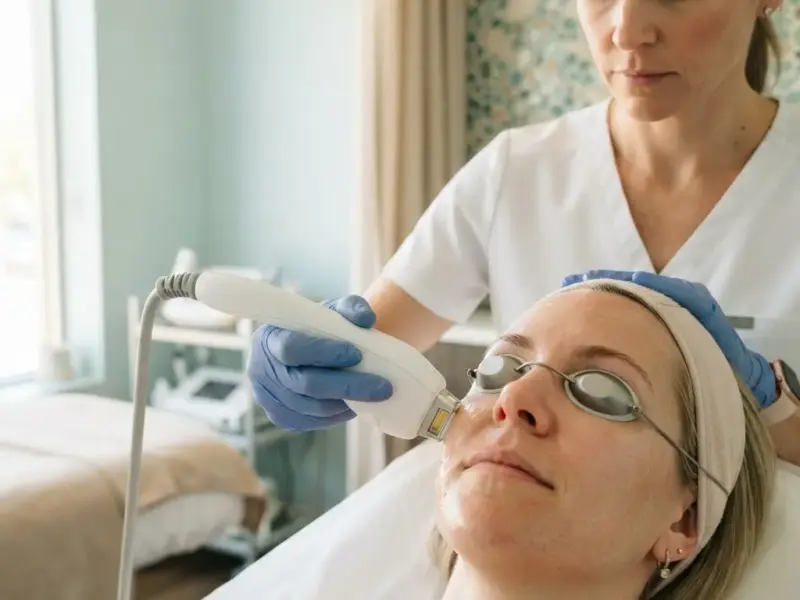
IPL photofacial
From $350 / sessionFiltered light that clears sun spots, redness, and small facial veins on lighter skin.
Learn more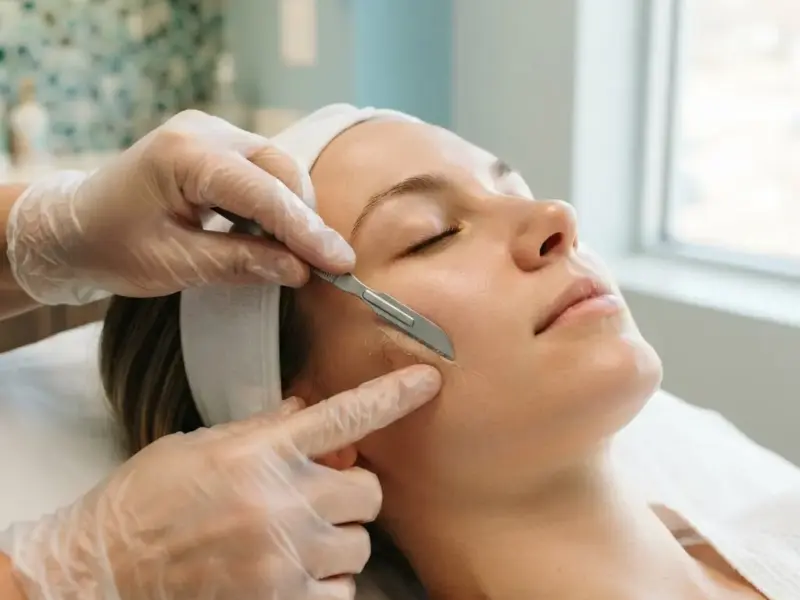
Dermaplaning
From $150 / visitA 30-minute blade exfoliation that removes dead skin and peach fuzz for a smoother surface, no downtime.
Learn more
Start with a consult
Tell us what you’d like to work on. We’ll assess your skin and goals, walk you through your Chemical peels options, and give you a clear plan and price before anything begins.
Afterpay and Klarna available at checkout for eligible treatments.