
Priorities
Acne scarring and texture
Pitted or raised scars and uneven texture left behind after breakouts.
Acne scarring is the uneven texture that can remain long after breakouts have cleared: shallow, wavy depressions across the cheeks, small pits along the temples, and a surface that foundation settles into rather than smooths over. Creams and serums rarely make a meaningful difference.
That’s because scars are structural. Improving them means rebuilding collagen beneath the surface, and we offer two treatments for that here in Arlington Heights.
What we'd want you to know
Ice-pick scars respond less than rolling scars
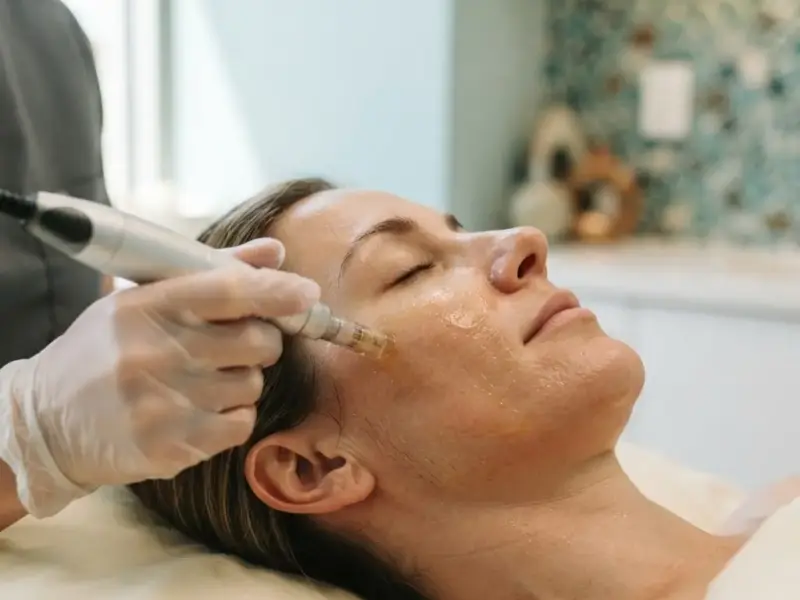
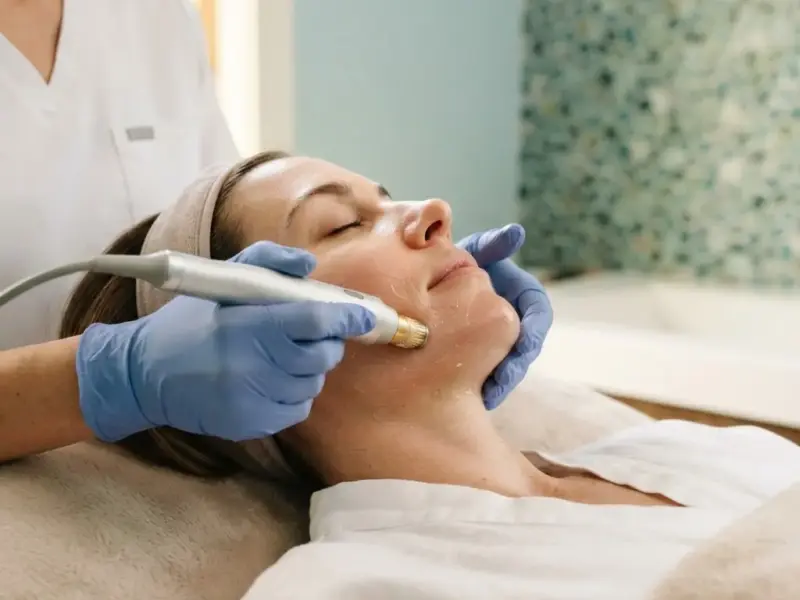
For shallow, rolling scars, especially on medium to dark skin, we usually start with microneedling with PRP. Our medical esthetician needles the skin and works your own platelets into the channels. Plan on three or four sessions about a month apart, or up to six for deep scarring, with a day or two of redness after each.
If your scars are deeper and boxcar-shaped, and the skin around them has loosened, Morpheus8 adds radiofrequency heat through the needles and does more per session. The series is three sessions, and we’ll assess your result three months after the last session.
How we decide
First, we’ll stretch the skin. Rolling scars, the soft wavy kind, flatten out when the skin is pulled, and those respond best. Boxcar scars have sharp edges and also respond well. Ice-pick scars, the narrow deep pits, barely change when stretched and respond least to anything short of surgical techniques. Most people have a mix of scar types.
Microneedling with PRP is where most people start, because the evidence is solid and the risk is low. A meta-analysis of 14 controlled studies found that adding PRP to microneedling roughly tripled the odds of a better than 50 percent improvement on the Goodman scale, with no added redness or swelling, per Frontiers in Medicine. Because there’s no heat involved, it’s safe across skin tones.
Morpheus8 is the next step up. A randomized split-face trial found that radiofrequency microneedling gave comparable acne-scar improvement to fractional CO2 laser after three sessions, with shorter-lasting redness and fewer pigment problems, per the trial. It costs more and has more downtime, so we reserve it for deeper scarring. Between sessions, a VI Peel can help with any leftover brown marks. Individual results vary.
Your questions, answered
How many microneedling sessions for acne scars?
Usually three to six, four weeks apart. The trials used that pattern, and patient reports say scar changes don’t show until at least the third session. We’d suggest planning the series over fall and winter, when sun exposure is lower, and we’ll assess the result three months after the last one.
Microneedling with PRP or Morpheus8 first?
We usually suggest microneedling with PRP first, unless your scars are deep and the skin has loosened, or you’ve already done a needling series and plateaued. Morpheus8 does more, but it also costs more and has more downtime. Our Morpheus8 vs microneedling guide compares the two in more detail.
Can I go to work the next day?
After microneedling with PRP, you’ll be red for 24 to 48 hours, so most people return to work two days after treatment. Your provider will tell you when to wash the PRP off. After Morpheus8, most people allow two or three days before an important meeting or event. Either way, plan on sunscreen. Skip makeup for 24 hours after microneedling with PRP, and until the surface has closed after Morpheus8.
Related treatments
From the clinic
Compare and decide · 6 min read
Morpheus8 vs microneedling: which one you actually need
Many people who ask about Morpheus8 are better suited to microneedling with PRP. The choice usually comes down to your main concern. Loose skin (jowls, neck,…
Compare and decide · 6 min read
PRP vs PRF for hair: does the upgrade matter?
PRF is PRP spun slower, with no anticoagulant, so it sets into a soft gel that releases growth factors more slowly. For hair, we use PRP…