
Thicker-looking hair, from your own blood
PRP hair restoration uses your own platelet-rich plasma, injected into thinning areas of the scalp, to help men and women whose hair is getting finer at the crown, the temples, or the part, where the follicles are still alive. A course is three to four visits, four to six weeks apart, then one every four to six months.
$899
per session
At a glance
PRP hair restoration- Appointment
- 45 to 60 minutes, blood draw included
- Downtime
- Tender scalp for a day, no washing until the next day
- First results
- Less shedding by month 2 or 3
- Full results
- Density judged at month 6
- Sessions
- 3 to 4, then maintenance every 4 to 6 months
- Cost
- From $899. About $225 per payment across 4
What to expect
What the appointment is like
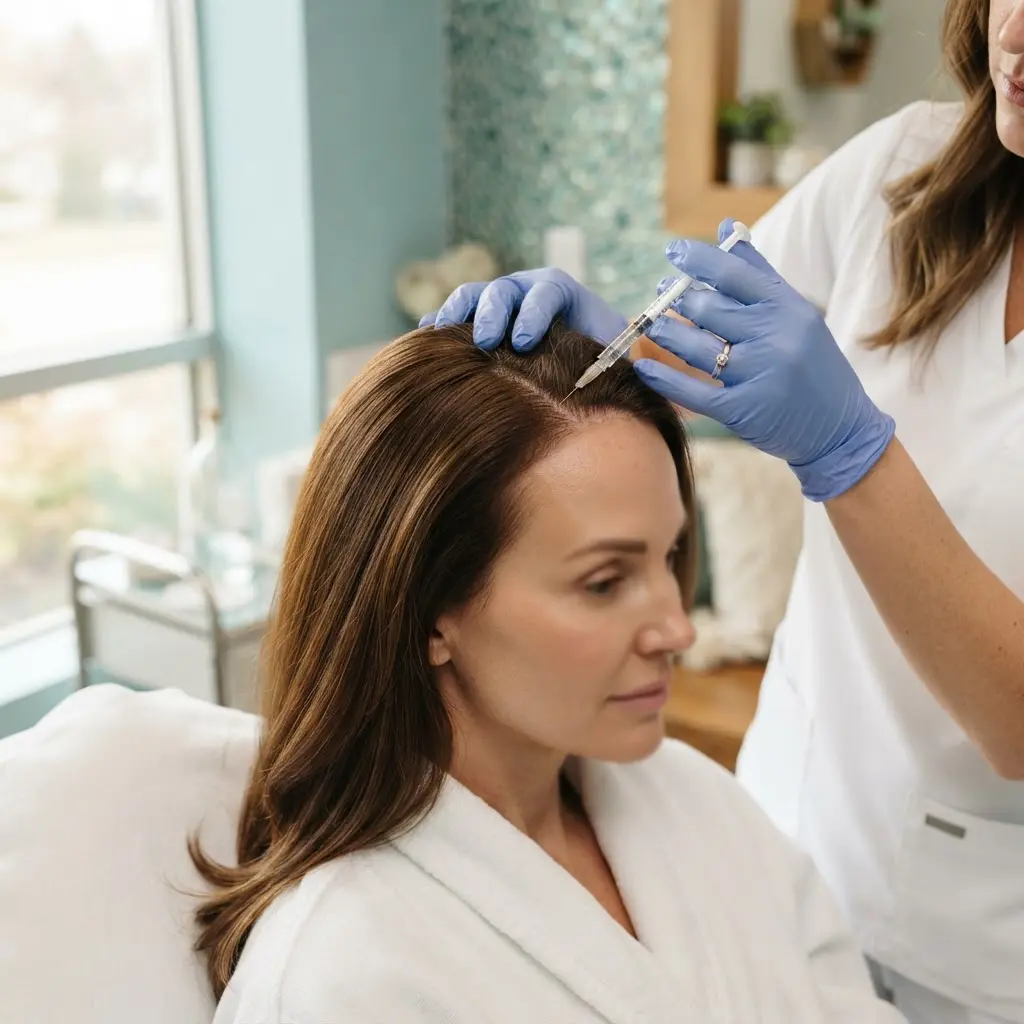
Plan on about 45 to 60 minutes. The blood draw is just a few tubes from your arm. The spin takes 10 to 15 minutes, and we numb your scalp during that time. The injections take 15 to 20 minutes. You’ll feel pressure and a sting with each one, and you can wear a cap home.
Consult
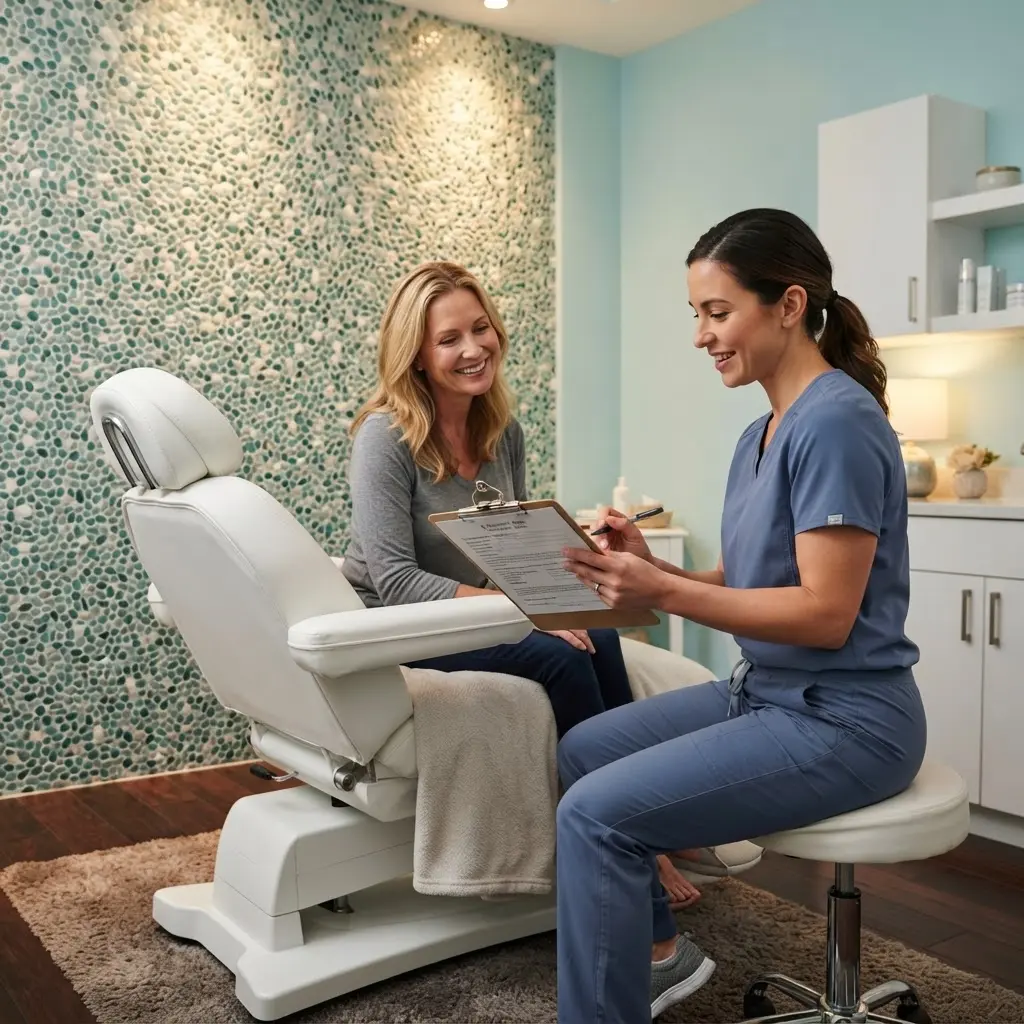
We’ll look at your scalp under good light to check that follicles are still there, ask about family history and medications, and map out a plan. You’ll leave with a written plan.
Blood draw and spin
A few tubes from your arm, then 10 to 15 minutes in the centrifuge while topical numbing goes on your scalp.
Injections
Fine-needle injections across the thinning area, 15 to 20 minutes. You’ll feel pressure and a sting with each one. Cold air or vibration can help.
Before you leave
Any pinpoint bleeding has stopped before you stand up. You’ll leave with written aftercare and your next visit booked four to six weeks out. A cap is fine to wear home.
Results
A predictable timeline
Shedding slows first, usually by the second or third month. Density changes were most commonly reported after the third month in the reviewed trials, and patient reports say to allow four months to see a difference. We suggest judging your result at six months, in the same light, with the same phone, from the same angle.
Visit 1
Draw and inject
Blood draw, spin, and injections. Your scalp may be tender for a day.
Weeks 4 to 12
Visits 2 to 4
Sessions continue four to six weeks apart, with a PRF add-on if recommended.
Months 2 to 3
Shedding slows
Shedding slows as the growth phase lengthens.
Month 6+
Judge, then maintain
Judge density with a photo in the same light as your starting photo. One maintenance visit every 4 to 6 months holds the result.
What it costs
Clear pricing, planned by the visit
Your cost depends on how many sessions are in the first-year plan (typically four to six, counting maintenance), whether PRF is added, how much of the scalp is treated, whether the package includes maintenance boosters, and whether take-home products are bundled. One session on its own rarely shows a visible difference, so we don’t offer it as a standalone.
- How many sessions are in the first-year plan
- Whether PRF is added
- How much of the scalp is treated
- Whether maintenance boosters or products are bundled
Series of three to start
PRP hair restoration
$899
per session
- Series of 3
- $2,697 to start
- Maintenance
- Once or twice a year
- Consultation
- $50
- With Afterpay / Klarna
- ~$225 × 4 payments
We honor existing vouchers, usually one session, while the course needs three or four. Insurance doesn’t cover PRP for hair because it’s elective.
Book your PRP hair restoration appointmentSimilar purpose, different options
PRP hair restoration or something else?
Here are three comparisons that come up often, including two options we don’t provide ourselves.
| PRP alone | PRP with PRF add-on | Minoxidil or finasteride | |
|---|---|---|---|
| What it is | Your platelets, injected | Your platelets plus a slow-release fibrin gel | FDA-approved drugs from your doctor |
| Offered here | Yes | Yes, when recommended | No, we don't prescribe |
| Evidence | 27 controlled trials, low quality | Five small studies, early | Decades of trials |
| Blocks the hormone driver | No | No | Finasteride does |
| Best used | With medication | With medication | Alone or with PRP |
What it is
- PRP alone
- Your platelets, injected
- PRP with PRF add-on
- Your platelets plus a slow-release fibrin gel
- Minoxidil or finasteride
- FDA-approved drugs from your doctor
Offered here
- PRP alone
- Yes
- PRP with PRF add-on
- Yes, when recommended
- Minoxidil or finasteride
- No, we don't prescribe
Evidence
- PRP alone
- 27 controlled trials, low quality
- PRP with PRF add-on
- Five small studies, early
- Minoxidil or finasteride
- Decades of trials
Blocks the hormone driver
- PRP alone
- No
- PRP with PRF add-on
- No
- Minoxidil or finasteride
- Finasteride does
Best used
- PRP alone
- With medication
- PRP with PRF add-on
- With medication
- Minoxidil or finasteride
- Alone or with PRP
PRP with the PRF add-on is the same visit with a second, slower-release preparation. Whether it’s worth adding depends on your pattern and what your nurse practitioner sees, and the evidence for adding it is still early. PRF is also what we inject under the eyes, where its gel texture is the point.
Prescription options we don’t provide. Minoxidil and finasteride are the only FDA-approved treatments for pattern hair loss, and PRP works best on top of them. You’d get them through your doctor, and we’ll recommend that conversation when it’s appropriate.
A hair transplant moves living follicles into bald skin, which PRP can’t do. When loss is advanced, we’ll make that referral.
You can also add microneedling with PRP for the face using the same blood draw. We also offer Botox for frown lines.
Is it right for me?
Who it’s for, and who it isn’t
You’re likely a good candidate if you have early to moderate thinning, follicles still visible on the scalp, and you’re already on minoxidil or finasteride from a doctor, or open to talking with one about it. That goes for men and women alike, the earlier the thinning, the more there is to work with.
A good fit for
- Early to moderate thinning at the crown, temples, or part
- Follicles still visible on the scalp
- Men and women already on, or open to, minoxidil or finasteride
- Support for the native hair around a transplant
Not recommended
- A completely bald, shiny area with no follicles left
- Shedding from thyroid, low iron, or a medication (treat the cause first)
- A platelet or clotting disorder, or blood thinners that can’t be paused
- A scarring alopecia, or during pregnancy
PRP isn’t a cure, pattern hair loss keeps going underneath, so results fade without maintenance visits. It works best on top of minoxidil or finasteride, which we don’t prescribe. No PRP product is FDA-approved for hair loss.
In detail
What it treats
Male pattern thinning at the crown and temples. The typical pattern is a widening crown and a hairline receding at the temples. This is where most of our PRP hair clients start, and where the published trials were done.
Female pattern thinning at the part. A part that has gradually widened, a thinner ponytail, and more visible scalp. It’s the same follicle process as in men with a different pattern, and PRP treats it the same way.
Thinning after weight change, illness, or medication. Here, the first question we’ll ask is whether the cause has passed. PRP helps miniaturized follicles from pattern thinning. It isn’t a substitute for addressing a thyroid problem, low iron, or a medication side effect, so if your history points that way, we’ll ask you to see your doctor for bloodwork before we treat.
Postpartum shedding. It’s common, and it’s often a different process from pattern loss. We’ll examine your scalp before recommending a course, and in some cases waiting is the better choice.
Hair transplant support. PRP is used around transplants to support the surrounding native hair. We don’t do transplants ourselves, but we’ll refer you for one when the loss is past what platelets can help.
What it can’t do: a bald, shiny scalp has no follicles left to stimulate, so PRP won’t regrow hair there. It also doesn’t treat scarring alopecias or cure alopecia areata.
How it works
We draw your blood, spin it in a centrifuge so the platelet-rich layer separates, and inject that layer across the thinning area with a fine needle. Platelets carry growth factors that act on the stem cells in the follicle, prolong the growth phase, and stimulate new blood vessels around the follicle, per Stevens and Khetarpal in the International Journal of Women’s Dermatology. What PRP does not do is block the hormone that drives pattern loss, which is why the same review calls it a co-adjuvant, something that works alongside minoxidil or finasteride rather than replacing them.
A 2023 systematic review of 27 controlled trials and 1,117 subjects found PRP increased hair density by an average of 25.6 hairs per square centimeter compared with saline, “but the evidence was rated as low quality,” per Cruciani and colleagues in Blood Transfusion. A meta-analysis of nine randomized trials found higher density at three and six months versus placebo, but no significant difference in hair count or hair diameter, per Zhang and colleagues. And PRP plus minoxidil beat either one alone in a six-study meta-analysis, per Xiao and colleagues. Overall, PRP helps, the studies are small and uneven, and it works best alongside medication.
No PRP or PRF product is FDA-approved for hair loss. The only FDA-approved treatments for pattern hair loss are oral finasteride and topical minoxidil, which we don’t prescribe. The centrifuge kit is FDA-cleared to prepare platelet concentrate, and injecting it into the scalp is off-label use of your own blood. You’re welcome to ask us which kit we use.
You may also hear about PRF as an add-on. Platelet-rich fibrin is the same blood spun slower without an anticoagulant, so it sets into a soft gel that releases growth factors over days instead of hours. A case series of 11 women with pattern loss showed improved hair count and thickness after three monthly sessions, and a 2024 review found five studies with a significant effect but “no consensus regarding the preparation of PRF,” per Shrestha and colleagues. PRF is a slower-release option some clients add, the head-to-head evidence is early, and your nurse practitioner decides case by case when to add it. We compare the two in more detail in PRP vs PRF for hair.
Afterwards
Downtime and aftercare
Day 0: your scalp will feel tender and tight, with mild swelling, and some people get a headache. Patient reports on RealSelf describe minimal downtime, which matches our experience: most people return to their day right away. Wait until the next day to wash your hair.
Days 1 to 3: soreness fades, and some people get small bruises at the injection sites. Avoid hair dye or harsh products for a few days, and keep sweat and swimming off the scalp for 24 to 48 hours. If you exercise most days, a late-week appointment can make this easier to plan around.
If you’re on minoxidil or finasteride, stay on it, because PRP adds to medication rather than replacing it. It’s also best to skip ibuprofen and other NSAIDs around the treatment if your doctor agrees, since they may blunt how the platelets work.
Why here
Why Arlington Heights
We offer PRP hair restoration for men and women at our Arlington Heights office. You’ll park in the free lot outside the single-story brown brick building at 3375 N Arlington Heights Rd, Suite C, just south of Dundee Road, and spend under an hour in a treatment room. The building sits in a quiet office plaza. We’re close to Buffalo Grove, Palatine, Wheeling, and Schaumburg, and we’ve written a visit-by-visit guide for men in PRP hair restoration for Arlington Heights men.
A course can start in any season. There’s no sun restriction, only the need to keep sweat and chlorine off the scalp for a day or two, so a course that starts in June works as well as one that starts in January. Choose an appointment day when skipping a hair wash and a workout fits easily into your week. Every visit is with our nurse practitioner, who also performs the injectables here.
Questions
Common questions, answered
For pattern thinning where follicles are still alive, the evidence says it helps: a systematic review of 27 controlled trials found an average gain of about 25.6 hairs per square centimeter versus saline, though the authors rated the evidence low quality. It works best alongside minoxidil or finasteride. It doesn’t regrow hair on a fully bald area, and we’ll assess that at your consult.
PRP hair treatment uses a draw of your own blood, spun in a centrifuge to concentrate the platelets, then injected across the thinning areas of the scalp. The platelets’ growth factors are meant to prolong the follicle’s growth phase and improve blood supply. A course is three to four sessions, four to six weeks apart, then maintenance every four to six months.
It depends on the number of sessions in your first-year plan, whether PRF is added, how much scalp is treated, and whether maintenance is bundled. We’ll go over the full cost at your consult. At Skinovatio Arlington Heights, every treatment starts with a consultation and a written plan, the small non-refundable deposit comes off your treatment, and Affirm, Afterpay, and Klarna are available for a course.
No. PRP for hair loss is elective and not FDA-approved, so insurance plans don’t cover it. Financing through Affirm, Afterpay, or Klarna is how most people spread the cost of a course.
Shedding slows first, usually by month two or three. Density changes were most commonly reported after the third month in the reviewed trials, and patient reports say to allow four months. We recommend judging it at six months with a photo taken in the same light as your starting photo.
Moderately, and not equally for everyone. Meta-analyses find higher hair density at three and six months versus placebo, but not a significant change in hair count or diameter, and the studies are small with varied methods. Younger patients, women, and people also using minoxidil tend to do better. Individual results vary.
Yes, for female pattern thinning at the part, and the network analysis found female patients responded at least as well as men. It isn’t the right treatment for postpartum shedding that will settle on its own, or for loss caused by thyroid, iron, or medication, where the cause needs treating first, and we’ll help identify which applies.
The blood draw is a standard arm draw. Each injection feels like pressure and a sting, and we use topical numbing and cold air or vibration to reduce discomfort. The scalp is tender for about a day and some people get a headache. Patient reports call it mild.
Yes. Wait until the next day, then wash gently with your usual shampoo. It’s best to skip dye and harsh styling products for a few days, and keep heavy sweating and swimming off the scalp for 24 to 48 hours. You can wear a cap out of the office.
Yes, we honor existing vouchers at Skinovatio Arlington Heights. A voucher usually covers one session, and the course is three to four sessions, so at your first visit we’ll lay out the full plan and the financing options for the rest.
There’s nothing to undo. If you aren’t seeing a response after a full course, you can stop, and we’ll let you know if we don’t think continuing is worthwhile.
Keep exploring
Related treatments
Related priorities
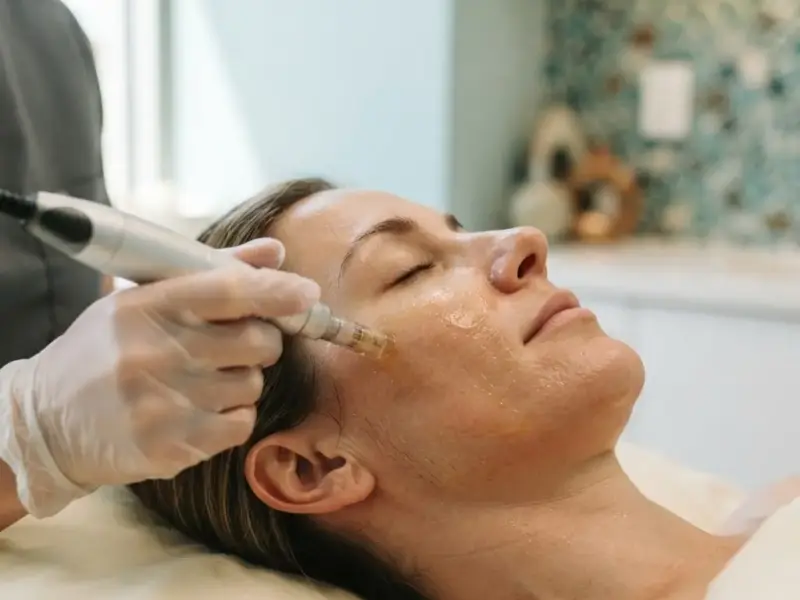
Microneedling with PRP
$499 / sessionMicroneedling paired with your own platelet-rich plasma for acne scars, texture, pores, and tone.
Learn more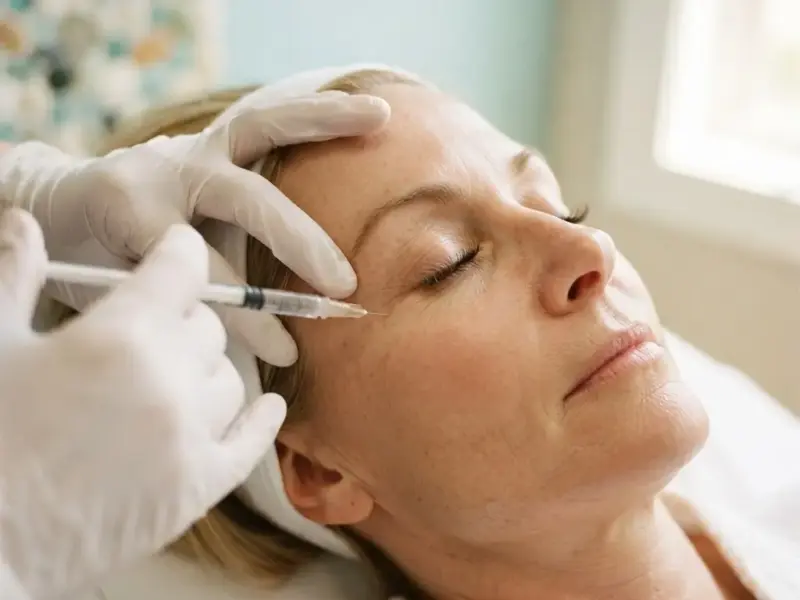
Under-eye PRF
$550 / sessionYour own platelet-rich fibrin, injected under the eyes over three sessions for crepey skin, dark circles, and mild hollowing.
Learn more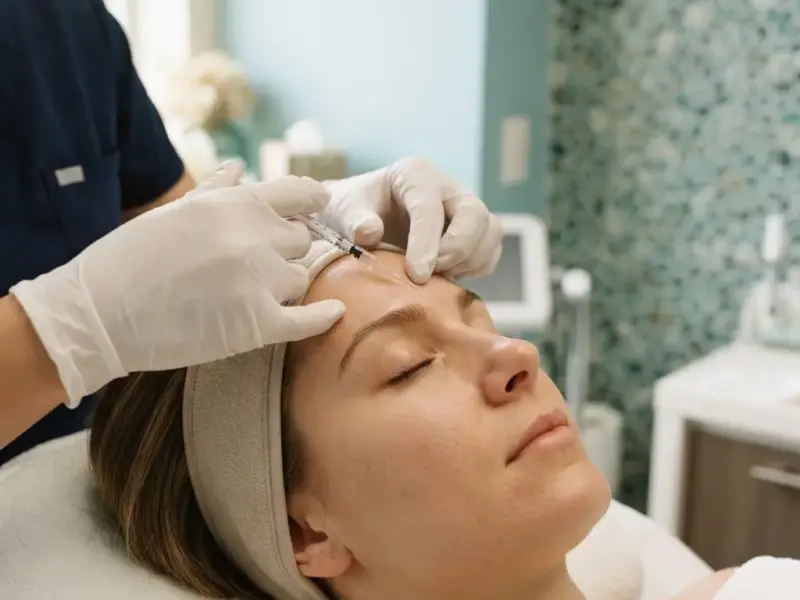
Botox
$14 / unitBotox, Dysport, Xeomin, Jeuveau, and Letybo to soften lines made by movement, from $14 a unit.
Learn more
Start with a consult
Tell us what you’d like to work on. We’ll assess your skin and goals, walk you through your PRP hair restoration options, and give you a clear plan and price before anything begins.
Afterpay and Klarna available at checkout for eligible treatments.