
A modest lift, without surgery
A PDO thread lift is a good fit for adults with mild to moderate sagging who aren’t ready for surgery: dissolvable sutures placed under the skin to hold the cheeks, jawline, or neck a little higher, and to build collagen where they sit. The result is more modest than the “non-surgical facelift” name suggests.
$1,000
per session
At a glance
PDO thread lift- Appointment
- 45 to 90 minutes with local anesthetic
- Downtime
- Sore for a few days, swelling and bruising up to a week
- First results
- A modest lift on the day, clear once swelling settles
- Full results
- Collagen effect at 2 to 3 months
- Sessions
- 1, repeated at about 12 months if you want it
- Cost
- From $1,000. About $250 per payment across 4
What to expect
What the appointment is like
Plan on forty-five to ninety minutes. You’ll be awake, with local anesthetic injected at each entry point and along the path of each thread. You’ll feel pressure and a tugging, pulling sensation as the barbs engage, then a tightness that lasts a few days. There’s no sedation, so you can drive yourself home.
Consult
We’ll do the fingertip test in the mirror, assess your skin thickness, and recommend the right option: threads, Morpheus8, filler, or a surgical opinion.
Marking and numbing
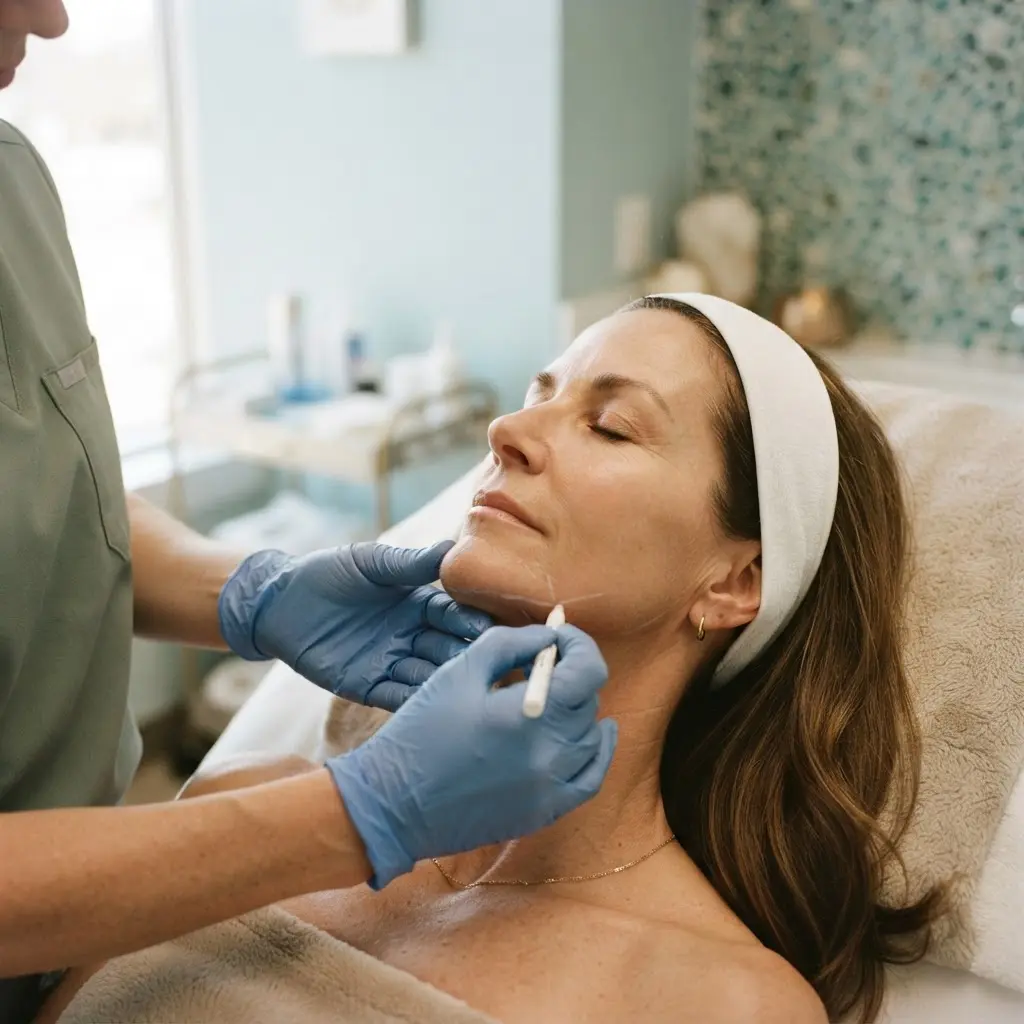
We take photos, then draw the thread paths on your skin and place local anesthetic at each entry point and along each line.
Placement
Each thread is fed in through a cannula or needle, set, and trimmed at the entry point. You’ll feel tugging, not sharp pain. We check both sides in the mirror.
Before you leave
We’ll place small dressings at the entry points, give you a cold pack and written aftercare, and book your check for about two weeks out.
Results
A predictable timeline
The lift is there the day the threads go in, then swelling obscures it for about a week. What you see at week two is close to the true lift. The collagen effect builds over the next two to three months, which is when your skin feels firmest. Most people see the lift hold for several months to about a year.
Day 0
Lifted and tight
Lifted, swollen, and tight, with entry-point marks and maybe some puckering.
Days 1 to 7
Swelling settles
Swelling and bruising settle. Most people are back to desk work from day one.
Week 2
True lift shows
Puckering is gone and the true lift shows. Time for your follow-up visit.
Months 2 to 12
Collagen peaks, then softens
The collagen effect peaks at 2 to 3 months. The lift softens by 6 to 12 months, while texture holds longer.
What it costs
Clear pricing, planned by the visit
Your cost depends on how many threads, which type (barbed lifting threads cost more than smooth ones), how many areas (jawline, midface, neck, brow), the local anesthesia, and whether we add filler or Botox in the same visit. A jawline is one plan, and jawline plus midface is another.
- How many threads
- Barbed lifting threads versus smooth
- How many areas
- Whether filler or Botox is added the same visit
PDO Mint threads
Thread lift
$1,000
per session
- Typical plan
- Lower face & jawline, one session
- Results last
- 12 to 18 months
- Consultation
- $50
- With Afterpay / Klarna
- ~$250 × 4 payments
Lifting threads are a single visit. A small non-refundable deposit holds your booking and comes off your treatment.
Book your PDO thread lift appointmentSimilar purpose, different options
Threads or something else?
Two treatments on our menu are often compared to threads, and surgery, which we don’t offer, is the alternative for heavier sagging.
| PDO thread lift | Morpheus8 | Dermal filler | Surgical facelift (not offered here) | |
|---|---|---|---|---|
| What it does | Repositions tissue a little higher | Contracts and remodels the skin with RF heat | Replaces lost volume | Repositions tissue and removes excess skin |
| Best for | Early jowls, mild midface sag | Laxity, texture, crepey skin | Deflation that reads as sagging | Heavy jowls, a loose neck |
| When you see it | Day one, true at 2 weeks | Builds over about 3 months | Right away | After weeks of recovery |
| Sessions | 1 | 1 to 3, 4 to 8 weeks apart | 1 | 1 |
| Lasts | Months to about a year, texture longer | Not permanent, yearly maintenance is common | 6 to 18 months by product | Years |
| Downtime | Sore days, swelling up to a week | Redness a few days | Swelling up to 2 weeks | Weeks |
What it does
- PDO thread lift
- Repositions tissue a little higher
- Morpheus8
- Contracts and remodels the skin with RF heat
- Dermal filler
- Replaces lost volume
- Surgical facelift (not offered here)
- Repositions tissue and removes excess skin
Best for
- PDO thread lift
- Early jowls, mild midface sag
- Morpheus8
- Laxity, texture, crepey skin
- Dermal filler
- Deflation that reads as sagging
- Surgical facelift (not offered here)
- Heavy jowls, a loose neck
When you see it
- PDO thread lift
- Day one, true at 2 weeks
- Morpheus8
- Builds over about 3 months
- Dermal filler
- Right away
- Surgical facelift (not offered here)
- After weeks of recovery
Sessions
- PDO thread lift
- 1
- Morpheus8
- 1 to 3, 4 to 8 weeks apart
- Dermal filler
- 1
- Surgical facelift (not offered here)
- 1
Lasts
- PDO thread lift
- Months to about a year, texture longer
- Morpheus8
- Not permanent, yearly maintenance is common
- Dermal filler
- 6 to 18 months by product
- Surgical facelift (not offered here)
- Years
Downtime
- PDO thread lift
- Sore days, swelling up to a week
- Morpheus8
- Redness a few days
- Dermal filler
- Swelling up to 2 weeks
- Surgical facelift (not offered here)
- Weeks
Morpheus8 tightens without putting anything under the skin. It’s radiofrequency microneedling, usually a series of three sessions four to eight weeks apart, with a result that builds over about three months. There’s no lift vector, so it won’t move a jowl, but it firms the skin over one. Many people like to alternate: threads for position, Morpheus8 between rounds for the skin.
Dermal fillers are for sag that’s really deflation. A flattened cheek makes the fold below it look like a jowl, and restoring cheek volume can correct that without a thread. Threads and filler are often combined, and one small study of 11 patients measured contour changes at 24 months from the pair, per Wan and colleagues in the Journal of Cosmetic Dermatology.
Is it right for me?
Who it’s for, and who it isn’t
The best candidates are 35 to 55, with mild to moderate sagging and good skin thickness. People in their 60s can have threads too, though older patients had higher rates of dimpling and infection in one meta-analysis.
A good fit for
- Mild to moderate sagging, not ready for surgery
- Early jowls or a softening jawline
- Good skin thickness
- Anyone wanting position plus a collagen effect
Not recommended
- Heavy jowls or very loose neck skin (surgery fits better)
- Sag that is really deflation (filler fits better)
- An active infection near the site
- During pregnancy or breastfeeding
Threads reposition tissue mechanically; Morpheus8 firms the skin over a jowl without moving it. Many people alternate, threads for position, Morpheus8 between rounds for the skin.
In detail
What it treats
A simple fingertip test gives a good sense of what threads can do. Place two fingertips in front of your ear and lightly lift your cheek up and back. If that small shift is the change you’re after, threads can deliver about that much. If it takes a firm push to get the look you want, that’s closer to a surgical result.
This is the most common treatment area. Barbed threads run from near the ear down along the jaw, catch the soft tissue that has slid into a jowl, and hold it in a higher position. The jawline looks cleaner and the shadow at the corner of the mouth softens. This works best on early jowling, because a heavy jowl can pull the thread loose.
The same barbed threads placed higher lift a midface that has started to drop, which softens the nasolabial fold from above instead of filling it. A subtle brow lift is possible with the same approach, though no thread is cleared for the brow by name.
Mild laxity along the jaw-to-neck line responds, but a neck with bands, hanging skin, or a lot of fat doesn’t. The American Society of Plastic Surgeons notes that a neck lift “can only be performed surgically” and “nonsurgical rejuvenation treatments cannot achieve the same results,” per the ASPS neck lift page.
Smooth and twist threads don’t lift. They’re placed in a mesh under crepey skin on the cheeks or neck to stimulate collagen, and they’re sometimes repeated in two or three sessions. The goal is firmness and texture rather than position.
How it works
PDO is polydioxanone, an absorbable surgical suture material. For a lift, a barbed (cog) thread is fed under the skin through a cannula or needle. Its barbs anchor in the fatty layer and hold the cheek or jowl in a slightly higher position from the day it goes in. Over the following months the thread dissolves, and the tissue around it forms a fibrous, collagen-rich track that gives a modest, longer-lasting firmness. Smooth (mono) and twist threads skip the barbs and do only the collagen part. The brand on the Arlington Heights booking menu is MINT.
On paper, threads are FDA-cleared as sutures, Class II devices. One clearance describes the barbed thread as being for face suspension to “temporarily” hold the cheek tissue in a higher position, per the FDA’s MINT clearance. The key word is temporarily. No thread is cleared to lift the neck, brow, or jowls by name, and “non-surgical facelift” is a marketing phrase, not a cleared use.
The evidence matches that wording. A 2025 systematic review of 12 studies and 818 patients found scores “improved in all cases immediately after the procedure,” with mild complications, but “the longest follow-up assessments were at 2 years” and “long-term efficacy data are lacking,” per Riopelle and colleagues in Dermatologic Surgery. A 2021 meta-analysis of 26 studies found satisfaction fell from 98 percent right after the procedure to 88 percent later, and advised telling patients “the rejuvenation effect of FTL may not maintain in the long-term,” per Niu and colleagues in Aesthetic Plastic Surgery. In practice, that means a visible lift on the day, a collagen effect over months, and a gradual fade.
Afterwards
Downtime and aftercare
On day 0, you’ll be swollen and tight, with small marks at the entry points. Some puckering or dimpling of the skin along a thread is expected at first, and it “should resolve within a week,” per RealSelf’s patient-reported ranges. Days 1 to 7 bring “mild swelling and bruising for up to a week,” and “most people return to work as soon as the day after,” per the same source. Plan on some soreness in the first few days, and you may be able to feel the threads under the skin for a few weeks.
First-week aftercare focuses on keeping the barbs from pulling loose: sleep on your back with your head raised, avoid opening your mouth wide, chewing gum, or eating hard foods, and hold off on hard exercise. For two to four weeks, it’s best to avoid rubbing, facials, or face massage. Please skip dental work for two weeks, and take antibiotics if we prescribe them. Makeup can go on once the entry points have closed.
Why here
Why Arlington Heights
Many thread lift consults at our Arlington Heights office involve weighing threads against surgery. For some people, threads are enough, and for others, a surgical consult is the better route.
There’s no sun restriction after threads, so any season works. The main timing consideration is swelling and bruising, so it’s best to choose a week without important events or photos. There’s no sedation, so you can drive yourself home from the free lot outside the door. The office is in Suite C of the brown brick building on the east side of Arlington Heights Road, a block and a half south of Buffalo Grove High School. Our nurse practitioner places every thread. You’ll find directions and a map on the page for our Arlington Heights office.
Questions
Common questions, answered
PDO threads are dissolvable polydioxanone sutures placed under the skin with a cannula or needle. Barbed (cog) threads grip tissue and hold it slightly higher, which is the “lift.” Smooth and twist threads sit in a mesh to stimulate collagen without lifting. All dissolve over months and leave a collagen track behind. They’re FDA-cleared as sutures, not for any named lift.
It depends on how many threads, which type (barbed lifting threads cost more than smooth ones), how many areas, and whether filler or Botox is added in the same visit. A jawline alone is a smaller plan than jawline plus midface plus neck. Every treatment starts with a consultation and a written plan, so you’ll know before you commit.
We’ll set the number at your consult, in the mirror, based on how far the tissue has dropped, the length of the jawline, and your skin thickness. More threads don’t mean more lift past a point, because heavy tissue pulls barbs loose. Both sides are usually done in the same visit so the jawline matches.
Yes, modestly and for a while. A 2025 systematic review of 12 studies found scores improved in all cases right after the procedure, with mild complications, but said long-term data are lacking. A 2021 meta-analysis found satisfaction fell from 98 percent immediately to 88 percent later. You can expect a subtle lift that holds for months to about a year, plus firmer skin that lasts longer.
Serious problems are rare. Across 26 studies the pooled rates were swelling 35 percent, dimpling 10 percent, numbness or odd sensation 6 percent, a visible or feelable thread 4 percent, infection 2 percent, and thread extrusion 2 percent. Older patients had more dimpling and infection. Nerve or salivary duct injury is rare. Threads can leave scarring that complicates a later facelift, so please mention any surgical plans at your consult.
A PDO thread lift places barbed dissolvable sutures under the skin of the cheeks, jawline, or neck to hold sagging tissue a little higher and build collagen along each thread. It takes 45 to 90 minutes under local anesthetic, with no sedation. The lift shows on the day, settles by two weeks, and the collagen effect peaks at two to three months. It’s the treatment marketed as a “non-surgical facelift,” though the result is much smaller than a facelift’s.
A facelift repositions tissue and removes excess skin, lasts years, and takes weeks of recovery. A thread lift moves tissue a little, lasts months to about a year, and has a week of swelling. If you have early jowls and like a subtle change, threads are a good fit. For heavy jowls or a neck that hangs, a surgeon is the better choice. We don’t perform facelifts.
Threads move tissue. Filler replaces volume. If a flattened cheek is making the fold below it look like a jowl, cheek filler may fix it with nothing under the jaw. If the tissue has actually slid, a thread puts it back and filler would just add bulk. Many people get both, and a small 11-patient study measured contour changes from the pair at 24 months.
Expect to feel sore and tight for a few days, with mild swelling and bruising for up to a week and small marks at the entry points. Puckering along a thread is normal in week one and should resolve within it. Most people are back at a desk the next day. For the first week, sleep on your back, skip gum and hard foods, and avoid big expressions. For two to four weeks, it’s best to avoid facials and face massage.
Yes. Threads have no sun restriction, so the season doesn’t matter. What matters is the week after: swelling and bruising for up to seven days, no wide mouth opening, no photos you care about. We suggest booking a week without major events rather than the week before a wedding or other occasion.
The threads dissolve on their own in about six months and the lift goes with them, so time takes care of it. What we can’t undo in the meantime is where they were placed, which is why we keep a first set deliberately conservative.
Keep exploring
Related treatments
Related priorities
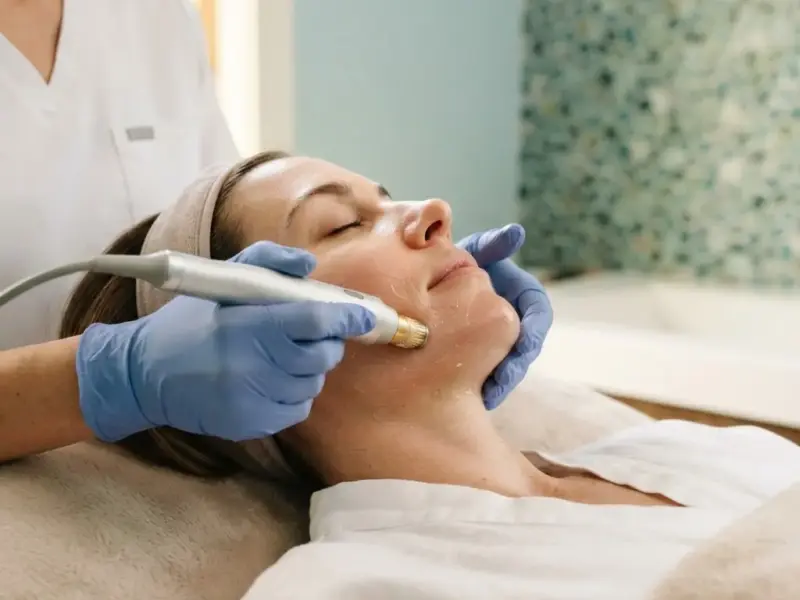
Morpheus8
From $799 / sessionRadiofrequency microneedling that firms mild to moderate jawline laxity, crepey neck skin, and acne scars.
Learn more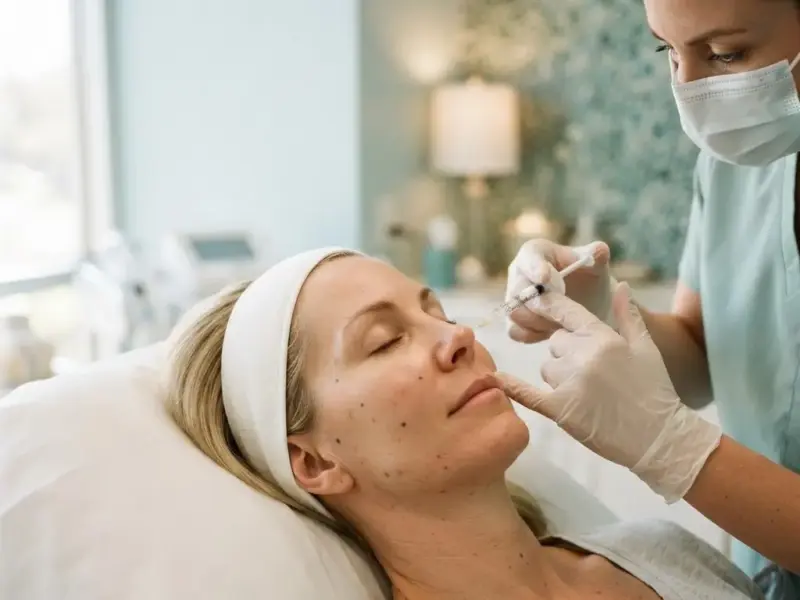
Dermal fillers
From $650 / syringeHA gels and Radiesse to restore volume and shape in the lips, cheeks, jawline, chin, and hands.
Learn more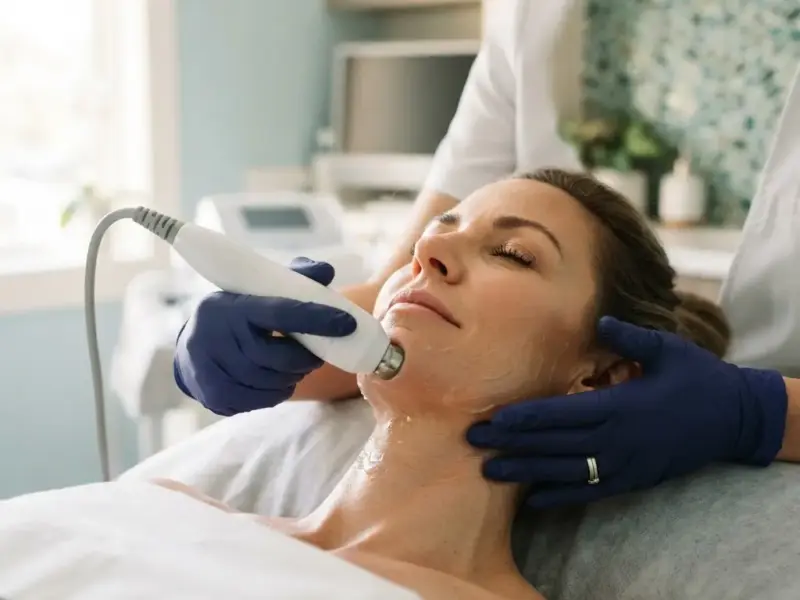
Forma skin firming
$699 / sessionNeedle-free radiofrequency that warms and gently tightens mildly loose skin, with no downtime.
Learn more
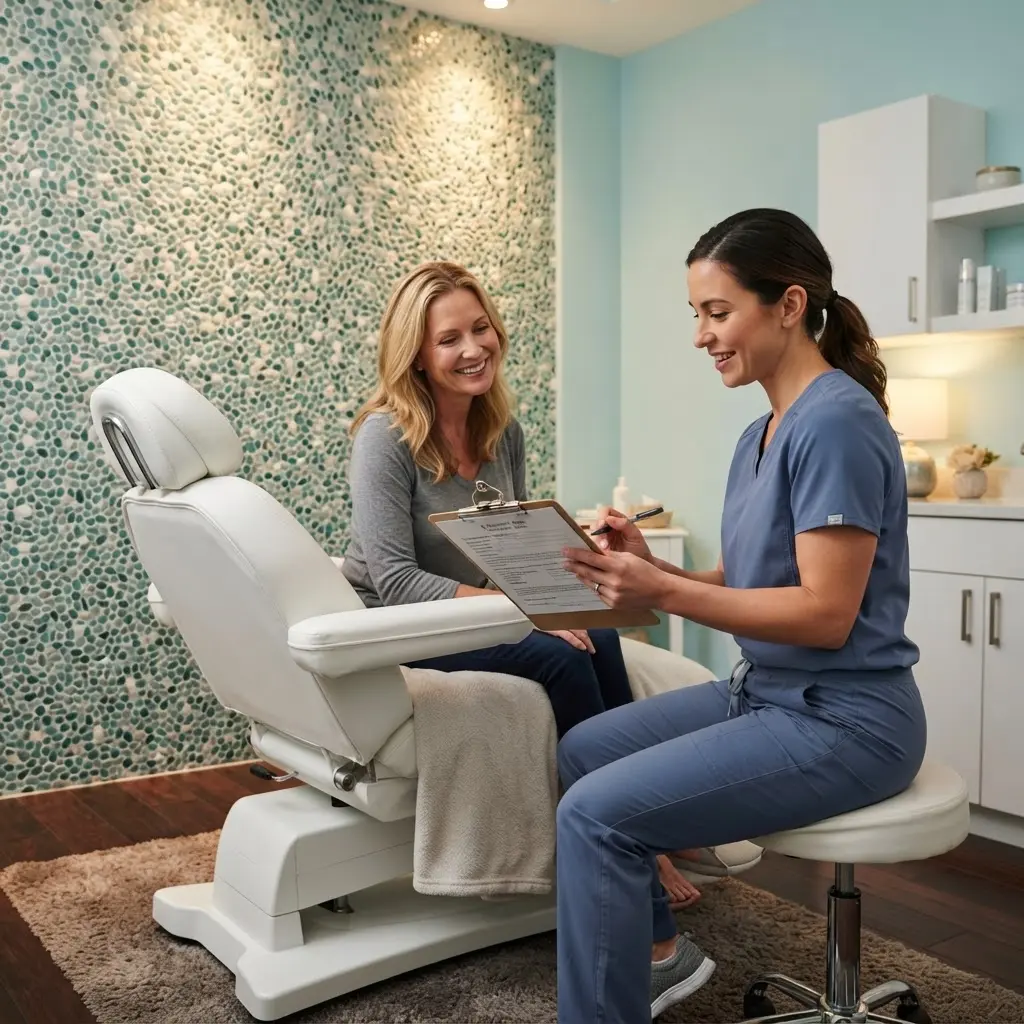
Start with a consult
Tell us what you’d like to work on. We’ll assess your skin and goals, walk you through your PDO thread lift options, and give you a clear plan and price before anything begins.
Afterpay and Klarna available at checkout for eligible treatments.