
A supervised path, not an online script
Medical weight loss with us means a once-weekly injection of semaglutide or tirzepatide, prescribed and monitored by our nurse practitioner for adults with a BMI of 30 or more, or 27 or more with a weight-related condition, who want a medically supervised program rather than an online prescription service.

$699
tirzepatide, from
At a glance
Medical weight loss- Appointment
- 30-minute consult, then short weekly or monthly check-ins
- Downtime
- None, but nausea is common early in each dose step
- First results
- Appetite change within days, weight within the first month
- Full results
- Trials ran 68 to 72 weeks, most loss in the first year
- Sessions
- Weekly injections, ongoing, with dose steps every 4 weeks or longer
- Cost
- From $699. About $175 per payment across 4
What to expect
What the appointment is like
Your first visit is a 30-minute consult with Charles, our nurse practitioner. He’ll go over your medical history, medication list, weight and BMI, and blood pressure, and screen for anything that would rule out treatment. Labs may be needed before a prescription. If you qualify, he’ll teach you to give the injection yourself at home.
Consult
We’ll review your medical history, BMI, blood pressure, and contraindication screen, and let you know whether you qualify. The consult fee is on the price card.
Labs
Any labs needed before the first prescription. If something is off, we’ll address it or refer you first.
First dose
Charles walks you through the pen or syringe, you give your first injection with him right there, and you leave with written dosing and side-effect instructions.
Check-ins
Short follow-up visits for weight, side effects, and dose decisions. Refills go through the pharmacy on our order.
Results
A predictable timeline
Many people notice their appetite change within days. The scale usually moves in the first month, then keeps moving as the dose steps up. The trials ran 68 to 72 weeks, with most of the loss in the first year and a plateau after. Weight regain after stopping is common, so a plan should include a maintenance phase rather than a stop date.
Week 1
Starting dose
Appetite drops and meals shrink. Nausea is common, so let us know how you’re feeling.
Weeks 2 to 4
Gut settles
Your gut usually settles. Most people see a first weight change on the scale.
Months 2 to 4
Dose steps up
Dose steps every four weeks or longer. Steady loss if you tolerate the increases.
Months 5 to 12
Maintenance dose
Maintenance dose reached; most of the total loss happens here. At a year we shift focus to maintenance.
What it costs
Clear pricing, planned by the visit
Your cost depends on which drug, the dose you end up on, branded versus compounded supply, and whether visits and labs are bundled with the medication. There’s no series in the med-spa sense. It’s a monthly medication cost for as long as you’re on it, so plan your budget for a year rather than a month. Insurance sometimes covers Wegovy or Zepbound.
- Which drug you’re prescribed
- The dose you end up on
- Branded versus compounded supply
- Whether visits and labs are bundled
Monthly medication
Semaglutide & tirzepatide
$699
tirzepatide, from
- Semaglutide
- $999
- Tirzepatide
- $699
- Consultation
- $50
- B12 injection
- $25
Compounded drugs aren’t FDA-approved; when we prescribe one it comes from a licensed pharmacy and we’ll explain the clinical reason. Ask at your consult exactly what the promotional price covers.
Book your Medical weight loss appointmentSimilar purpose, different options
Medical weight loss or something else?
| Semaglutide or tirzepatide | Kybella | Morpheus8 Body | |
|---|---|---|---|
| What it changes | Total body weight | Fat under the chin only | Skin quality and laxity |
| How | Weekly injection, appetite and satiety | Injected deoxycholic acid destroys fat cells | Radiofrequency through microneedles |
| Time frame | Months to a year or more | 2 to 4 sessions a month apart | Usually 3 sessions, results 3 months after the last |
| What it won't do | Choose where the weight comes from | Tighten skin or treat the body | Remove fat or replace surgery |
| Who prescribes or performs | Our nurse practitioner | Our nurse practitioner | Our medical esthetician |
What it changes
- Semaglutide or tirzepatide
- Total body weight
- Kybella
- Fat under the chin only
- Morpheus8 Body
- Skin quality and laxity
How
- Semaglutide or tirzepatide
- Weekly injection, appetite and satiety
- Kybella
- Injected deoxycholic acid destroys fat cells
- Morpheus8 Body
- Radiofrequency through microneedles
Time frame
- Semaglutide or tirzepatide
- Months to a year or more
- Kybella
- 2 to 4 sessions a month apart
- Morpheus8 Body
- Usually 3 sessions, results 3 months after the last
What it won't do
- Semaglutide or tirzepatide
- Choose where the weight comes from
- Kybella
- Tighten skin or treat the body
- Morpheus8 Body
- Remove fat or replace surgery
Who prescribes or performs
- Semaglutide or tirzepatide
- Our nurse practitioner
- Kybella
- Our nurse practitioner
- Morpheus8 Body
- Our medical esthetician
If a chin is your main concern, take a look at our Kybella page. If you’ve lost the weight and the skin on your abdomen or arms hasn’t caught up, Morpheus8 Body treats laxity, not fat. No IV vitamin blend has evidence for weight loss.
Our booking menu includes a B12 add-on. B12 injections treat a deficiency. As Mayo Clinic puts it: “There’s no solid proof that vitamin B-12 shots, also called injections, help you lose weight,” per Mayo Clinic. People eating very little for weeks on a GLP-1 are worth checking, so we offer B12 when your history or labs suggest you’re low, not as an energy shot.
Is it right for me?
Who it’s for, and who it isn’t
It’s a good fit for adults who meet the BMI criteria, have had labs, understand the side effects and the regain data, and want regular check-ins with a prescriber. The FDA-approved indications cover a BMI of 30 or higher, or 27 or higher with a weight-related condition such as high blood pressure, type 2 diabetes, high cholesterol, or sleep apnea.
A good fit for
- Adults with a BMI of 30 or more
- A BMI of 27 or more with a weight-related condition
- Anyone who wants prescriber-supervised check-ins
- People ready to pair it with diet and activity changes
Not recommended
- A BMI under 27, or short-term goals like ten pounds before an event
- Pregnancy, breastfeeding, or planning a pregnancy soon
- A personal or family history of medullary thyroid cancer or MEN 2
- A history of pancreatitis, until your doctor weighs in
Both drugs carry a boxed warning: in rodents they cause thyroid C-cell tumors, and it’s unknown whether they do in humans. It won’t keep weight off after you stop, most people regain most of it within a year, and it can’t choose where the weight comes from.
In detail
What it treats
The FDA-approved weight indications for Wegovy (semaglutide) and Zepbound (tirzepatide) cover adults with obesity, meaning a BMI of 30 or higher, and adults with overweight, a BMI of 27 or higher, who also have at least one weight-related condition such as high blood pressure, type 2 diabetes, high cholesterol or sleep apnea, per the Wegovy prescribing information and the Zepbound prescribing information. Both labels say the drug is to be used with a reduced-calorie diet and more physical activity, and we build that into your plan.
We won’t prescribe for anyone with a BMI under 27, or anyone pregnant, breastfeeding or planning a pregnancy in the next few months. The same goes for a personal or family history of medullary thyroid carcinoma or Multiple Endocrine Neoplasia syndrome type 2, which is a contraindication on both labels. If you have a history of pancreatitis or gallbladder disease, we’ll defer treatment until you’ve discussed it with your doctor. We also don’t prescribe for anyone under 18, or for short-term goals like losing ten pounds before an event.
A double chin, loose skin, or a specific area you’d like smaller. These drugs lower total body weight, but they can’t choose where it comes from. For a chin, Kybella is the better tool. If skin has loosened after weight loss, Morpheus8 Body can be considered later.
How it works
Semaglutide mimics GLP-1, a gut hormone your body releases after eating. Tirzepatide mimics GLP-1 and a second gut hormone, GIP. Both act on appetite centers in the brain, so you feel full sooner and eat less, and both slow how fast your stomach empties. The Wegovy label states it directly: “WEGOVY delays gastric emptying.” That slowing is also why nausea is the most common side effect.
Weight comes off because you eat less, not because the drug burns fat. It’s a once-weekly injection under the skin of the abdomen, thigh or upper arm, started low and raised gradually in steps so your gut has time to adjust.
Here are the key trial results. In STEP 1, 1,961 adults without diabetes lost a mean of 14.9 percent of body weight on semaglutide 2.4 mg over 68 weeks, versus 2.4 percent on placebo, per Wilding and colleagues in the New England Journal of Medicine. In SURMOUNT-1, 2,539 adults lost a mean of 15.0, 19.5 and 20.9 percent on tirzepatide 5, 10 and 15 mg over 72 weeks, versus 3.1 percent on placebo, per Jastreboff and colleagues. In the one head-to-head trial, SURMOUNT-5, tirzepatide produced a mean 20.2 percent loss versus 13.7 percent for semaglutide over 72 weeks. That study was open-label and funded by Eli Lilly, per the NEJM report. Everyone in those trials had lifestyle counseling too, and about one in ten did not reach even a 5 percent loss. Individual results vary.
Afterwards
Downtime and aftercare
There’s no downtime in the med spa sense, but there is an adjustment period, and it can recur with each dose increase. We’ll review side effects with you at every check-in.
The label numbers for Wegovy 2.4 mg versus placebo: nausea 44 percent versus 16, diarrhea 30 versus 16, vomiting 24 versus 6, constipation 24 versus 11. For Zepbound at 15 mg versus placebo: nausea 28 percent versus 8, diarrhea 23 versus 8, vomiting 13 versus 2. About 7 percent of trial participants stopped for side effects, per the two prescribing information documents linked above. Most gut symptoms cluster in the first weeks of each dose step and then settle.
A few things help: smaller meals, stopping when you’re full, less fat and alcohol in the first weeks, and staying well hydrated, because dehydration from vomiting or diarrhea is how kidney injury happens. Protein and resistance training belong in your plan too, because muscle is lost along with fat. If you’re on Zepbound and use oral contraception, the label says to add a barrier method for four weeks after starting and after each dose increase.
Both labels carry these warnings: pancreatitis, gallbladder disease, low blood sugar with insulin or a sulfonylurea, kidney injury from dehydration, a faster heart rate, severe constipation, and the risk of inhaling stomach contents under anesthesia because the stomach empties slowly. Please tell any surgeon or endoscopist that you’re on it. As a clinic policy, we also ask you to let us know about any mood changes.
Why here
Why Arlington Heights
Regular check-ins are an important part of a GLP-1 program, so we keep them convenient. Each is a quick 15-minute visit, with free parking and no meters in the lot outside Suite C on Arlington Heights Road, about 200 yards south of Dundee Road. The office is a short drive from Buffalo Grove and Palatine.
The prescriber is our nurse practitioner. In Illinois a nurse practitioner prescribes these drugs under a written collaborative agreement with a physician or with full practice authority, per the Illinois Nurse Practice Act. He makes every dose decision. You’ll find directions and the map on the page for our Arlington Heights office.
Questions
Common questions, answered
In the STEP 1 trial, people lost a mean of 14.9 percent of body weight over 68 weeks on the full 2.4 mg dose, with lifestyle counseling, versus 2.4 percent on placebo. About half lost 15 percent or more, and 13.6 percent didn’t reach 5 percent. Individual results vary.
Tirzepatide produced more weight loss in the one direct comparison, SURMOUNT-5: 20.2 percent versus 13.7 percent over 72 weeks. That trial was open-label and funded by Eli Lilly, which makes tirzepatide. Side effects were similar in kind. Which one you get depends on your history, your tolerance, cost and supply, and Charles decides that with you at the consult.
Compounded semaglutide isn’t FDA-approved, so the FDA hasn’t reviewed it for safety, effectiveness or quality. As of late 2024 the FDA had received more than 392 adverse-event reports for compounded semaglutide and more than 215 for compounded tirzepatide, many tied to dosing errors. When we use a compounded product, we’ll tell you the pharmacy and the reason.
Most people regain most of it. In the STEP 1 extension, participants regained two-thirds of their lost weight within a year of stopping semaglutide. In SURMOUNT-4, people switched from tirzepatide to placebo regained a mean 14 percent in a year. That’s why we plan for maintenance with you from the start, rather than setting a stop date.
Yes. Illinois nurse practitioners prescribe legend drugs like these under a written collaborative agreement with a physician, or independently with full practice authority after meeting the state’s experience and education requirements. Our nurse practitioner prescribes here.
They’re mostly digestive. At 15 mg in the Zepbound trials: nausea 28 percent, diarrhea 23, vomiting 13, constipation 11, injection-site reactions 8, all well above placebo. About 6 to 7 percent stopped for side effects. Rarer but serious risks include pancreatitis, gallbladder disease and kidney injury from dehydration, and we’ll go over the warning signs with you.
You can stop at any time, and nothing needs reversing. Stopping has consequences, though: weight regain after coming off a GLP-1 is well documented, so it’s best to think of this as ongoing treatment rather than a short course.
Keep exploring
Related treatments
Related priorities

Kybella
$799 / sessionDeoxycholic acid injections that permanently destroy a soft pocket of fat under the chin.
Learn more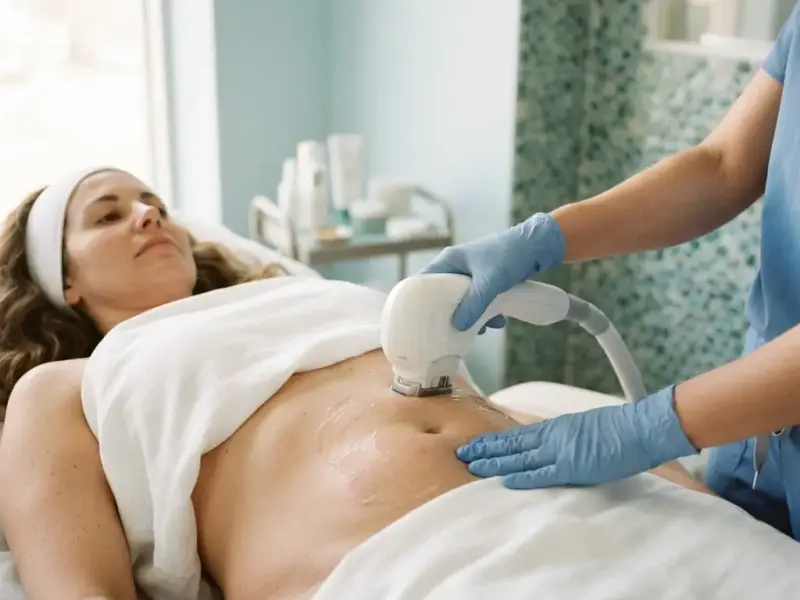
Morpheus8 Body
From $500 / sessionRadiofrequency microneedling for loose, crepey skin and stretch marks on the abdomen, arms, knees, and thighs.
Learn more
Morpheus8
From $799 / sessionRadiofrequency microneedling that firms mild to moderate jawline laxity, crepey neck skin, and acne scars.
Learn more

Start with a consult
Tell us what you’d like to work on. We’ll assess your skin and goals, walk you through your Medical weight loss options, and give you a clear plan and price before anything begins.
Afterpay and Klarna available at checkout for eligible treatments.