
A precise lift for small, delicate areas
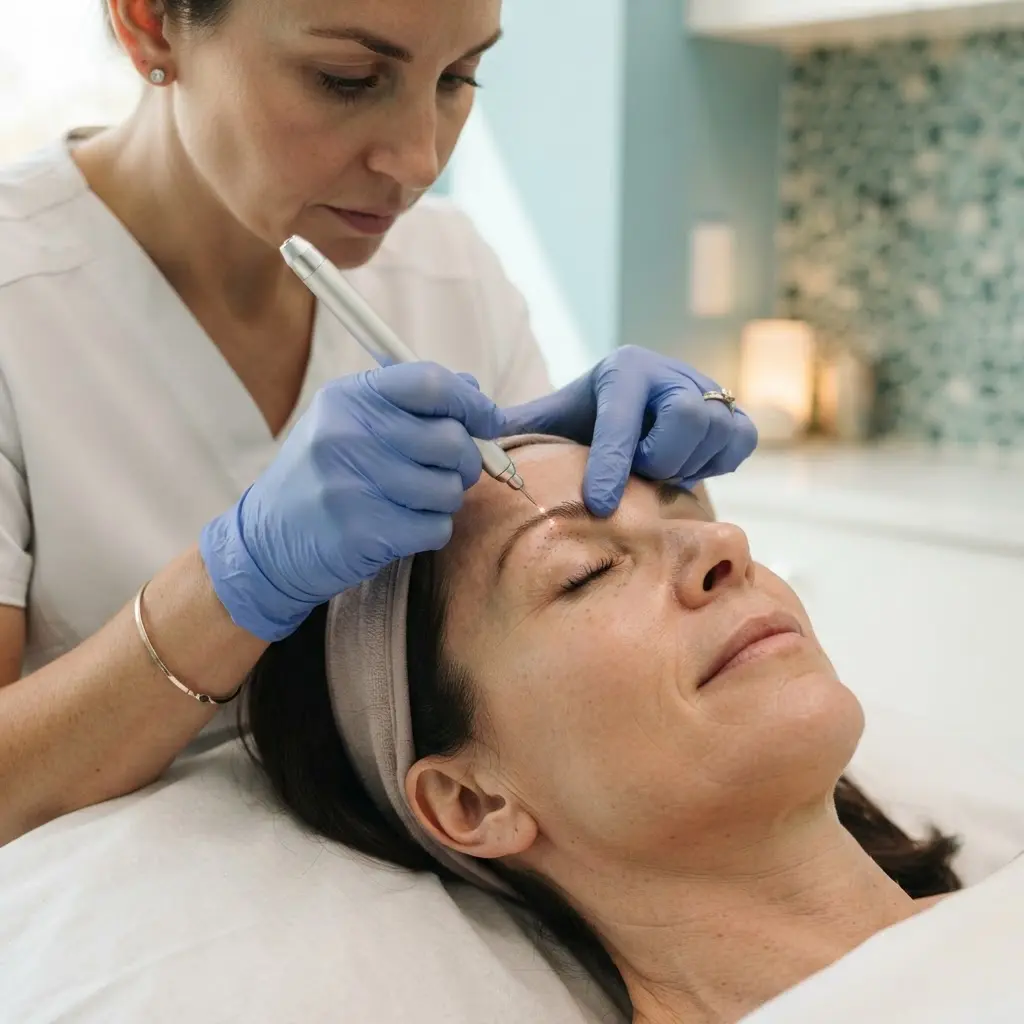
The Plasma Pen is a small handheld tool that tightens loose skin over a small area, mostly the upper eyelids and the upper lip. It’s a good option if you have mild hooding or vertical lip lines, you’d rather not have surgery, and you’re comfortable with a week of visible healing.
Consult
priced at your visit
At a glance
Plasma Pen- Appointment
- 30 to 60 minutes, plus 30 to 45 minutes of numbing
- Downtime
- About a week of crusting, then weeks of pink dots
- First results
- 1 to 2 weeks, as the swelling settles
- Full results
- About 3 months after the last session
- Sessions
- 1 to 3, about 4 to 8 weeks apart
- Cost
- Priced at your consult. Financing available
What to expect
What the appointment is like
Plan on about an hour and a half in Suite C, and most of that is numbing time. You’ll be awake the whole time, and you can drive yourself home afterward. Your provider places tiny dots in a grid, one small section at a time. You’ll feel heat and a sharp sting with each dot, and notice a burning smell.
Consult
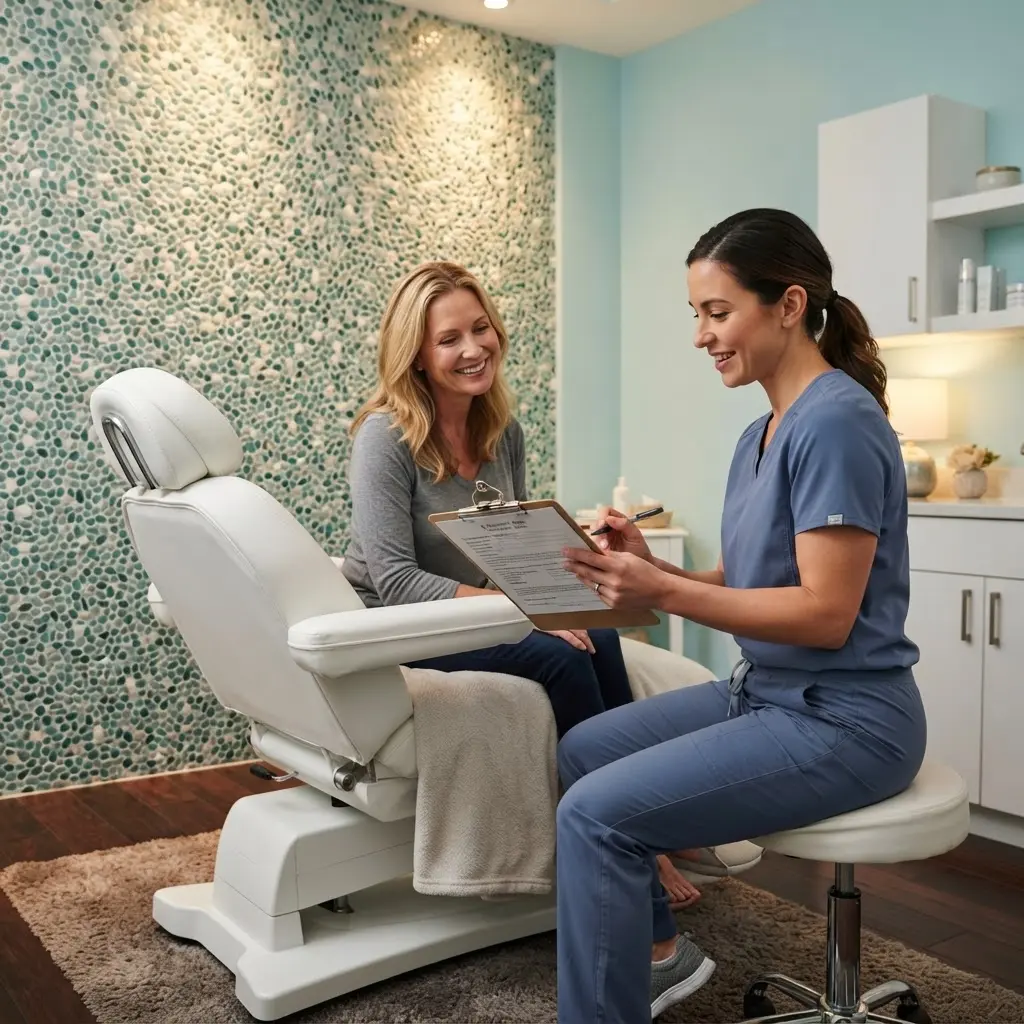
We’ll look at the area in daylight, check your skin type, and discuss whether surgery would be a better option. If it’s a good fit, we’ll photograph the area and book your session.
Numbing
A topical numbing cream sits on the area for 30 to 45 minutes. For eyelid work, you’ll wear protective eye shields.
Treatment
Your provider places the dots in a grid, one small section at a time. You’ll feel heat and a sharp sting with each dot, and you’ll notice a burning smell.
Before you leave
We’ll apply a healing ointment, go over the crust and sun guidelines, and give you a written aftercare sheet. Bring sunglasses for the drive home.
Results
A predictable timeline
You’ll see some tightening at one to two weeks as the swelling settles, then the change builds as the skin remodels. The two studies measured at three months after the last session, so that’s the point to judge your result. How long results last is still unknown, the small trials followed patients for three months.
Days 0 to 3
Red and crusting
Red and swollen with the dot grid visible, then swelling peaks and the dots crust over. This is expected.
Days 4 to 7
Crusts fall away
Crusts fall away on their own, leaving pink skin underneath. Don’t pick them.
Week 2
First tightening
The swelling is gone, first tightening is visible, and the pink dots are fading.
Months 1 to 3
Judge the result
Second session at month one if you’re doing a series. At month three, contraction has settled and the dots have faded in most skin.
What it costs
Clear pricing, planned by the visit
Cost depends on the area treated, and we’ll give you a quote at your consult. What shapes your cost: the size of the area (upper lids, under-eyes, or lip lines), the number of sessions, and numbing time. Lip lines are a smaller visit than both upper lids. The studies that showed results used three sessions a month apart.
- The size of the area treated
- The number of sessions
- Numbing time
- Whether you start with a single session
Fibroblast device
Plasma Pen
Consult
priced at your visit
- Sessions
- 1 to 3, 4 to 8 weeks apart
- Sun avoidance after
- 8 to 12 weeks
- Consultation
- $50
- Financing
- Affirm, Afterpay, Klarna
Some people are happy after one session, so we recommend seeing your first result before committing to more.
Book your Plasma Pen appointmentSimilar purpose, different options
Plasma Pen or something else?
Most Plasma Pen questions are about the eyelids, and the right treatment depends on how much skin has loosened. Here’s how it compares.
| Plasma Pen | Morpheus8 | Forma | |
|---|---|---|---|
| Best for | Mild lid hooding, lip lines | Jowls, neck, larger areas, scarring | Mild laxity, maintenance |
| Skin types | I to III only | All types, settings adjusted | All types |
| Downtime | About a week of crusts | 2 to 5 days of redness | None |
| Sun rules after | 8 to 12 weeks | While healing | Sunscreen as usual |
Best for
- Plasma Pen
- Mild lid hooding, lip lines
- Morpheus8
- Jowls, neck, larger areas, scarring
- Forma
- Mild laxity, maintenance
Skin types
- Plasma Pen
- I to III only
- Morpheus8
- All types, settings adjusted
- Forma
- All types
Downtime
- Plasma Pen
- About a week of crusts
- Morpheus8
- 2 to 5 days of redness
- Forma
- None
Sun rules after
- Plasma Pen
- 8 to 12 weeks
- Morpheus8
- While healing
- Forma
- Sunscreen as usual
Morpheus8 is radiofrequency microneedling. It treats bigger areas, helps with jaw and neck laxity the Plasma Pen can’t reach, works in more skin types, and leaves no dot grid. It can’t remove eyelid skin either, but its small Prime tip can firm the skin around the eyes without a week of crusts.
Forma is the gentlest option: radiofrequency heating with no needles and no downtime, done as a series. It’s a good starting point for mild concerns when you can’t take time off.
When the hooding is significant, blepharoplasty is the better option. We don’t perform surgery, and we’ll refer you if that’s the right path for you.
Is it right for me?
Who it’s for, and who it isn’t
The Plasma Pen tends to suit people with lighter skin (Fitzpatrick types I to III), mild skin excess, realistic expectations, and a schedule that allows for a week of crusting and a season of strict sun avoidance. If you have a little extra eyelid skin but not enough to need surgery, you’re likely a good candidate.
A good fit for
- Mild upper-eyelid hooding
- Vertical lip lines (“smoker’s lines”)
- Crepey skin under the eyes or in small patches
- Lighter skin, Fitzpatrick types I to III
Not recommended
- Darker skin (Fitzpatrick IV to VI), real risk of a dark mark
- Heavy hooding or fat bags (blepharoplasty fits better)
- A history of keloid scars, or an active cold sore
- A pacemaker or implant, or during pregnancy
FDA-cleared plasma pens are cleared as electrosurgical tools for removing skin lesions and coagulating tissue, none is cleared for lifting eyelids or tightening skin. Those are off-label uses supported by two small studies rather than long-term data.
In detail
What it treats
It’s a precision tool for thin, loose skin in areas too small or too delicate for other devices.
Around the eyes: mild hooding of the upper eyelid, crepey skin under the eyes, and crow’s feet.
Around the mouth: vertical lines on the upper lip, where lipstick tends to bleed. They’re often called smoker’s lines, but they’re common in people who have never smoked.
Small patches elsewhere: crepey neck skin in small sections, and skin tags or small benign growths. Lesion removal is what this device category is cleared for, which makes it the one on-label use on the list.
What it isn’t designed for: jowls, deep folds, heavy hooding, or fat bags under the eyes. We’ll recommend options better suited to those concerns.
How it works
The tip of the pen doesn’t touch your skin. It ionizes the air between the tip and your skin to make a tiny electrical arc, which vaporizes a pinpoint of the surface and sends heat into the layer just beneath. Your provider places these dots in a grid across the loose skin. Each dot forms a small carbon crust, and as the grid heals, the skin between the dots pulls in.
The “fibroblast” name refers to the collagen-producing cells that activate during healing. The tightening you see is mostly surface contraction rather than a deep lift. It’s closer to shrinking fabric than to pulling it up.
The best evidence we have is two small trials from 2022, with 40 and 56 women, each using three sessions a month apart on the upper eyelids. Both reported meaningful improvement in laxity scores at three months with no serious adverse events, per Hassan et al. and Abdollahimajd et al. Neither was randomized, neither followed anyone past three months, and neither included US data on darker skin. We set expectations based on what those studies show.
Afterwards
Downtime and aftercare
The downtime is the main trade-off with this treatment, so plan for it before you book.
Day 0: the area will be red, swollen, and dotted. Eyelids usually look worse than they feel.
Days 1 to 3: swelling peaks. Eyelids can swell nearly shut for a day or two, so plan to keep your schedule light. The dots darken into small crusts.
Days 4 to 7: the crusts fall off on their own. Avoid picking them, since picking is the most common cause of lasting marks. Most people take about a week of social downtime.
Weeks 2 to 8: the pink or slightly darker dots gradually fade. In at-risk skin, they can stay for months.
What to avoid while you heal: water on the area beyond what the aftercare sheet allows, makeup until every crust is gone, retinoids and acids until you’re fully healed, and pools, saunas, and hot yoga until the surface has closed. Sun is the most important one. Plan on strict sun avoidance and daily sunscreen for 8 to 12 weeks, with sunglasses and a hat outdoors. Sun on healing skin can leave a lasting grid of brown dots.
Light workouts are fine once the crusts are gone. Until then, it’s best to keep sweat off open crusts.
Why here
Why Arlington Heights
The Plasma Pen is best scheduled in winter. Sun avoidance after treatment lasts 8 to 12 weeks, which is easiest to follow in the lower-sun months. We book most sessions from November through March. If you have holiday events coming up, allow at least a week or two for the crusts to heal.
You can go to work while you heal. Expect about a week of sunglasses and no makeup. When you visit, you can park free in the lot right outside the building, with no meters and no garage.
Our medical esthetician performs this treatment at our Arlington Heights office, in Suite C of the brown brick building just south of Dundee Road.
Questions
Common questions, answered
It depends on what you’d like to improve. For mild upper-lid hooding or lip lines on lighter skin, it’s one of the few non-surgical options that treats eyelid skin directly, and the small studies show real improvement at three months. If your hooding is heavy, your skin is darker, or you can’t take a week of crusting and a season out of the sun, another treatment will suit you better, and we’ll help you choose one.
They’re different tools. Morpheus8 treats larger areas, handles jowls and neck laxity, works in all skin types, and leaves no dot grid. The Plasma Pen works on the eyelid skin itself and on lip lines, in lighter skin only. Neither removes skin the way surgery does.
There isn’t a firm answer yet. The two published trials followed patients for three months, and there are no long-term studies. Manufacturers claim years, but that claim isn’t backed by data. Plan on a touch-up eventually.
With 30 to 45 minutes of numbing cream, most people describe heat and a sharp sting with each dot, plus a burning smell. Eyelids are more sensitive than the lip. If a section is too uncomfortable, tell us and we’ll pause.
The crusts form over days one to three and fall off on their own between days four and seven. Pink or slightly darker dots can stay visible for two to eight weeks after that.
No. We don’t use it on Fitzpatrick types IV to VI. The heat at each dot can trigger hyperpigmentation that lasts months, and there are no US studies showing it can be done safely. On darker skin, we use radiofrequency instead, either Morpheus8 or Forma, and we’ll help you choose.
It can tighten mild hooding. Two small studies measured meaningful improvement in upper-lid laxity three months after three sessions. It can’t remove skin or fat, so if your hooding is heavy or there’s a fat pad, an eyelid surgeon is the better route.
It’s best to wait until every crust has fallen off on its own, usually about a week. After that, mineral makeup over sunscreen is fine. Until then, sunglasses help cover the area.
The studies used three sessions a month apart. In practice, lip lines often need one or two, and upper lids one to three, spaced four to eight weeks apart. We recommend assessing your first result at three months before booking more.
The healing dots can darken and stay dark for months, which leaves a visible grid. That’s why aftercare includes strict sun avoidance and daily sunscreen for 8 to 12 weeks, and why we schedule this treatment in winter.
It isn’t reversible. It’s a controlled injury to the skin surface, and the result depends on how that heals. That’s why we treat a small area first, and why skin type screening is a required step for everyone.
Keep exploring
Related treatments
Related priorities
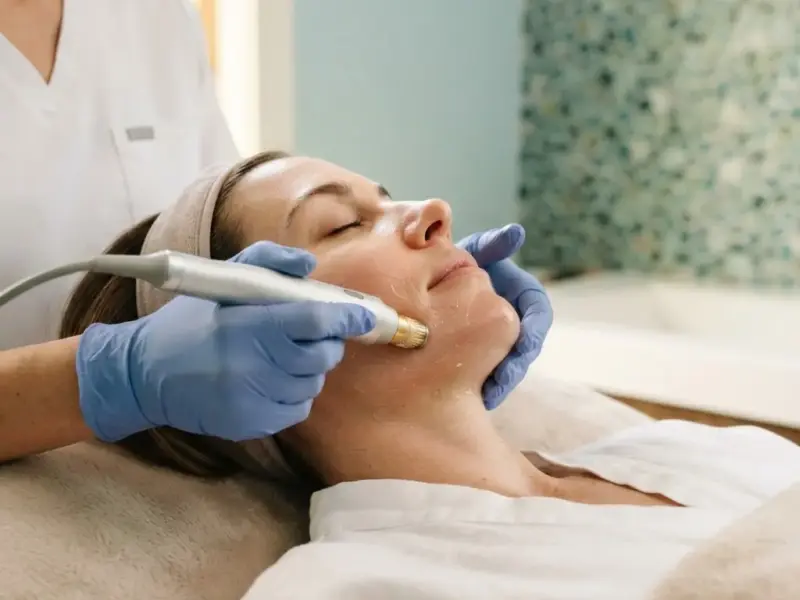
Morpheus8
From $799 / sessionRadiofrequency microneedling that firms mild to moderate jawline laxity, crepey neck skin, and acne scars.
Learn more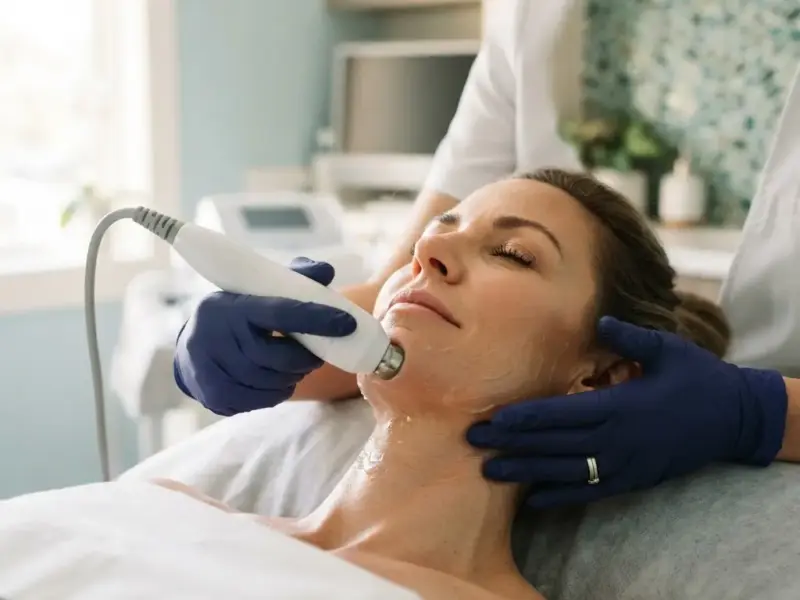
Forma skin firming
$699 / sessionNeedle-free radiofrequency that warms and gently tightens mildly loose skin, with no downtime.
Learn more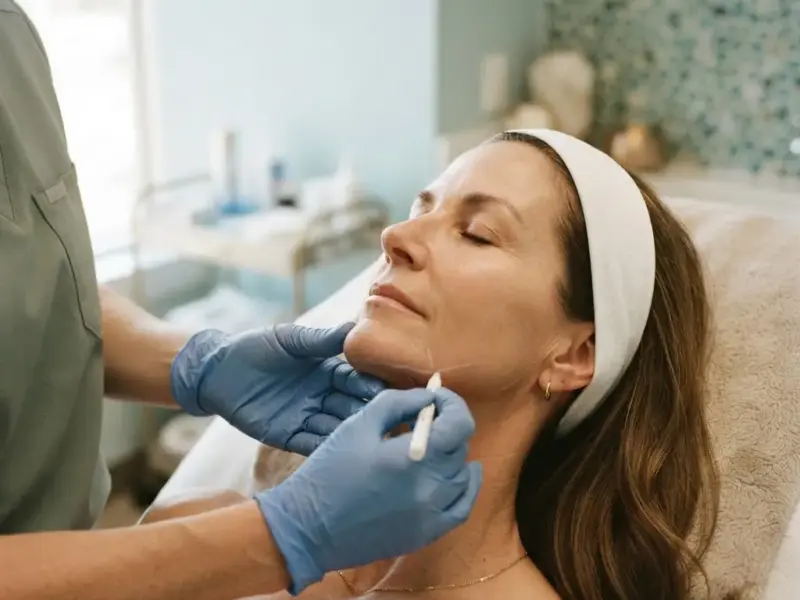
PDO thread lift
From $1,000 / sessionDissolvable sutures placed under the skin to lift early jowls and a softening jawline, and to build collagen.
Learn more
Start with a consult
Tell us what you’d like to work on. We’ll assess your skin and goals, walk you through your Plasma Pen options, and give you a clear plan and price before anything begins.
Afterpay and Klarna available at checkout for eligible treatments.