
Wrinkle Relaxers that leave you looking rested, not different
A prescription injection of botulinum toxin type A that relaxes the muscles behind forehead lines, frown lines, and crow’s feet for three to four months. Every injection at our Arlington Heights office is performed by a nurse practitioner.
$14
per unit, all brands
At a glance
Botox & toxins- Appointment
- 10 to 20 minutes, no numbing cream
- Downtime
- None. Small bumps for 30 minutes, possible bruise
- First results
- 3 to 7 days
- Full results
- 14 days
- Sessions
- One, repeated every 3 to 4 months
- Cost
- From $560 a visit, or about $140 across 4 payments
What to expect
What the appointment is like
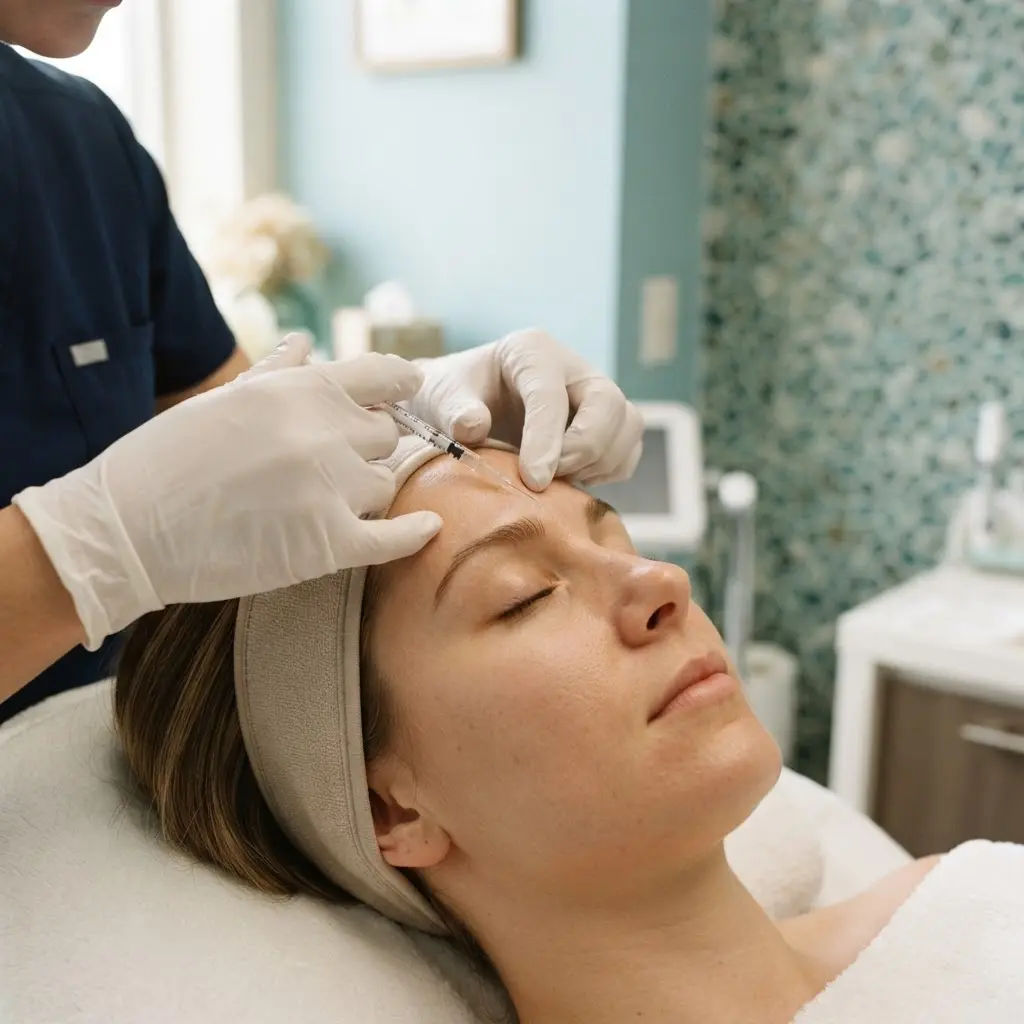
Plan on 10 to 20 minutes for one to three areas, and most of that time is spent talking. You’ll frown, raise your brows, and squint while your nurse practitioner watches which muscles are doing the work, then a few quick pinches from a very fine needle. No numbing cream needed, and you sit comfortably upright the whole time.
Consult
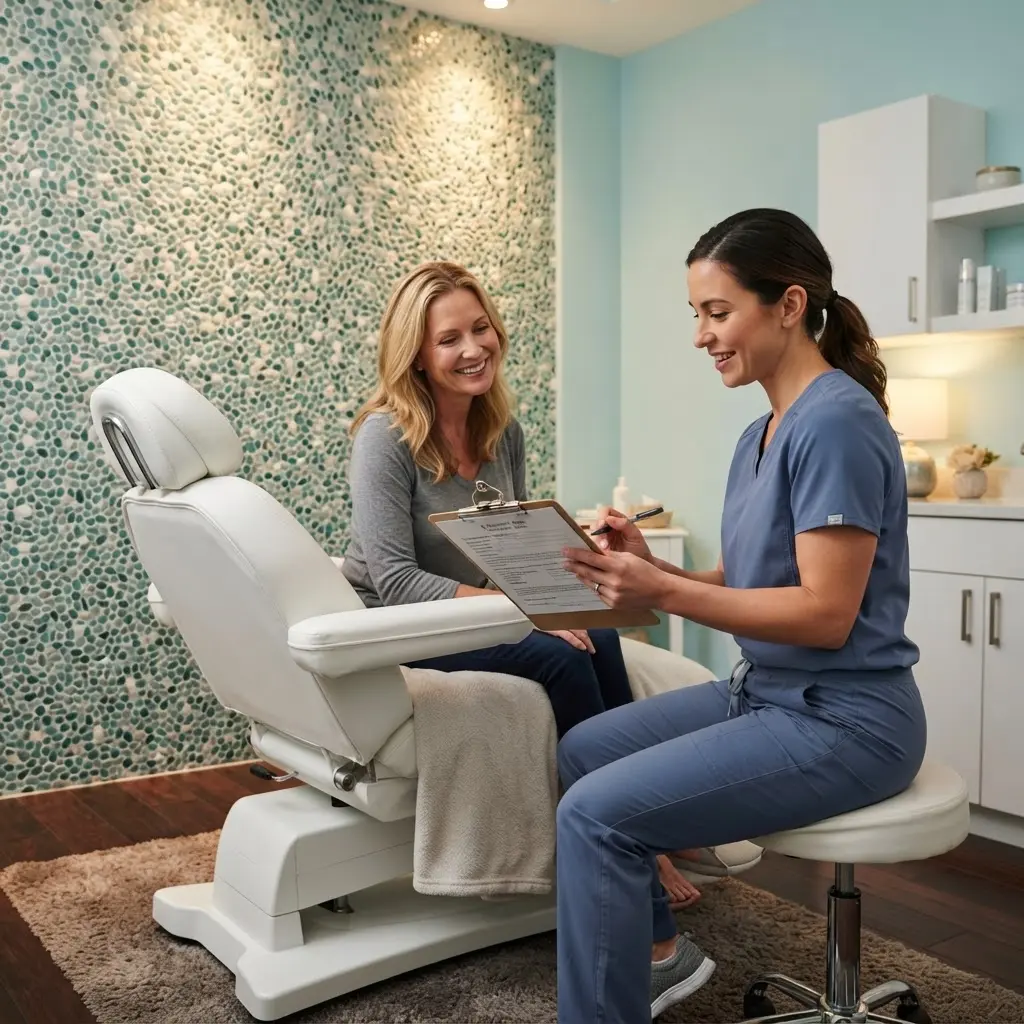
Show us what you’d like to soften and how your face moves. Together, we’ll choose the areas, the brand, and how much natural movement to keep.
Marking
We mark the injection points while your muscles are engaged. Ice or vibration is there if you want it.
Injection
A few quick pinches per area with a very fine needle. The injections take only a few minutes.
Before you leave
Any small bumps flatten within 30 minutes. We book your two-week check, and you can drive yourself home.
Your results
A predictable timeline
It’s normal to see no change for the first couple of days. In Botox’s frown-line trials, 74 percent of patients had responded by day 7 and 80 percent by day 30. It holds for about three to four months before movement gradually returns, which is why most people rebook around month three. Individual results vary.
Days 0 to 2
Bumps are gone within the hour, and a pinpoint bruise is possible. Otherwise, no visible change yet.
Days 3 to 7
Lines begin to soften, and frowning takes more effort.
Day 14
Full effect. We check in and touch up anything uneven.
Months 3 to 4
Movement returns gradually. A good time to rebook, before the lines come all the way back.
What it costs
Priced by the unit, planned by the visit
A unit measures the drug’s activity, not a volume. Heavier muscles, men, and the neck bands take more of them, which is why the total for your areas is more useful than the price per unit. There’s no package or series to buy: treatment is one appointment every three to four months, and you can switch brands between visits.
- How many areas you treat
- How many units each area needs
- Which brand you choose
- Whether the two-week touch-up is included
All five brands
Botox, Dysport, Xeomin, Jeuveau & Letybo
$14
per unit
- Typical first visit
- 40 to 56 units
- Estimated total
- $560 to $784
- Consultation
- $50
- With Afterpay / Klarna
- About $140 × 4 payments
Most first visits treat the forehead, the 11s and crow’s feet. A small non-refundable deposit holds your booking and comes off your treatment. Back every 3 to 4 months.
Book your Botox appointmentSimilar purpose, different options
Botox or something else?
Sometimes what looks like a Botox concern is a better match for one of two other treatments.
If the line is there at rest, or the issue is a hollow cheek, a thin lip, or a fold from the nose to the mouth, that’s about volume, and dermal filler can do what Botox can’t. Many patients benefit from both, and we’ll recommend the right combination for your goals.
If the concern is position, like a jowl that has dropped or a brow that feels heavy because the skin has slid, relaxing a muscle won’t lift it. That’s where a PDO thread lift can help, or Morpheus8 for the skin itself.
| Botox and the other toxins | Dermal fillers | PDO threads | |
|---|---|---|---|
| Fixes | Lines made by muscle movement | Static folds, lost volume, lips | Mild sagging in cheeks and jowls |
| How | Relaxes the muscle | Adds gel where volume is missing | Repositions tissue with dissolvable sutures |
| Onset | 3 to 7 days, full at 14 | Immediate, settled at 2 weeks | Immediate, swelling gone in about a week |
| Lasts | 3 to 4 months | About 6 to 18 months by product and area | Several months to about a year |
| Downtime | None | Swelling and bruising for days | Sore for a few days, swelling and bruising up to a week |
Fixes
- Botox and the other toxins
- Lines made by muscle movement
- Dermal fillers
- Static folds, lost volume, lips
- PDO threads
- Mild sagging in cheeks and jowls
How
- Botox and the other toxins
- Relaxes the muscle
- Dermal fillers
- Adds gel where volume is missing
- PDO threads
- Repositions tissue with dissolvable sutures
Onset
- Botox and the other toxins
- 3 to 7 days, full at 14
- Dermal fillers
- Immediate, settled at 2 weeks
- PDO threads
- Immediate, swelling gone in about a week
Lasts
- Botox and the other toxins
- 3 to 4 months
- Dermal fillers
- About 6 to 18 months by product and area
- PDO threads
- Several months to about a year
Downtime
- Botox and the other toxins
- None
- Dermal fillers
- Swelling and bruising for days
- PDO threads
- Sore for a few days, swelling and bruising up to a week
For more on Dysport, read our guide on who Dysport suits in Arlington Heights.
Is it right for me?
Who it’s for, and who it isn’t
Age isn’t a cutoff, but it affects response: in Botox’s trials, 83 percent of patients under 65 responded at day 30 against 39 percent of those 65 and older. If your lines are mostly etched in, we’ll explain that at your consult and recommend an option that fits better. We start conservatively, and we don’t aim for a frozen look.
A good fit for
- Adults with lines that show when they move who want them softer
- Patients who want to keep some natural expression
- People starting with the frown lines, forehead, or crow’s feet
- Anyone wanting a rested look with no downtime
Not recommended
- During pregnancy or breastfeeding, without exception
- Over an active skin infection at the site
- Lines etched in at rest (filler or resurfacing fit better)
- Discuss first with a neuromuscular condition or certain medications
Possible side effects include temporary eyelid droop (3 percent of frown-line patients) and a heavy brow (2 percent of forehead patients). We’ll review your full history at your consult.
In detail
What it treats
Botox softens lines made by movement. The lines that appear when you raise your brows, squint, or frown are the ones it can help. If a line is still there when your face is relaxed, it’s etched into the skin, and filler or resurfacing is usually the better option.
We note FDA approval for each area below. All five brands are FDA-approved for frown lines. Botox and Xeomin are also approved for forehead lines and crow’s feet, and Botox alone for neck bands, per the prescribing information. Everything else below is off-label, meaning it’s common and studied but outside what the FDA reviewed. We’ll talk through which of those areas are right for you at your consult.
These are the horizontal lines that show up when you lift your brows. On label for Botox and Xeomin. Dosing here is conservative because the forehead muscle holds your brows up, and over-treating it can trade lines for a heavy brow (2 percent of patients in Botox’s forehead trials). That’s why we treat the forehead together with the frown lines, so the two muscle groups stay balanced, and we use a lighter dose here than on the elevens.
The vertical creases between your brows. It’s the most studied area, and the one most men start with. The labeled Botox dose is 20 units, per the prescribing information, which makes a helpful reference point: strong frowners may need the full dose or a little more, and lighter frowners need less. Dysport counts units differently, about three of its units to one of Botox in the head-to-head trial, so unit counts can’t be compared across brands.
The fan of lines at the outer corners of your eyes when you smile, treated on both sides in the same visit. On label for Botox and Xeomin. Placed too close to the eye, it can cause eyelid swelling (1 percent in Botox’s trials) or flatten your smile, so careful placement matters even more than the unit count here.
A small dose in the muscles that pull the brow down lets the outer brow sit a touch higher. It’s a subtle change, and off-label. If your brow feels heavy because the skin has loosened, rather than because a muscle is pulling, Botox won’t help, and we may recommend PDO threads or Forma instead.
The little diagonal creases on the sides of your nose when you scrunch it, which often get more noticeable once the elevens have been treated. It’s off-label, uses small doses, and takes only a few minutes.
A small dose at the edge of the upper lip relaxes the muscle so the lip rolls outward slightly and more of it shows when you smile. It’s off-label, and it doesn’t add volume. If a fuller lip is what you’re after, dermal filler is the better match.
The vertical cords that stand out when you clench your jaw. Botox is the one product approved for platysma bands, as of the October 2024 label revision. It softens the cords but doesn’t tighten loose neck skin, so if crepiness or laxity is what’s bothering you, Morpheus8 may be a better fit.
We’re also often asked about the masseter for jaw slimming and clenching, chin dimpling, a gummy smile, and underarm sweating. These uses are off-label with these products, and we can discuss them at your consult.
How it works
All five products are botulinum toxin type A. Injected into a muscle, the toxin blocks the release of acetylcholine at the nerve-muscle junction, so the muscle relaxes and the skin over it stops creasing. The nerve endings recover over a few months, which is why the effect wears off.
Botox
On our menu- Onset
- Most patients by day 7
- Full effect
- 14 days
Dysport
On our menu- Onset
- A few days
- Full effect
- 14 days
Xeomin
On our menu- Onset
- About 3 days in trials
- Full effect
- 14 days
Jeuveau
On our menu- Onset
- A few days
- Full effect
- 14 days
Letybo
On our menu- Onset
- A few days
- Full effect
- 14 days
Daxxify
Not offered- Onset
- A few days
- Full effect
- 14 days
All five labels carry the same boxed warning: the effect can spread beyond the injection site and, rarely, cause swallowing or breathing trouble. It’s one reason every injection here is done by a nurse practitioner in a treatment room.
The table also clears up two common myths. Dysport doesn’t “spread more” than Botox: a 2018 review concluded diffusion depends on dose, not brand, per Dover and colleagues in Dermatologic Surgery. And Daxxify doesn’t reliably last six to nine months: its pooled phase 3 trials showed a median of 24 weeks, per Bertucci and colleagues, so half of patients got less.
For more detail, read our guides on Dysport vs Botox, the differences that matter in the chair and how many units of Botox the forehead takes.
Afterwards
Downtime and aftercare
There’s no recovery time, and aftercare is simple. Avoid rubbing or massaging the treated areas for the rest of the day, be gentle applying makeup over the sites, and wait two hours before hard exercise, per the American Academy of Dermatology. It’s also best to skip a face-down massage or a tight hat for the day.
The main thing you might notice is a small bruise. If you get one, it’s usually pinpoint-sized and fades in about a week, and alcohol or ibuprofen in the days before can make one more likely. A few people get a mild headache the first day, and it passes.
Many commonly repeated aftercare rules have little evidence behind them. The same 2018 review found post-treatment restrictions “are widely used despite the lack of evidence,” and that using the muscles afterward may even help. That’s why our list is short.
Why here
Why Arlington Heights
Every injection at our Arlington Heights office is done by a nurse practitioner in a treatment room. Patients come from Schaumburg, Barrington, and across the northwest suburbs for that standard of care, a full treatment menu beyond Botox, and free parking right outside.
If you’re planning around an event, such as graduation photos or a wedding, book at least two weeks ahead. Full effect takes 14 days, and a small bruise can take about a week to fade, so the week before photos is not an ideal time for treatment.
For men, the forehead and frown lines are the usual first areas. The appointment takes about 15 minutes, and results look rested rather than treated. Parking is free outside Suite C, and directions are on the page for our Arlington Heights office.
Questions
Common questions, answered
About three to four months, sometimes a little longer. In Botox’s frown-line trials, 80 percent of patients still met the responder bar at day 30 and 25 percent at day 120, per the prescribing information. Dysport, Xeomin, and Jeuveau run on a similar clock.
Daxxify is the longer-acting option, with a median of 24 weeks in its phase 3 trials, which means half of patients got six months or more and half got less. Individual results vary.
Per-unit comparisons can be misleading. A unit measures the drug’s activity, not a volume, and the number you need depends on the area, the strength of the muscle, and how much movement you want to keep. The labeled Botox dose for frown lines is 20 units, for reference.
Units also don’t convert between brands. One Botox unit ran about three Dysport units and one Xeomin unit in the head-to-head trial, so a lower per-unit figure for one brand tells you nothing about the total. We’ll give you the total for your areas instead.
Softening starts in three to seven days, and 74 percent of patients in Botox’s trials had responded by day 7. The full effect is at 14 days, which is when a touch-up is assessed.
Xeomin was slightly faster in one randomized trial (about 3 days against about 5 for Botox and Dysport), and men were slower than women with all three, but other studies disagree. Wait the full two weeks before judging the result.
Avoid rubbing or massaging the injected areas for the rest of the day, be gentle putting makeup over the sites, and wait two hours before hard exercise, per the American Academy of Dermatology. Skip a face-down massage or a tight hat over the area that day.
Alcohol and ibuprofen mainly matter for bruising, so avoid them the day before and after if you bruise easily. Most other post-Botox rules have little evidence behind them, per a 2018 review in Dermatologic Surgery, which is why our list is short.
Only a little, and only briefly. Each injection is a quick pinch with a very fine needle, and an area takes a handful of them. Most people rate it well below a blood draw. We offer ice or a vibration tool if you want it, and no numbing cream is needed.
The frown lines and the lip are the spots people feel most. Small bumps at the sites are gone within about 30 minutes.
We don’t inject Botox, Dysport, Xeomin, Jeuveau, or Letybo during breastfeeding or pregnancy. The Botox label states there are no studies or adequate data on developmental risk in pregnancy, and none of the five labels has safety data for nursing.
That isn’t evidence of harm. It’s an absence of evidence, and a cosmetic treatment can wait a few months. You can book a consult now and schedule treatment for after you’ve weaned.
The common advice is to stay upright for about four hours, and it’s wise to keep your head up and skip face-down positions for the rest of the day. This rule, like most post-injection rules, has little research behind it, per a 2018 review in Dermatologic Surgery.
A daytime appointment makes this easy, and sleeping normally that night is fine.
Both are botulinum toxin type A approved for frown lines. Daxxify’s trials showed a median duration of 24 weeks, against Botox’s roughly three to four months, and Daxxify uses a peptide instead of human albumin as a stabilizer. Half of Daxxify’s trial patients got less than six months, so the longer duration isn’t a promise.
Botox has the wider label (forehead lines, crow’s feet, and neck bands as well as frown lines) and decades more use. If fewer visits appeal to you and you’re comfortable with that variability, Daxxify may suit you. If you’d prefer the most-studied product across several areas, Botox is the stronger choice.
They’re the same type of drug, botulinum toxin type A, and the labeled frown-line dose is 20 units for both. Jeuveau is FDA-approved for frown lines only, while Botox is also approved for forehead lines, crow’s feet, and neck bands. Onset and duration are similar, at a few days and about three to four months.
In Jeuveau’s trials, headache was reported by 12 percent of patients and eyelid droop by 2 percent. If you only want the elevens treated, either is a good option. For other areas, Botox is the one on label.
Our nurse practitioner in a treatment room at 3375 N Arlington Heights Rd, Suite C, under medical direction.
You’ll meet your nurse practitioner at the consult first, and the same provider does your two-week check. Credentials and training are listed on the team page as they’re confirmed.
Botox wears off on its own over three to four months, so nothing needs to be undone. We also start conservatively on a first visit and see you back at two weeks to add more if needed, because adding is easy and taking away is not.
Keep exploring
Related treatments
Related priorities
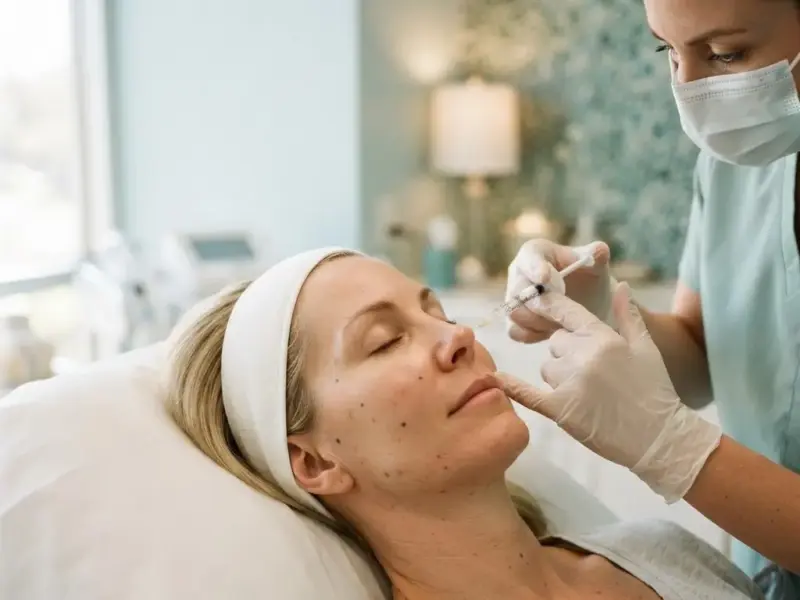
Dermal fillers
From $650 / syringeHA gels and Radiesse to restore volume and shape in the lips, cheeks, jawline, chin, and hands.
Learn more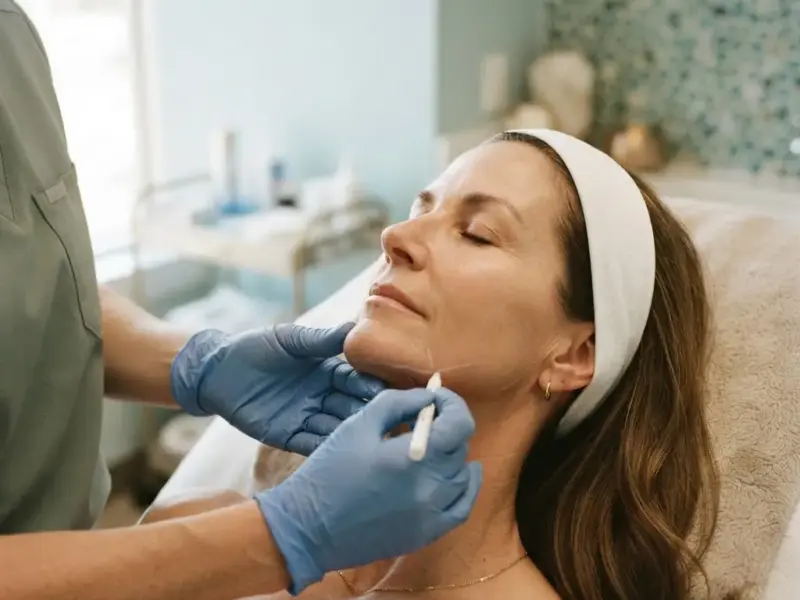
PDO thread lift
From $1,000 / sessionDissolvable sutures placed under the skin to lift early jowls and a softening jawline, and to build collagen.
Learn more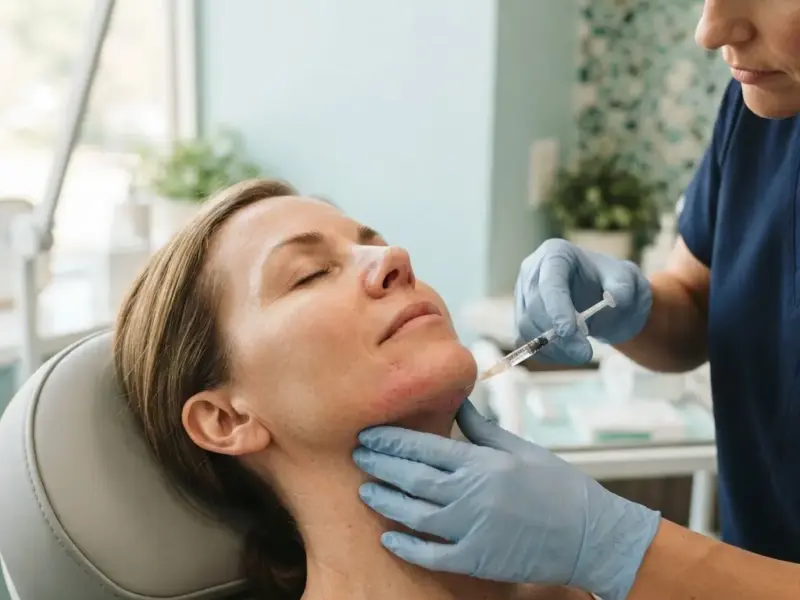
Kybella
$799 / sessionDeoxycholic acid injections that permanently destroy a soft pocket of fat under the chin.
Learn more
Start with a consult
Tell us what you’d like to soften. We’ll map your movement, recommend the areas and brand, and give you a clear unit count and total before anything is injected. Your consultation is $50.
Afterpay and Klarna are available at checkout, about $140 across four payments for a typical first visit.