
Long-term hair reduction, any skin tone
Laser hair removal works only on the hairs that are actively growing on the day of your session, so it’s a course of 6 to 8 sessions with the Candela GentleMax Pro, for anyone with dark hair they’re tired of shaving, on any skin tone. We start most courses in the fall so the last session lands before summer sun.
$110
small area, per session
At a glance
Laser hair removal- Appointment
- 10 to 60 minutes by area, no numbing
- Downtime
- None to speak of. Red and warm for a day or two
- First results
- Shedding at 1 to 3 weeks; 10 to 25% less after the first session
- Full results
- After the full series, with maintenance a year
- Sessions
- 6 to 8, spaced 4 to 8 weeks apart by area
- Cost
- From $110. About $28 per payment across 4
What to expect
What the appointment is like
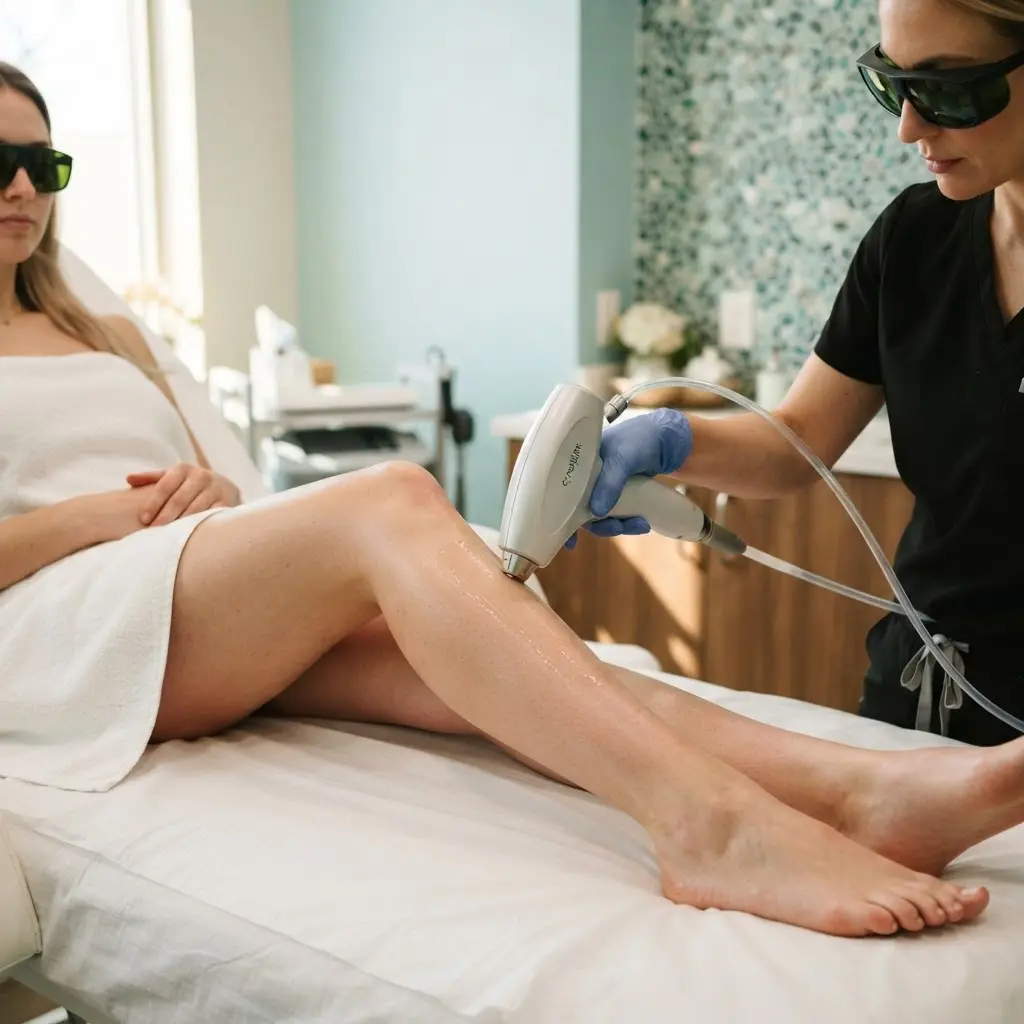
Shave the area within 24 hours before you come in, ideally the night before, and avoid waxing, tweezing, or threading for 4 to 6 weeks beforehand, the laser needs the hair sitting in the follicle. Expect a cold spritz, then a snap like an elastic band against the skin, and a faint sulfur smell. Most areas don’t need numbing, since the cooling spray does that job.
Consult
We’ll look at your hair and skin together, ask about tanning, waxing, medications, cold sores, and hormones, and choose the wavelength. If your hair is too light to respond, we’ll tell you at this visit.
Prep
You’ll have shaved the night before. We cleanse the area, cover tattoos and dark moles, and everyone in the room wears eye protection.
Treatment
We start with a test pulse, then the handpiece moves across the area in a grid, with a cold spray before each pulse. About ten minutes for a lip, up to an hour for full legs.
Before you leave
We apply cool gel or a compress and sunscreen on any exposed area, and book your next visit 4 to 8 weeks out. You’re free to drive, work, and shower, just not hot.
Results
A predictable timeline
The first session gets 10 to 25 percent of the hair, per the AAD, a modest start, which is why we don’t recommend a single session for most areas. By session three, most people are shaving much less often. By the end of a full course, most of the reduction is in, and what grows back is finer and sparser.
Day 0
Red and warm
Red and warm, like a mild sunburn. A cool compress helps; skip a hot shower.
Days 5 to 14
The shed
Treated hairs shed. It can look like growth for a few days, then it’s gone. Don’t pluck; light exfoliation helps.
Weeks 4 to 8
Next session
Your next session, timed to the area, face sooner, legs and back later. Noticeable thinning after session three.
Months 6 to 12
Assess and maintain
We assess the result in line with how the FDA measures hair reduction. Most people plan one or two maintenance sessions a year.
What it costs
Clear pricing, planned by the visit
Your cost depends on the size of the area (an upper lip takes minutes, full legs up to an hour), the number of sessions, whether you combine areas in one visit, and maintenance later on. A single session gets you 10 to 25 percent, which is why we offer packages of six for any area you’re serious about.
- The size of the area
- The number of sessions
- Whether you combine areas in one visit
- Maintenance later on
Candela GentleMax Pro
Laser hair removal
$110
small area, per session
- Recommended course
- 6 to 8 sessions
- Season
- Start in September
- Consultation
- $50
- Financing
- Affirm, Afterpay, Klarna
Underarms alone, a lip, or a touch-up on a finished area are the exceptions where a session or two can make sense.
Book your Laser hair removal appointmentSimilar purpose, different options
Laser hair removal or something else?
Dermaplaning uses a blade, not a laser. It shaves fine vellus fuzz off the face for three or four weeks of smoother skin. It’s the right tool for peach fuzz, which the laser can’t target, but not for coarse dark hair, which it only shortens.
IPL photofacial uses broad, filtered light rather than a single wavelength. Here, we use it for sun spots and redness, not hair. Lasers have the long-term hair reduction evidence and IPL doesn’t, and IPL isn’t safe on darker skin for hair, per Haedersdal and Wulf. For hair removal on tan or brown skin, the Nd:YAG laser is the safer choice.
Waxing pulls out the follicle the laser needs to reach, so it’s one or the other. If you’re waxing now, switch to shaving 4 to 6 weeks before your first session. At-home light devices run at a fraction of the power, and a 2013 review found that further research is needed on their safety and efficacy, per Gan and Graber, so their results are hard to predict. We don’t offer electrolysis.
| Laser (GentleMax Pro) | Dermaplaning | Waxing | |
|---|---|---|---|
| Best for | Coarse dark hair, any skin tone | Facial peach fuzz | Anywhere, any hair color |
| What happens to the follicle | Disabled while it's growing | Untouched | Pulled out, grows back |
| How long it lasts | Months to years, with maintenance | 3 to 4 weeks | 3 to 6 weeks |
| Ingrown hairs | Fewer over time | Not relevant | Often worse |
| Works on white or gray hair | No | Yes | Yes |
| Season to start | Fall and winter | Any | Any |
Best for
- Laser (GentleMax Pro)
- Coarse dark hair, any skin tone
- Dermaplaning
- Facial peach fuzz
- Waxing
- Anywhere, any hair color
What happens to the follicle
- Laser (GentleMax Pro)
- Disabled while it's growing
- Dermaplaning
- Untouched
- Waxing
- Pulled out, grows back
How long it lasts
- Laser (GentleMax Pro)
- Months to years, with maintenance
- Dermaplaning
- 3 to 4 weeks
- Waxing
- 3 to 6 weeks
Ingrown hairs
- Laser (GentleMax Pro)
- Fewer over time
- Dermaplaning
- Not relevant
- Waxing
- Often worse
Works on white or gray hair
- Laser (GentleMax Pro)
- No
- Dermaplaning
- Yes
- Waxing
- Yes
Season to start
- Laser (GentleMax Pro)
- Fall and winter
- Dermaplaning
- Any
- Waxing
- Any
Is it right for me?
Who it’s for, and who it isn’t
You’re likely a good candidate if you have dark hair, skin that can stay untanned for the length of the course, and the ability to come in every 4 to 8 weeks. Light skin with dark hair is the easiest case; darker skin with dark hair is a good case too, treated with the 1064 nm Nd:YAG starting conservatively with a test spot.
A good fit for
- Coarse, dark hair anywhere you’re tired of shaving
- All skin tones, the 1064 nm wavelength is safe on darker skin
- Ingrown hairs and razor bumps (pseudofolliculitis barbae)
- Anyone who can stay untanned and come in every 4 to 8 weeks
Not recommended
- White, gray, red, or very light blond hair (no pigment to target)
- Fine peach fuzz (dermaplaning fits better)
- Tanned skin or self-tanner. We’ll reschedule
- During pregnancy, or over an active cold sore or infection
The accurate term is long-term reduction, not permanent removal. Most people keep a maintenance session or two a year, and hormone-driven areas need the cause managed and more upkeep. A rare paradoxical increase in hair can occur, mostly on the face and neck of darker skin, which is one reason we favor the Nd:YAG there.
In detail
What it treats
The laser targets dark hair on skin that’s lighter than the hair. Below are the areas we treat most often, grouped the way they’re usually booked, though any area can be treated for anyone.
Underarms are the fastest area and a popular first choice: just a few minutes, 4 to 6 weeks apart, and it’s best to skip deodorant the day of. Bikini line and Brazilian often get booked for ingrown hairs more than for the hair itself, since a disabled follicle can’t grow a hair that curls back into the skin. Spacing is 6 to 8 weeks, and we’ll agree on exactly how much of the area is treated before we begin.
Legs are the longest appointment, up to an hour, on the longest spacing, and the area that sees the most sun. That’s why we start leg courses in the fall and finish by late spring. Upper lip and chin visits come about every 4 weeks, because face hair cycles fast. Chin and jaw hair in women is often hormone-driven, and hormone-driven hair needs more sessions and more upkeep. We’ll discuss this at your consult.
Back and shoulders are the biggest area we treat and the one men ask about most: 45 minutes to an hour, 6 to 8 weeks apart, with noticeable shedding in the weeks after each session. Chest and stomach are often a thinning request rather than a clearing one, and the laser can help with that too, since fewer sessions leave finer, sparser hair instead of bare skin.
Razor bumps are most common on the neck and along the beard line. The medical name is pseudofolliculitis barbae, and the 1064 nm wavelength on the GentleMax Pro is cleared to treat it, per the FDA clearance. We treat the neck below the beard line and tidy the cheeks above it, but we don’t remove beards.
Hormone-driven facial hair, with PCOS being the usual cause, is treatable too, though the hormonal driver needs managing with your doctor, and the maintenance runs heavier than a standard course.
How it works
The GentleMax Pro fires a pulse of light that’s absorbed by melanin, the pigment in the hair shaft and follicle. The follicle heats up and is disabled. A hair between growth cycles has no shaft in the follicle to absorb the light, so it’s skipped, which is why one session catches only the hairs growing that day, per Haedersdal and Wulf’s evidence review.
The GentleMax Pro has two wavelengths in one machine. The 755 nm alexandrite is absorbed strongly by melanin, which makes it efficient on light skin with dark hair. Darker skin has melanin in the skin as well as the hair, and a wavelength absorbed that strongly would heat the skin’s surface. So for skin types IV to VI, we switch the machine to the 1064 nm Nd:YAG, which passes through the skin’s own pigment and heats the follicle deeper down. Dermatologists call the Nd:YAG the best laser system for pigmented skin, per Gan and Graber’s review, and the FDA clearance covers hair reduction on all skin types, Fitzpatrick I to VI, per 510(k) K133283.
Before every pulse, the Dynamic Cooling Device sprays a burst of liquid cryogen onto the skin. That’s the cold burst you feel first, and it keeps the heat in the follicle instead of on the surface, per Candela’s patient page.
Controlled trials show alexandrite and diode lasers produce partial long-term reduction that lasts beyond six months after repeated treatments, and the same review notes that there’s no evidence for complete and persistent hair removal, per Haedersdal and Wulf. A Cochrane review put short-term reduction at roughly 50 percent up to six months out, from trials it rated low quality, per Haedersdal and Gøtzsche.
A note on the word permanent. The FDA’s definition of permanent hair reduction is “the long-term, stable reduction in the number of hairs regrowing when measured at 6, 9, and 12 months after the completion of a treatment regime,” per a hair removal clearance. The definition describes reduction, not removal, measured up to a year after treatment. That’s what we offer: long-term reduction, finer regrowth, and a maintenance session or two a year.
Afterwards
Downtime and aftercare
Downtime is minimal. The area is red and warm for a day or two, sometimes with small bumps around each follicle, and patients describe it as feeling “like it’s sunburned” (RealSelf, patient-reported). The American Academy of Dermatology puts redness, swelling, and discomfort at 1 to 3 days, per its laser hair removal FAQs.
Day 0: cool compresses help. It’s best to skip hot showers, saunas, and hard workouts for 24 hours, and to leave deodorant off treated underarms that night.
Days 1 to 3: the redness fades. Makeup on a treated face is fine once it settles, usually by the next morning. Normal workouts are fine from day 2.
Days 5 to 14: the shed. Treated hairs push out and fall away, and for a few days this can look like regrowth, though it isn’t. A light exfoliation in the shower helps it along, and it’s best not to pluck.
Between sessions: shave as often as you like, but please avoid waxing, tweezing, or threading. Hold off on exfoliating acids on the area for a few days after each session, and keep it out of direct sun for two weeks.
Why here
Why Arlington Heights
Sun exposure shapes the timing of this treatment. Summer sun makes it harder to keep treated areas untanned, and tanned skin can’t be treated. For most of our Arlington Heights patients, the course starts in September or October, runs through the winter, and finishes in late spring. Summer is best saved for a single maintenance session on an area you’ve kept covered.
If you’re coming in for hair PRP, you can ask about laser hair removal for the back or beard line at the same visit.
We’re on the east side of Arlington Heights Road, about 200 yards south of Dundee Road, a block and a half south of Buffalo Grove High School, in the single-story brown brick building. You can park free in the lot right outside the door, with no meters and no garage. Our medical esthetician does the laser work here. If you’re coming from Buffalo Grove or Palatine, there’s a timing and directions post for those areas, and the map, hours, and parking details are on the page for our Arlington Heights office.
Questions
Common questions, answered
Plan on 6, up to 8 for hormone-driven areas like a woman’s chin or jaw, spaced 4 to 8 weeks apart. The American Academy of Dermatology gives 2 to 6 sessions every 4 to 6 weeks, and Candela, the maker of the GentleMax Pro, suggests six to eight weeks between visits. Face hair cycles fastest, so it’s treated about every 4 weeks. Legs, back, and bikini run 6 to 8 weeks. Each session only catches hair in its growth phase, which is why one visit can’t do the job.
Not quite. It’s long-term hair reduction. The FDA defines permanent hair reduction as a stable drop in the number of hairs regrowing, measured 6, 9, and 12 months after the course, which is reduction, not removal. After a full series, most people see little or no hair for months to years, and what comes back is finer and sparser. Most keep a maintenance session or two a year, and hormone-driven hair needs more.
It does sting. Each pulse comes with a cold spray first, then a snap like an elastic band against the skin, per Candela. The bikini line, a man’s neck, and the upper lip sting more than legs or arms. Most people call it uncomfortable rather than painful, no numbing cream is needed for most areas, and it gets easier as the hair thins over the series.
Yes, in trained hands with the right wavelength for your skin. The common side effects are redness, swelling, and discomfort for 1 to 3 days, per the American Academy of Dermatology. Rare ones include blistering, cold sore outbreaks, infection, scarring, and skin lightening or darkening, and burns are the risk of the wrong settings for a skin tone. Eye shields are worn every time. For your safety, we don’t treat tanned skin, pregnant clients, or active infections.
Please shave the area within 24 hours before your session, ideally the night before. Avoid waxing, tweezing, or threading for 4 to 6 weeks beforehand, because the laser needs the hair in the follicle. Keep the area out of the sun, off tanning beds, and free of self-tanner for 2 to 4 weeks. On the day, come in with clean skin and no lotion or deodorant on the area, and bring a list of your medications.
Yes. The Candela GentleMax Pro is FDA-cleared for all skin types, I to VI, because it carries a 1064 nm Nd:YAG laser alongside the 755 nm alexandrite. On darker skin we use the 1064 nm, which passes through the skin’s own pigment and heats the follicle deeper down. Dermatologists call it the best laser system for pigmented skin, per Gan and Graber’s 2013 review. We start with conservative settings and a test spot first.
No. Hair removal lasers are not ultraviolet light. They use red and infrared light, at 755 and 1064 nanometers, which heats the pigment in a hair follicle a few millimeters down and doesn’t damage DNA the way UV does. The Skin Cancer Foundation’s position on cosmetic lasers is that none of them increase the chance of developing skin cancer, per its president, Dr. Deborah Sarnoff. What a laser can do is burn tanned skin, which is why we won’t treat a tan.
It depends on the area, the number of sessions, and whether you combine areas. An upper lip takes minutes, while full legs or a man’s back takes up to an hour. A single session removes only 10 to 25 percent of the hair, per the American Academy of Dermatology, so packages of six are the normal way to buy it. Every course starts with a consultation and a written plan, and your deposit comes off your treatment.
No. If you arrive with a tan, we’ll reschedule your session. A tan means extra pigment in the skin, which absorbs laser energy meant for the hair and raises the risk of a burn or a dark or light patch. Self-tanner counts too. It’s best to stay out of the sun, off tanning beds, and off self-tanner for 2 to 4 weeks before each session, and keep the area covered for two weeks after.
September is the ideal time to start. Six sessions spaced 4 to 8 weeks apart, started in September, put the last one in late April or May, before summer sun exposure increases. Legs and bikini run on the longer spacing and can finish in late May or early June. If you start in November, the last sessions land in summer, when the area has to stay untanned. Summer itself is best for one maintenance session rather than starting fresh.
The results can’t be undone, since permanent hair reduction is the goal of treatment. If there’s any chance you’ll want the hair later, it’s best not to treat the area, and that includes a beard line or hairline you may feel differently about in the future.
Keep exploring
Related treatments
Related priorities
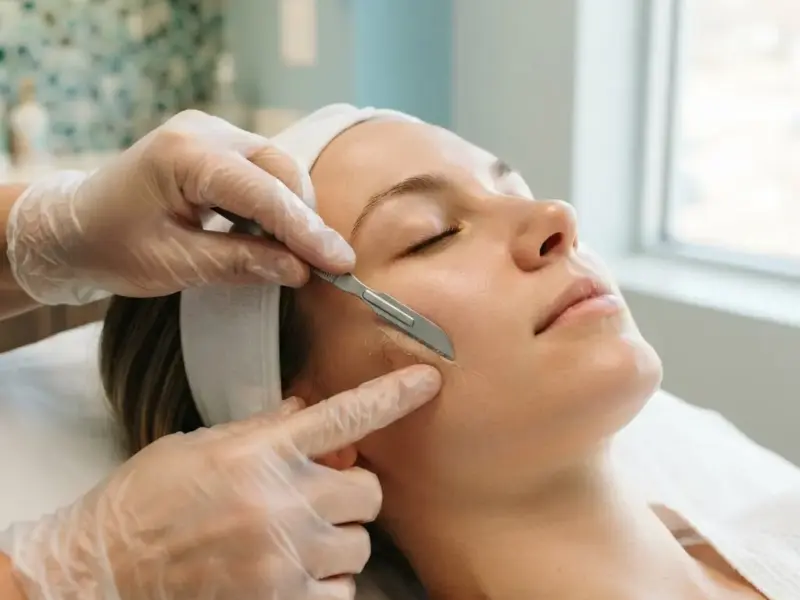
Dermaplaning
From $150 / visitA 30-minute blade exfoliation that removes dead skin and peach fuzz for a smoother surface, no downtime.
Learn more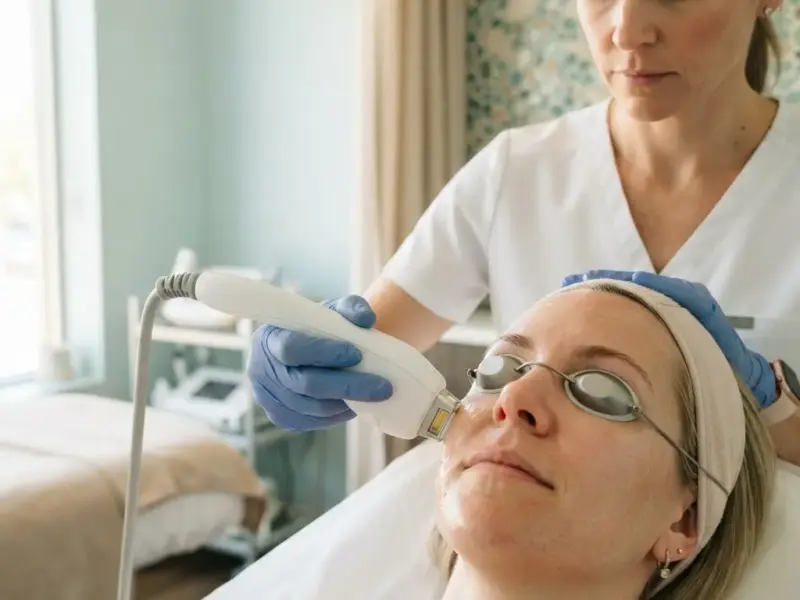
IPL photofacial
From $350 / sessionFiltered light that clears sun spots, redness, and small facial veins on lighter skin.
Learn more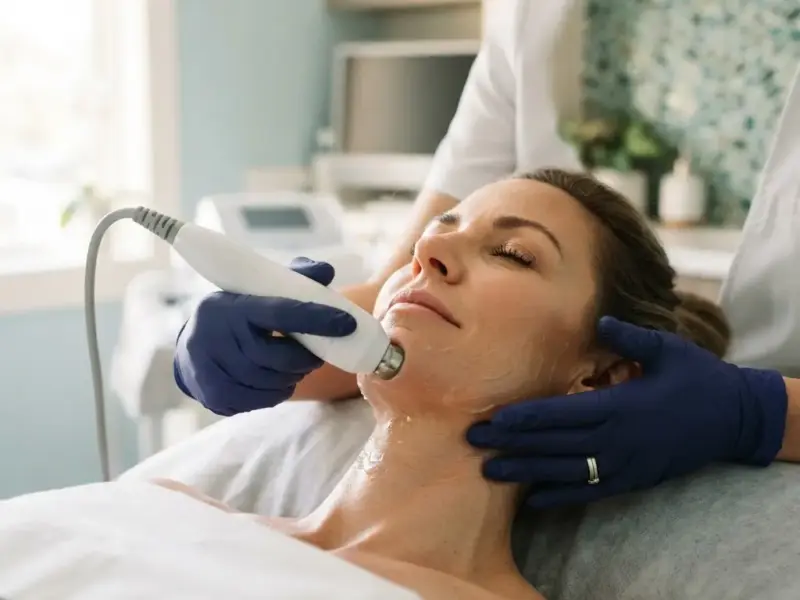
Forma skin firming
$699 / sessionNeedle-free radiofrequency that warms and gently tightens mildly loose skin, with no downtime.
Learn more

Start with a consult
Tell us what you’d like to work on. We’ll assess your skin and goals, walk you through your Laser hair removal options, and give you a clear plan and price before anything begins.
Afterpay and Klarna available at checkout for eligible treatments.