
Priorities
Unwanted hair
Unwanted hair, constant shaving or waxing, ingrown hairs, and razor bumps.
Treatments from $110
The short version
Unwanted hair most often affects the underarms, bikini line, legs, face, and chin. Frequent shaving can cause irritation, razor bumps, and ingrown hairs, and regular waxing adds up in both time and cost over the years.
Laser hair removal works on dark hair but not on light hair. Beyond hair color, good results depend mostly on timing your sessions well.
Why it happens
How laser hair removal works
The laser targets the pigment in the hair. Dark hair absorbs the light, turns it into heat, and that heat damages the follicle so it grows back finer or not at all. That's also why it needs several sessions, and why light hair doesn't respond.
Pigment absorbs the light
The darker and thicker the hair, the more light it absorbs, and the more heat reaches the follicle.
Light hair has nothing to target
Grey, white, blonde and red hair don't have enough pigment for the laser to work on.
Hair grows in cycles
Only follicles in their growth phase respond, so sessions are spaced weeks apart to catch each wave.
Sources: Cleveland Clinic, laser hair removal
Your options
How we'd approach it
-
Step 1We'd start with
Laser hair removal
From $110
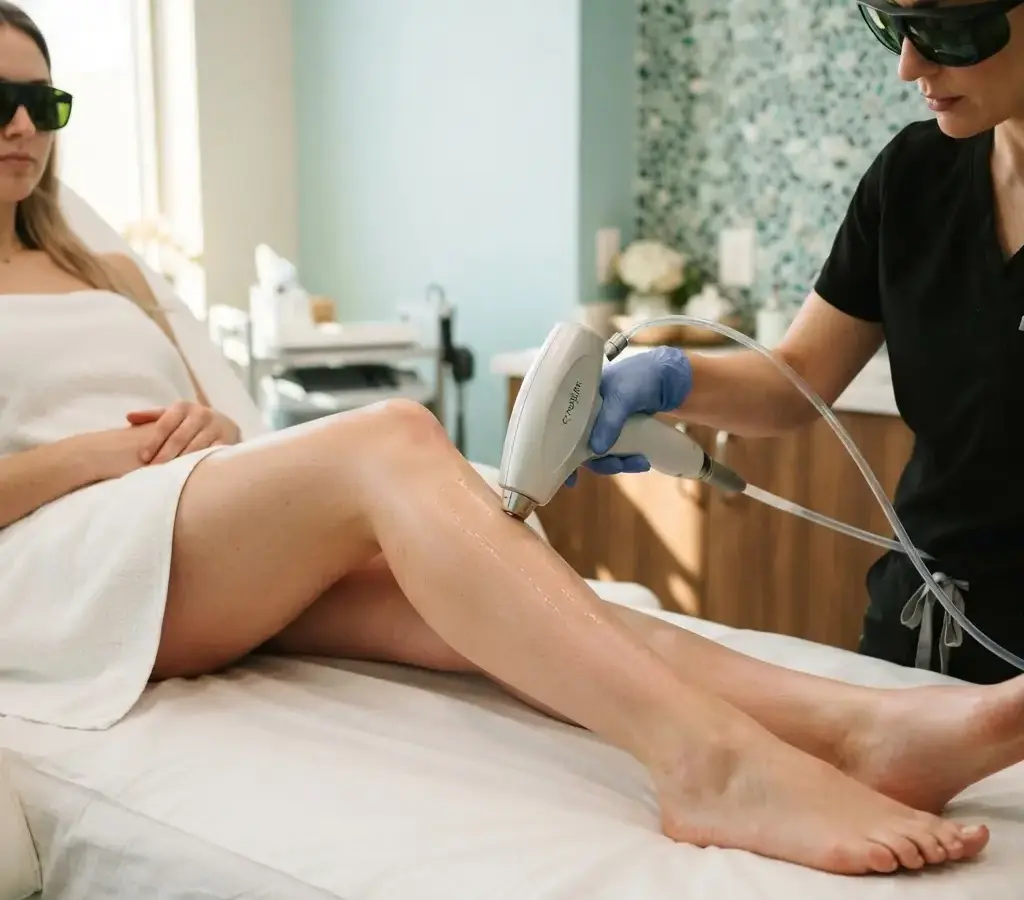
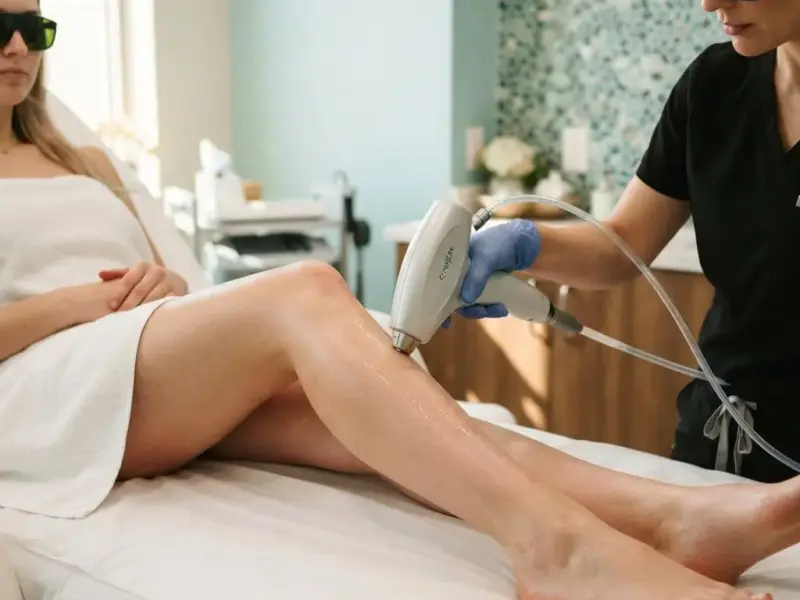
About Laser hair removalIf your hair is brown or black, we'd suggest laser hair removal on the Diolaze (InMode). Our medical esthetician treats small areas in minutes and full legs in up to an hour. For most people, six sessions, four to eight weeks apart, takes care of most of the hair.
-
Step 2If you need a little more
A maintenance session or two a year
From $110
About A maintenance session or two a yearAfter the series, a maintenance session or two a year helps keep it that way. Hormonal areas like the chin, or a PCOS pattern, need more frequent touch-ups.
Side by side
Your options side by side
Laser does the heavy lifting on dark hair. Here's how it compares with the alternatives we offer.
We'd start with
Laser hair removal
From $110
- Best for
- Brown or black hair on most skin tones
- Appointment
- 10 to 60 minutes by area, no numbing
- Downtime
- None to speak of. Red and warm for a day or two
- First results
- Shedding at 1 to 3 weeks; 10 to 25% less after the first session
- Sessions
- 6 to 8, spaced 4 to 8 weeks apart by area
Dermaplaning
From $150
- Best for
- Fine, light peach fuzz on the face
- Appointment
- 30 to 45 minutes, no numbing
- Downtime
- None, pink for an hour or two
- First results
- Immediately
- Sessions
- One, repeat every 3 to 6 weeks if you like it
Prices are starting prices from our menu. Your provider will confirm the plan and total cost at your consult. Individual results vary.
What to expect
What to expect with laser hair removal
Treated hairs shed over one to three weeks. Each session reduces regrowth a little more, and most people see the full result after the series.
Day 0
Red and warm
Red and warm, like a mild sunburn. A cool compress helps; skip a hot shower.
Days 5 to 14
The shed
Treated hairs shed. It can look like growth for a few days, then it’s gone. Don’t pluck; light exfoliation helps.
Weeks 4 to 8
Next session
Your next session, timed to the area, face sooner, legs and back later. Noticeable thinning after session three.
Months 6 to 12
Assess and maintain
We assess the result in line with how the FDA measures hair reduction. Most people plan one or two maintenance sessions a year.
Timeline for laser hair removal, from our treatment page. Individual results vary.
Our reasoning
How we decide
We’ll look at your hair and the skin under it. Dark hair on lighter skin is the easiest case. Darker skin can be treated too, with conservative settings and a test spot first on the Diolaze (InMode), an 810 nm diode laser.
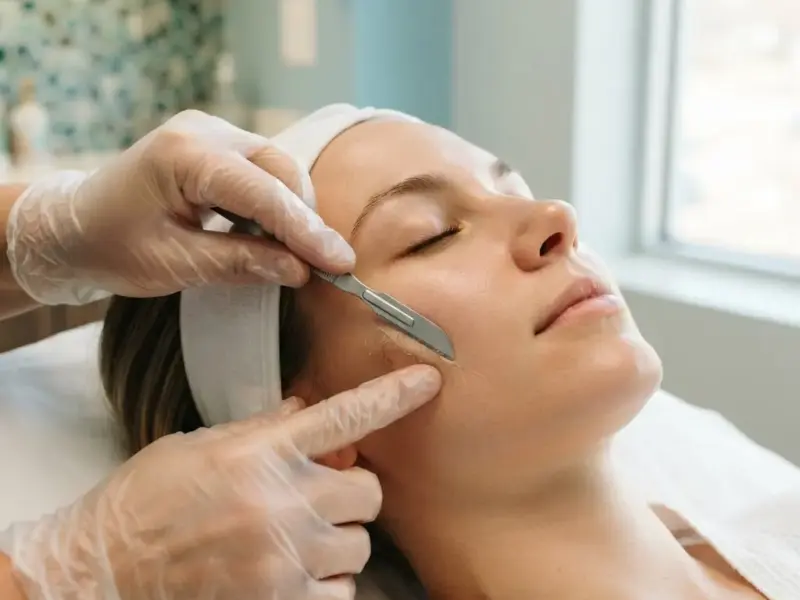
Laser can’t treat hair without pigment. Grey, white, blonde, and red hair have no melanin for the laser to target. Fine peach fuzz doesn’t respond well either, but for that, dermaplaning works well.
Timing matters too. The plan is six sessions spaced weeks apart, no sun on the area for two weeks around each, and no waxing or plucking between them (shaving is fine). Starting in September or October means a bikini or underarm series can be finished by summer. Starting in May makes it difficult to keep the area out of the sun between sessions.
The evidence supports reduction, not removal. A Cochrane review found roughly 50 percent short-term reduction with alexandrite and diode lasers up to six months after treatment, per the Cochrane Library, and the American Academy of Dermatology says regrowth tends to be finer and sparser. Individual results vary.
Your questions, answered
Is laser hair removal permanent?
Not quite. The FDA's phrase is "permanent hair reduction," defined as a stable reduction in the number of hairs regrowing at 6, 9 and 12 months after the series. Most people go months to years without seeing hair in the treated area, and what comes back tends to be finer.
When should I start to be done by summer?
Ideally by October. Six sessions at four to eight week intervals runs five to eight months, and the last one needs two sun-free weeks after it. Our Buffalo Grove and Palatine timing guide shows how to choose a start date based on when you want to finish.
Does it help ingrown hairs and razor bumps?
Yes, it can. Razor bumps (pseudofolliculitis barbae) come from hairs curling back into the skin, so reducing the hair reduces the ingrowns along with it. The bikini line and men's necks are the most common areas treated for this reason.
Why do I need so many laser sessions?
Hair grows in cycles, and the laser only works on follicles that are actively growing. At any time, some follicles are resting, so sessions are spaced weeks apart to catch them as they start to grow. Most people need six to eight.
Does laser hair removal work on blonde or grey hair?
Not well. The laser needs pigment in the hair to absorb the light, and blonde, grey, white and red hair don't have enough. For pigment-free hair, electrolysis is the option, though we don't offer it here.
Also used for this
From the clinic
Local · 6 min read
Laser hair removal in Buffalo Grove and Palatine: when to start so you’re done by pool season
We recommend starting in September. A full course is typically 6 sessions, up to 8 for hormonal areas, spaced 4 to 8 weeks apart, so a…
Local · 5 min read
Med spa near Prospect Heights, Wheeling, and Mount Prospect: what’s on Arlington Heights Road
If you live in Prospect Heights, Wheeling, or Mount Prospect, the nearest Skinovatio is at 3375 N Arlington Heights Rd, Suite C, just south of Dundee…